







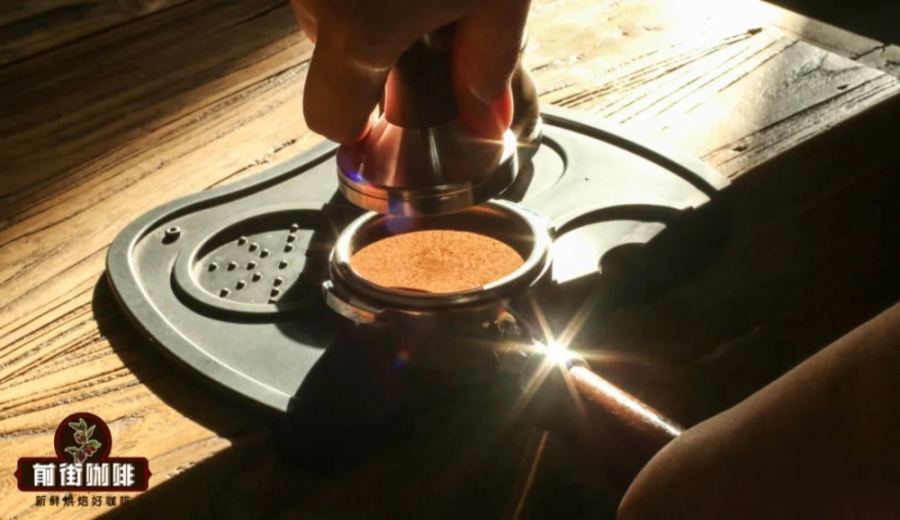
Introduction:When making a high-quality espresso, tamping may seem simple, but it is a crucial detail that affects extraction and flavor complexity. So how much pressure should you apply when tamping? What does the 9bar pressure of an espresso machine actually mean? This article will delve into how different tamping pressures influence extraction time and taste, and break down the principles behind a coffee machine’s 9bar pressure, as well as how proper dosing and tamping can effectively reduce channeling to achieve a more balanced and intense extraction.
During the brewing process of espresso, distributing and tamping the coffee grounds are always key steps that impact extraction results. Many baristas and enthusiasts know these two actions are essential, but what exactly is the right amount of tamping pressure? Can different tamping forces truly alter extraction time or even affect the final coffee flavor? This article uses experiments and analysis to show you the specific effects of light tamping, heavy tamping, and no tamping at all on espresso extraction, while also deeply exploring the actual meaning of a coffee machine’s 9bar pressure and its role in high-pressure extraction on the coffee puck.
First, we conducted a set of real extraction tests using 20 grams of coffee grounds, aiming to extract 40 milliliters of espresso. The experiment was carried out with three methods: light tamping (about 2 kilograms), heavy tamping (about 18 kilograms), and no tamping at all. To ensure data reliability, three shots were brewed under each tamping condition, and their average extraction times and flavor profiles were recorded. The coffee used was a dark roasted blend with rich crema, suitable for making espresso and capable of showcasing distinct flavor layers.

The experimental results showed that the puck tamped with 2 kilograms of pressure had an average extraction time of 33 seconds, while the one with 18 kilograms averaged 34 seconds. Surprisingly, there was almost no significant difference in extraction time between the two, and the flavor profiles were also similar, both exhibiting a balanced acidity, sweetness, and bitterness with clear layers. Furthermore, we also tried extracting without any tamping, and the result was similarly around 33 seconds. These figures challenge the common belief that “the greater the tamping pressure, the longer the extraction time.”
The reason behind this is actually closely related to the extraction pressure of the espresso machine itself. Generally speaking, an espresso machine provides a stable pressure of about 9 atmospheres (i.e., 9bar) during extraction, which is the standard setting for making espresso. So, how much force is 9bar? If converted into actual numbers, in a standard 58mm portafilter basket, 1bar is roughly equivalent to 27 kilograms of pressure, so 9bar is about equal to 243 kilograms—almost the combined weight of four adults. Precisely because the machine already provides such high pressure, the manual tamping force has relatively limited impact in comparison.

So if the extraction pressure of the coffee machine is already so strong, why do we still need to tamp? The answer lies in controlling “channeling.” Without proper tamping, there will be many gaps between coffee grounds, and these gaps can cause the hot water to choose the path of least resistance during extraction instead of uniformly penetrating the entire coffee bed. As a result, some coffee grounds may be over-extracted while others are under-extracted, leading to an imbalanced coffee liquid in terms of flavor, and even producing sharp acidity or unpleasant off-notes.
Although in the above experiment, the extraction time without tamping was similar to that of light and heavy tamping, in actual tasting, untamped extractions often produce noticeable negative flavors due to uneven channels. This is also why tamping is still considered an indispensable step in professional coffee preparation. Proper tamping can effectively reduce gaps in the coffee bed, allowing hot water to more evenly penetrate every coffee particle, thereby improving extraction stability and flavor balance.

The tamping force doesn’t need to be excessive; it is generally recommended to stay within 10 to 18 kilograms, which is sufficient to form a stable and uniform puck structure, helping to maintain good extraction conditions under the high pressure of 9bar. It’s important to ensure that the tamping force is applied evenly to avoid over-compacting a single spot, which could lead to uneven puck density and inadvertently create hidden channels. In addition, the evenness of the coffee distribution is also key—if the coffee bed itself is unevenly spread, even the most uniform tamping may not deliver optimal results.
In summary, although the impact of tamping pressure on extraction time is limited, it plays a pivotal role in maintaining extraction uniformity, reducing channeling, and achieving the final flavor balance. Under the powerful pressure of 9bar, appropriate tamping ensures that hot water steadily penetrates the coffee bed, extracting rich and harmonious aromas and tastes. Mastering the correct tamping technique will bring you closer to the ideal standard of a perfect espresso with every brew.

The above content is compiled by CoffeeHunters, a coffee news website.


