







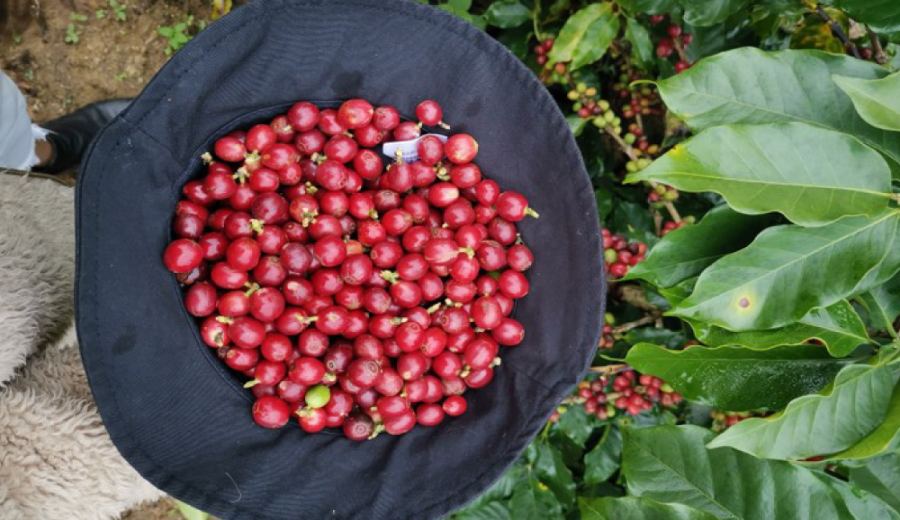
Introduction:Want to dive deeper into the variety differences, regional climates, and suitable brewing methods of Yunnan small-grain coffee? This article provides a detailed analysis of the geographical conditions, altitude distribution, and historical background of Yunnan’s major coffee-growing regions such as Pu’er, Lincang, Baoshan, and Dehong. It explores the characteristics of varieties like Catimor, Typica, Bourbon, and Geisha, and offers practical pour-over recommendations and parameters to help you savor the nutty and caramel aromas of Yunnan coffee.
As an important coffee-producing region in China, Yunnan grows almost exclusively Arabica varieties, with Catimor being the dominant one, supplemented by Typica, Bourbon, and Geisha. These coffees are mainly distributed in Pu’er, Lincang, Baoshan, and Dehong. Thanks to high altitudes, moderate rainfall, and significant day-night temperature variations, they develop unique flavors with notes of nuts and caramel. The following will delve into the natural conditions, cultivation evolution, and varietal characteristics of each region, along with practical pour-over tips to help you gain a more comprehensive understanding of Yunnan specialty coffee.
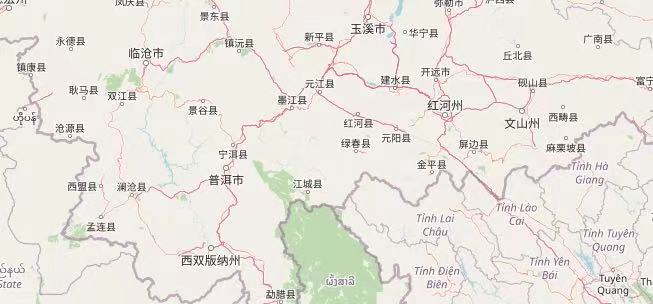
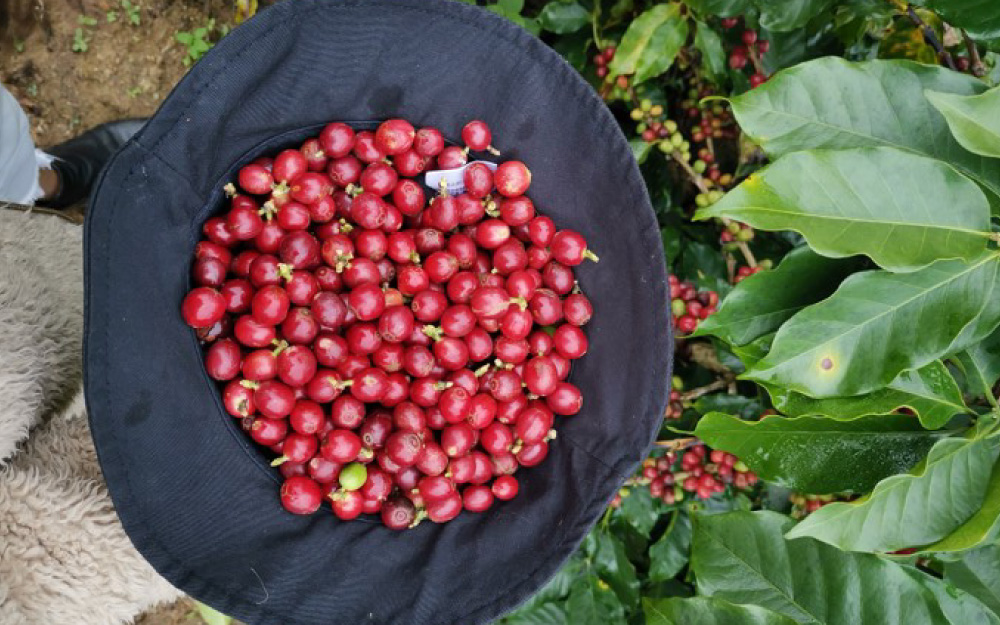 Currently, all coffee varieties grown in Yunnan belong to the Arabica species, commonly known as the small fruit or small grain variety. Among them, Catimor is planted most extensively, followed by Typica, with some areas also growing small amounts of Bourbon and Geisha. These coffees are primarily produced in prefectures and cities such as Pu’er, Lincang, Baoshan, Dehong, Nujiang, Xishuangbanna, Dali, and Diqing, among which those from Dehong, Baoshan, Pu’er, and Lincang receive the most attention.
Yunnan’s coffee-growing regions are concentrated in the western and southern parts of the province, roughly located between 15°N and the Tropic of Cancer. The terrain is mostly mountainous and hilly, with relatively high altitudes. Coupled with abundant sunshine, ample rainfall, and significant day-night temperature differences, these provide ideal environmental conditions for coffee growth.
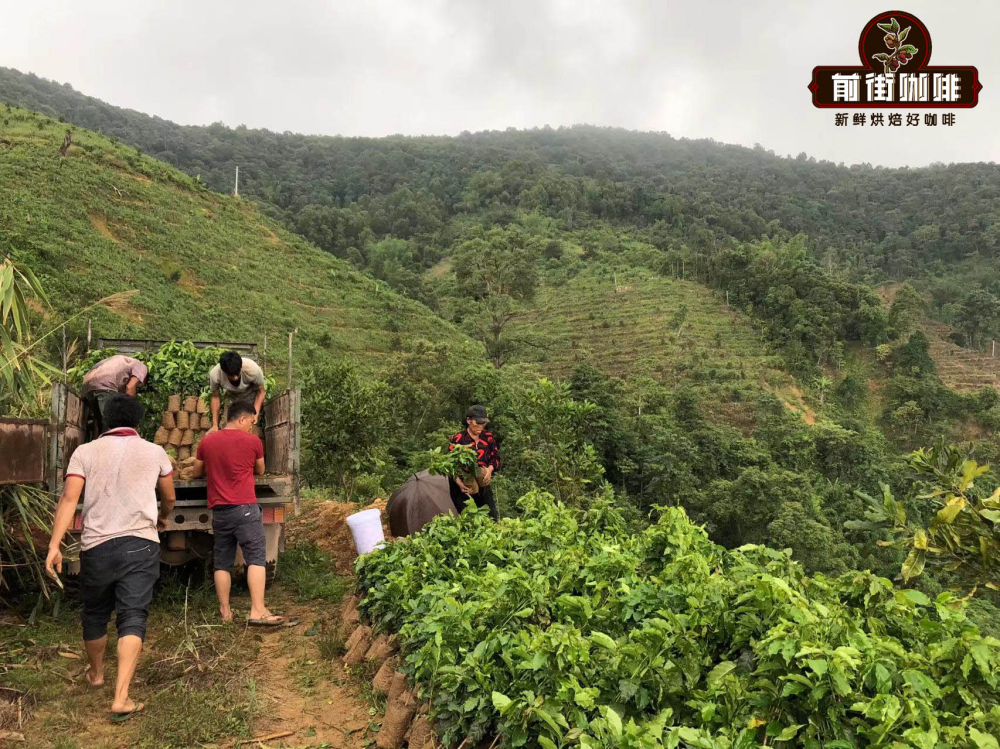 The Pu’er region has long been famous for its tea, but it actually has a coffee cultivation history of nearly 150 years. In the late 1990s, to adjust the agricultural structure and increase farmers’ income, the local government began vigorously promoting the development of the coffee industry. Pu’er has a subtropical monsoon climate, mostly frost-free throughout the year, not severely cold in winter or extremely hot in summer, with an average annual temperature of about 15–20.3°C, a frost-free period exceeding 315 days, and annual rainfall ranging between 1100–2780 mm — very suitable for coffee cultivation.
Dehong Prefecture also enjoys very favorable climatic conditions. The entire prefecture is located near the Tropic of Cancer, at a relatively low latitude, influenced by the southwest monsoon from the Indian Ocean, and has a South Asian tropical monsoon climate. The coffee-growing areas here generally exceed 1000 meters in altitude, with about 30,000 mu planted at elevations above 1600 meters. Dehong has cool summers, abundant rainfall, rain and heat occurring in the same season, distinct dry and cold periods, large diurnal temperature variations and small annual temperature fluctuations, along with a short frost period, providing a stable environment for the growth and overwintering of Arabica coffee trees.
Baoshan’s coffee cultivation history can be traced back to the mid-1950s. It is said that the first coffee seedlings were introduced from Southeast Asia by patriotic overseas Chinese Mr. Liang Jinshan. Baoshan has a low-latitude mountainous subtropical monsoon climate. Located on a low-latitude plateau, the altitude range for coffee planting here is approximately 100–1500 meters. The region experiences small annual temperature variations but large diurnal ones, with abundant rainfall and distinct wet and dry seasons. Such climatic conditions help cultivate Yunnan small-grain coffee with rich flavors.
Lincang City has a subtropical low-latitude plateau mountainous monsoon climate. Influenced by warm and humid air currents from the Indian Ocean and the southwest monsoon, the boundaries between the four seasons are not distinct, but the wet and dry seasons are clear. Rainfall is relatively high, sunshine is abundant, and the frost period is short. Coffee is mainly planted at altitudes between 1000–1600 meters, where climatic conditions are stable, highly conducive to coffee ripening and flavor accumulation.
It is worth mentioning that a certain coffee brand established its own coffee plantation in the mountains near the Myanmar border in Lincang around 2013, at an altitude of about 1300 meters, specifically for planting the most traditional Arabica variety — Typica. Typica is one of the oldest coffee varieties, with pure Arabica lineage. Its flavor profile is typically clean and elegant, often regarded as representative of specialty coffee, though its downside is lower yield per plant. In contrast, Catimor is a hybrid of Arabica and Robusta, offering advantages such as high yield, strong disease resistance, and low cultivation costs, but it was previously often criticized for having a slightly rough flavor with hints of herbal notes. However, with advancements in cultivation and post-harvest processing techniques in recent years, the performance of Yunnan Catimor has significantly improved.
If you’re seeking a purer and more layered coffee experience, choosing the Typica variety would be a better option. A certain coffee brand currently sells Yunnan coffee mainly from Lincang and Baoshan, including their own “Brand 2013 Natural Typica Coffee Beans,” as well as “Selected Regional Staple Bean – Yunnan Baoshan Washed Catimor Coffee Beans” and “Red Cherry Natural – Catimor Coffee Beans from Baoshan’s Ludianba Region.” These are suitable for coffee enthusiasts who enjoy exploring different flavor profiles.
Yunnan coffee generally exhibits pronounced notes of nuts, caramel, and plum. To fully highlight these characteristics, it is recommended to use a drip filtration method and enhance flavor clarity through appropriate extraction ratios. It is recommended to use a V60 dripper, with a coffee-to-water ratio of 1:15, a medium grind size (approximately like coarse sugar, or about 75% extraction rate through a Chinese No. 20 standard sieve), and water temperature controlled between 88–89°C.
In practice, it is suggested to use a three-stage pouring method to enhance layering: first pour 30 grams of water for blooming for about 30 seconds; then pour with a small stream in circles up to 125 grams, wait until the water level drops by half, then continue pouring with a small stream in circles up to 225 grams. Allow the coffee to completely drip through, with total extraction time controlled to around 2 minutes and 10 seconds. This method helps balance acidity and sweetness, highlights the aroma of nuts and caramel, and allows you to more fully experience the unique charm of Yunnan small-grain coffee.
The above content is compiled by CoffeeHunters, a coffee news website.


