







Introduction:South Korea’s coffee market is globally renowned for its astonishing number of professional certifications and unique consumption habits. With over 350,000 certified baristas and 147 internationally accredited training centers, this article takes you deep into six defining features of Korean coffee culture—from must-order extra-hot lattes and cinnamon-infused cappuccinos to Gangnam-style iced americano and Dutch cold brew techniques. We explore the historical context and market logic behind these phenomena to help you master the key details of serving Korean customers.
Korea’s influence on the global coffee stage continues to expand, not only successfully hosting Asia’s largest coffee expo but also boasting an extensive professional certification system that surpasses many others. From the number of certified baristas and density of training institutions to consumers’ unique preferences for beverage temperature and flavoring, this East Asian country’s coffee ecosystem holds many intriguing details worth exploring.
In the field of professional certification, South Korea has set multiple world records: the nation is home to350,000 certified baristas, a number that not only far exceeds that of most countries but is also equivalent to the combined global workforce of two Starbucks. Even more remarkable is the presence of147 SCAE (now SCA)-accredited training centers, which cultivate a large pool of technical talent in the industry. In addition, Korea has2,041 Q-graders(international coffee tasters) and 157 R-graders, forming the world’s largest professional cupping network.
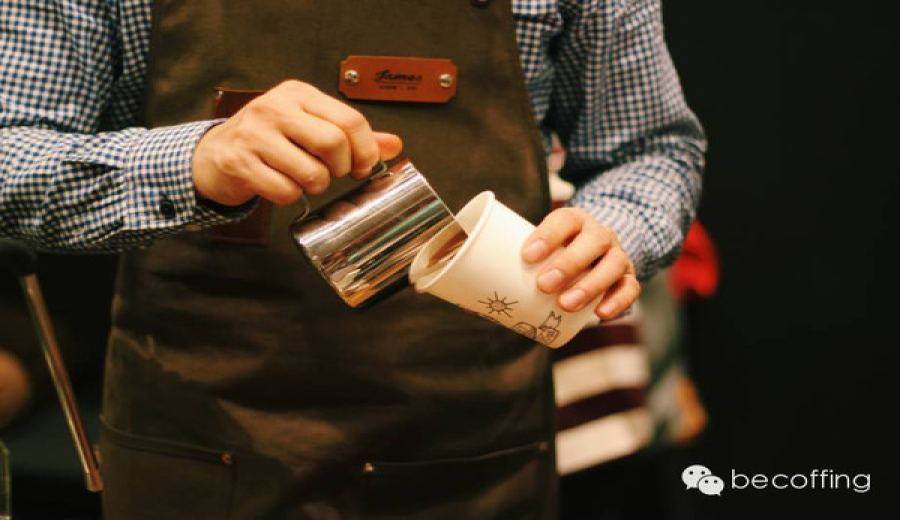
Korean customers have a unique preference for lattes—they expect their drinks to be served at a temperature much higher than international norms. To achieve this, baristas must extend the steaming time to ensure the milk reaches near-boiling levels. This pursuit of an “extra-hot” experience often leads staff to respond with a smile before handing over the drink, acknowledging the customer’s anticipation.
When it comes to cappuccinos, the Korean version presents characteristics distinctly different from the international definition. The local convention involves sprinkling cinnamon powder on top of a standard cappuccino, creating a flavor profile similar to that of a latte. This tradition has remained unchanged since the drink was introduced, and consumers have grown accustomed to seeing cinnamon as an essential element of the beverage.
The term “coffee” in the Korean context often presupposes an Americano. This consumption habit stems from the early days when the market was dominated by drip coffee. As espresso became more popular, and considering the majority of consumers’ lower tolerance for highly concentrated espresso, iced americanos and various flavored americanos gradually became staple options on menus.
Targeting fashion-conscious urbanites, Korea has developed a unique “Gangnam-style iced americano”—a minimalist configuration strictly limited to “two ice cubes” based on the standard iced americano. This emphasis on visual aesthetics reflects the local consumers’ pursuit of a refined lifestyle.
The evolution of cold brew in Korea is exemplified by the rise of the Dutch brew method (Dutch Brew). Through a long-duration, low-temperature steeping process, this technique extracts a continuous flavor profile, and its equipment design resembles a sophisticated funnel system, making it a sought-after item for collection and gifting among coffee enthusiasts. It’s worth noting that despite the rapid global growth of the cold brew market, many Korean consumers still find this traditional method refreshing and novel.
With an understanding of these cultural traits, whether you’re a professional adjusting service procedures or a traveler trying to grasp ordering logic, you’ll be better equipped to integrate smoothly into the daily routine of Korean cafés. From the rigor of the certification system to the uniqueness of consumption habits, the Korean market offers a valuable development model for the global coffee industry.
The above content is compiled by CoffeeHunters, a coffee news website.


