







Introduction:Delve into the Huakui coffee from Ethiopia’s Sidamo Guji Hambella region — explore its terroir, heirloom variety traits, and natural processing method to uncover the secrets behind its high sweetness and vibrant floral-fruit aromas. This article details the logic behind Huakui’s X.0 year coding system, compares its flavor profile with Yirgacheffe, and provides practical pour over recommendations and parameters to help you fully appreciate the charm of this popular specialty coffee bean.
As the birthplace of coffee, Ethiopia is home to numerous renowned coffee-growing regions, among which Sidamo and Yirgacheffe are often compared. Although both belong to the country’s southern specialty coffee belt, their cup profiles are distinctly different. Yirgacheffe is celebrated for its bright lemony acidity and delicate floral notes, while Sidamo showcases a more juicy body and complex layers, with intense floral-fruit aromas and a rich mouthfeel.
Among the many coffees from Sidamo, Huakui stands out for its outstanding natural processing and consistent performance. In particular, the natural Huakui from Hambella in the Guji region has not only won accolades in domestic and international competitions but also gained widespread popularity among coffee enthusiasts for its intense tropical fruit character and high sweetness.
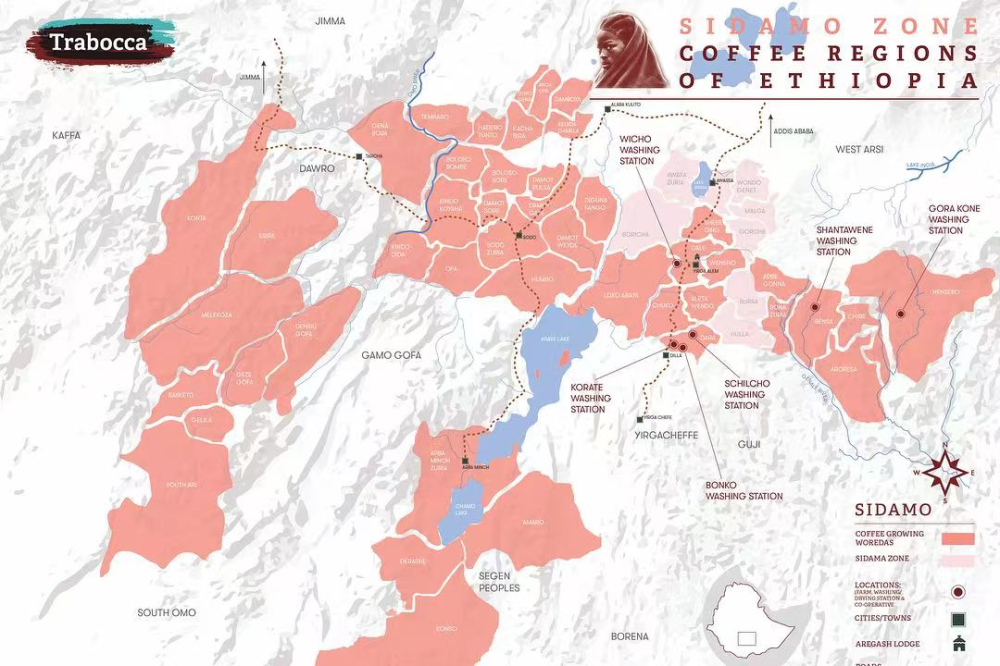
Located in southern Ethiopia near the Kenyan border, Sidamo generally sits at elevations between 1400 and 2200 meters, making it a classic high-altitude specialty coffee growing area. The region features mostly volcanic soils that are deep, well-draining, and rich in humus, providing an ideal environment for coffee trees. The area’s varied terrain — including mountains, plateaus, valleys, and plains — along with significant day-night temperature variations, contributes to the diverse and layered flavors of Sidamo coffee.
In many international coffee competitions such as COE (Cup of Excellence) and TOH (Taste of Harvest), coffees from the Sidamo region frequently rank among the winners. Their green beans typically appear light green in color, with medium to small and slightly elongated shapes, and emit a rich, steady dry fragrance. When brewed, they often reveal wild berry, citrus, floral, and subtle spice notes, with a long and layered aftertaste.
When talking about Sidamo, one cannot overlook the local Huakui coffee. The name “Huakui” originates from a natural lot from the Buku Abel washing station in the Hambella area, which won the TOH competition in 2017. That particular batch was celebrated for its intense strawberry and creamy aromas. Later, this coffee was introduced by domestic green bean traders and named “Huakui,” symbolizing top-tier quality akin to the lead geisha.
The origin of Huakui coffee — Hambella — is situated in the Guji region and boasts exceptionally favorable geographical conditions. Located southeast of Yirgacheffe, the area features a complex and varied terrain with steep peaks, deep gorges, and plateau plains. Elevations in Hambella generally exceed 1800 meters, with some areas reaching over 2000 meters, coupled with significant day-night temperature differences, providing excellent ripening conditions for coffee. The soil is predominantly fertile black Vertisol, extending as deep as two meters and rich in organic matter, laying a solid foundation for the coffee’s flavor profile.
Regarding the name “Huakui,” it was actually coined by domestic green bean merchants based on the origin and competition performance. Strictly speaking, Huakui refers to a specific natural lot from the Buku Abel washing station, with the bean variety being a local heirloom type. Its scientific classification is not yet fully clarified, as it belongs to Ethiopia’s rich and diverse coffee genetic pool. These heirloom varieties have evolved naturally in the local environment, exhibiting unique qualities and flavor profiles, but they have not been publicly subdivided due to genetic protection policies.
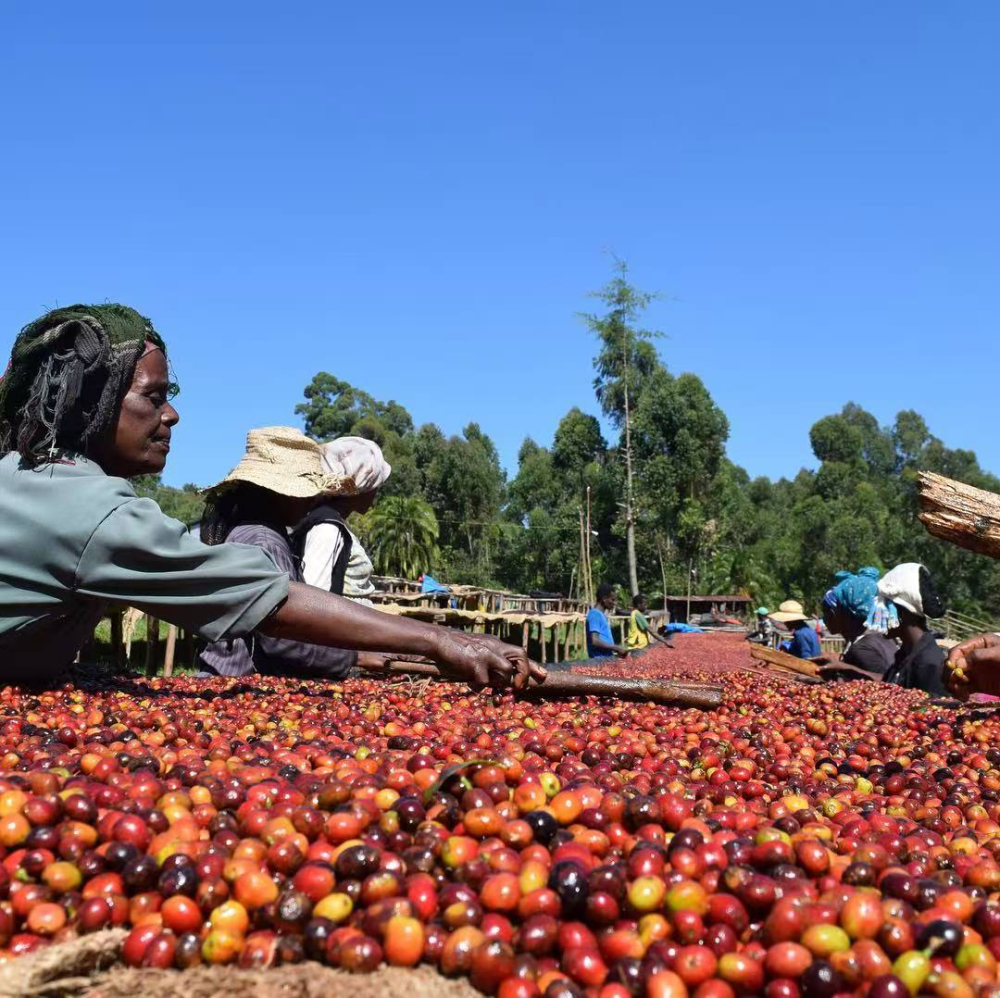
The Sidamo region commonly employs the natural processing method, which is key to Huakui’s ability to showcase its unique flavors. Natural processing is the most traditional coffee method, where harvested coffee cherries are directly placed under the sun to dry for about two to four weeks until the pulp moisture content drops to around 11%, after which the outer mucilage and parchment layers are removed. This method fully preserves the sugars and fruit aromas within the pulp, imparting the coffee with richer sweetness and fruity characteristics.
Compared to the clean acidity and bright mouthfeel of washed-processed coffee, Sidamo’s natural beans usually exhibit a softer acidity, smoother texture, along with delicate floral and fruity notes, sometimes accompanied by a hint of spice or nutty finish. The beans typically appear grayish-green in color, with inconsistent sizes, but overall stable quality. They are suitable for light to medium roasting to highlight their floral-fruit characteristics, or medium-dark roasting to serve as a base in blends.
Regarding the numbering of Huakui X.0, it is actually arranged according to the production year. For example, 2018 is 2.0, 2019 saw the release of 3.0 and 3.1, 2020 is 4.0, 2021 is 5.0, 2022 is 6.0, and so on. This numbering system helps consumers identify differences between vintages — each edition of Huakui may vary slightly in flavor due to climate, processing conditions, and ripeness.
For brewing, it is recommended to use a light-roasted Yirgacheffe as a reference. Choose a V60 filter, control the water temperature at around 90°C, set the coffee-to-water ratio at 1:15, and adjust the grind size to 80% passing through a Chinese No. 20 sieve, equivalent to a medium-fine grind. Start with a 30-second bloom using twice the coffee dose (about 30 grams) of water to aid degassing, then pour in a thin stream of water up to 125 grams before pausing. Continue pouring until reaching a total of 225 grams, with the total extraction time around 2 minutes. These parameters help fully express Huakui’s floral-fruit aromas and layered sweetness.
Overall, Huakui coffee has secured its place in the global specialty coffee market with its intense floral-fruit aromas, high sweetness, and smooth mouthfeel. Whether you’re a beginner or a seasoned coffee enthusiast seeking unique flavors, Huakui is a classic bean worth savoring and exploring.
The above content is compiled by CoffeeHunters, a coffee news website.


