







Introduction:Want to learn how to brew Yunnan small-grain coffee with captivating flavors? This article delves into Yunnan coffee’s geographical advantages and the evolution of its main varieties—from the differences between washed and natural processing methods to expert pour-over recommendations—with detailed brewing parameters to help you master the essence of Yunnan coffee. It also includes vivid flavor profiles of two classic processing styles to guide you toward your ideal Yunnan coffee experience.
Yunnan, a land renowned for Pu’er tea, has now also become an important hub for specialty coffee in China. Over 95% of the country’s coffee is produced in Yunnan, primarily in regions such as Baoshan, Pu’er, Lincang, and Dehong. Blessed with exceptional natural conditions, this area cultivates the uniquely flavored “small-grain coffee.” Starting from its natural environment, this article will guide you through the major varietal transitions in Yunnan coffee, analyze the key processes and flavor characteristics of washed processing, offer expert pour-over recommendations with full steps, and detail the flavor profiles of both washed Yunnan small-grain and natural Typica—helping you better understand how to brew captivating Yunnan coffee.
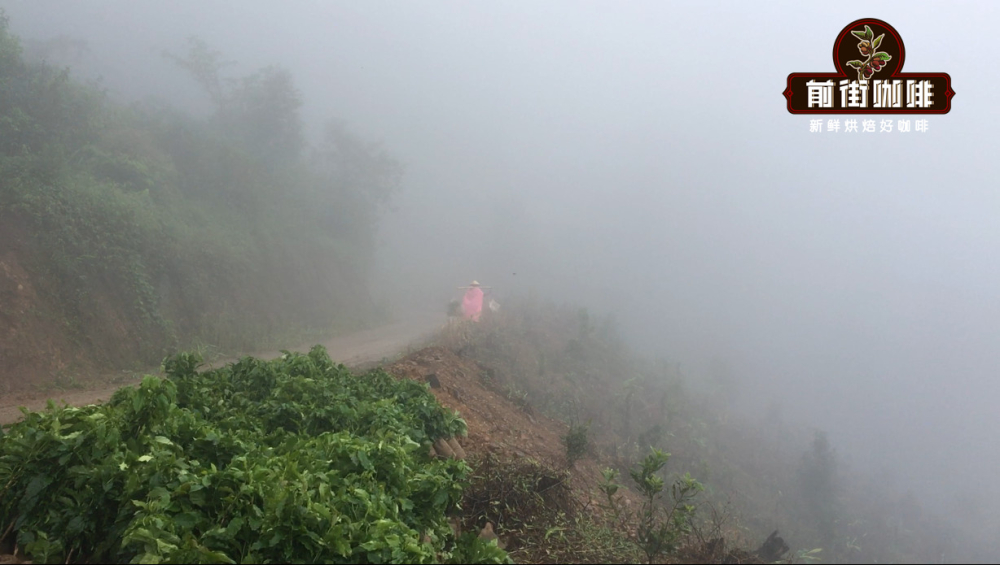
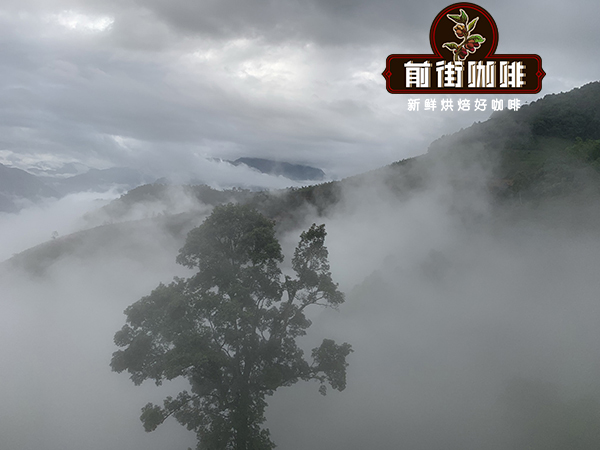
Located between 15°N and the Tropic of Cancer, Yunnan lies within the global coffee belt. The region mainly consists of mountains and slopes at elevations of 1,500 to 2,200 meters, enjoying a mild climate, significant day-night temperature variation, and distinct dry and wet seasons—ideal conditions for coffee cultivation. As a result, Yunnan coffee often exhibits a rich yet non-bitter profile, with fruity notes and a tea-like aftertaste. In earlier years, some growers attempted planting in Guangdong, but due to unsuitable climate and geography, they eventually established their growing base in Lincang, Yunnan, focusing on high-quality coffee production.
When talking about Yunnan coffee, we must start with its main producing areas. Baoshan, Pu’er, Lincang, and Dehong are the four most renowned coffee-producing regions in Yunnan. Among them, Baoshan, one of the important birthplaces of small-grain coffee, began cultivation in the mid-1950s and is home to old coffee trees over 60 years old. It is especially known for the dry-hot valley climate of the Lüjiangba area, where elevations mostly range between 800 and 1,200 meters, with some reaching up to 1,400 meters—providing ideal growing conditions for Arabica. The area enjoys an average annual temperature of around 21.3°C, over 2,300 hours of sunlight annually, moderate rainfall, almost no frost, and is considered one of the world’s optimal regions for producing high-quality small-grain coffee.
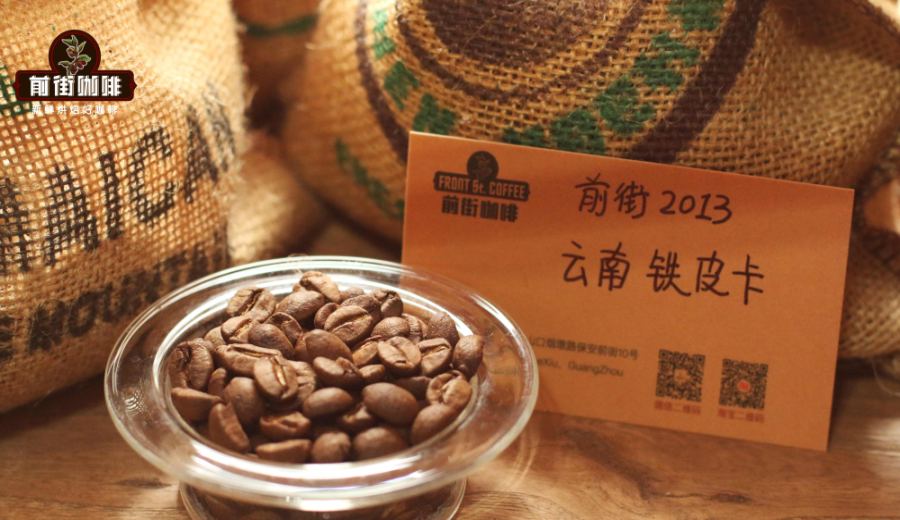
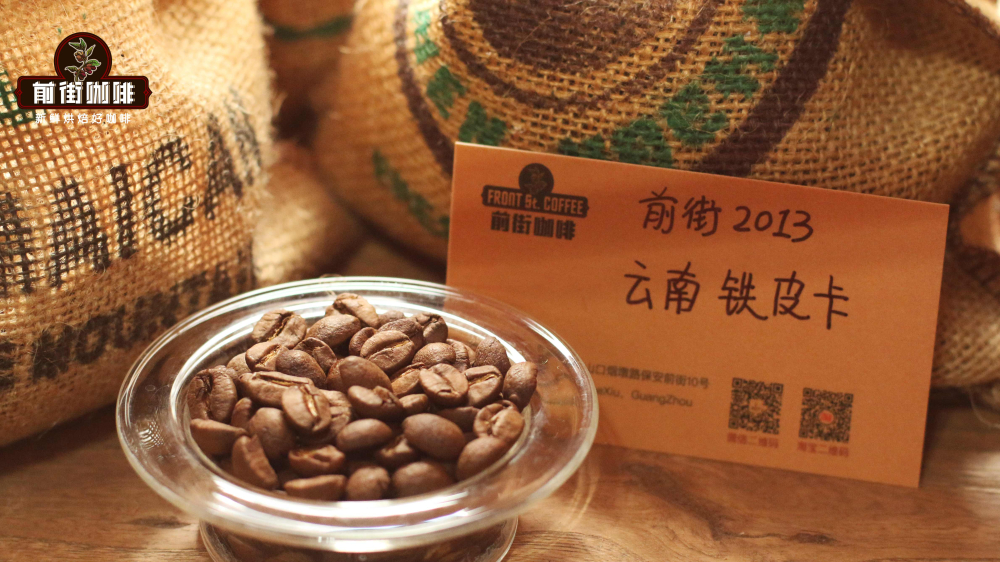
The so-called “Yunnan small-grain coffee” mainly refers to the “Catimor” variety. Although early plantings were dominated by the traditional Typica—a venerable Arabica variety with reddish copper-colored top leaves, oval-shaped foliage, few branches, and slender beans that offers elegant flavors but is vulnerable to disease and low-yielding—later, to meet demands for higher yield and disease resistance, the focus shifted to Catimor, a hybrid of Caturra and Timor. Catimor combines leaf rust resistance with high productivity, making it the dominant variety in Yunnan coffee today. However, some producers still insist on cultivating the more subtly flavored Typica, showcasing its unique potential through high elevation and meticulous management.
In terms of processing methods, due to Yunnan’s changeable weather with unpredictable rain and shine, most coffee beans are processed using the washed method to ensure stability and consistency. The washed process involves: first removing most of the fruit pulp with a pulper, then soaking the parchment-covered beans in water tanks for fermentation to thoroughly remove residual mucilage. During fermentation, unripe and defective beans naturally float due to buoyancy, making them easy to sort. This method reduces off-flavors, resulting in a cleaner, brighter acidity and complex fruity notes—well-suited to highlighting Yunnan coffee’s regional characteristics. Compared to the natural method, washed processing better maintains quality stability amid variable climates.
For pour-over brewing, it is recommended to use a V60 filter cone paired with medium-roast Yunnan small-grain coffee beans to highlight its balanced nutty and brown sugar foundation, while preserving gentle fruity acidity. The recommended parameters are as follows: water temperature around88°C, coffee dose15 grams, brew ratio1:15, grind size close togranulated sugar (about 80% passing through a Chinese standard No. 20 sieve). A three-stage pouring method can enhance layering: the first pour adds30 grams of waterfor a30-second bloom, the second pour uses a slow circular motion to add water up to125 grams, then after the water level drops, the third pour continues to225 grams, with total brew time controlled around2 minutesuntil the final drip finishes in the filter cone.
In terms of flavor profile, washed Yunnan small-grain coffee often presents intense nutty aromas, with herbal, chocolate, and caramel layers on the palate, followed by a delicate fruity acidity in the aftertaste—offering overall balance and harmony. Natural Typica, on the other hand, has a fuller body, relatively milder acidity but more pronounced sweetness, featuring berry-like notes and a slight tea-like character, with a long and rounded finish, making it ideal for those who prefer sweeter profiles.
Overall, Yunnan small-grain coffee falls into a moderately flavored category—not overly acidic or intense, suiting the palates of most coffee enthusiasts. If you prefer pronounced fruity acidity, opt for high-elevation, light-roast beans; if you lean toward a mellow and rich cup, go for darker roasts. Whichever you choose, freshly roasted beans are always key to flavor expression. Enjoy them within 4 to 7 days post-roast to experience Yunnan coffee at its peak, delivering you the purest Yunnan coffee experience.
The above content is compiled by CoffeeHunters, a coffee news website.


