








Introduction:Yirgacheffe is renowned for its bright citrus acidity and jasmine floral notes, making it an entry point for many into specialty coffee. This article will comprehensively explore the unique charm of this classic coffee bean — from the growing environment, evolution of washed processing, characteristics of light roasting, to brewing techniques. It also includes practical brewing parameters and tasting suggestions to help you better understand its aroma sources and ideal presentation.
With its vibrant citrus and lemon acidity paired with soft jasmine floral tones, Yirgacheffe (Yirgacheffe) holds a distinctive place in the specialty coffee world and is often the starting point for many people’s first encounter with light-roasted coffee. What kinds of geographical environment, processing techniques, and roasting strategies create such a standout flavor? This article will delve into the regional background of Yirgacheffe, its washed processing methods, and how light roasting and brewing together shape its captivating fruity and floral profile.

Yirgacheffe is located in Ethiopia, the birthplace of coffee. The region features high altitudes, cool climates, and stable rainfall — conditions highly suitable for coffee trees that are demanding in their growing environment. Local farmers often cultivate coffee on misty mountain slopes using agroforestry methods, co-growing with bananas or other cash crops, most commonly planting coffee under banana trees. This pastoral cultivation method not only maintains biodiversity but also helps the coffee cherries mature slowly within the natural microclimate.
The large diurnal temperature variation brought by high altitude extends the growth cycle of coffee cherries, allowing them to accumulate richer aromatic compounds. As a result, the harvest season for Yirgacheffe typically falls between October and January of the following year, slightly later than other regions, but in exchange offers more delicate and complex flavor potential.
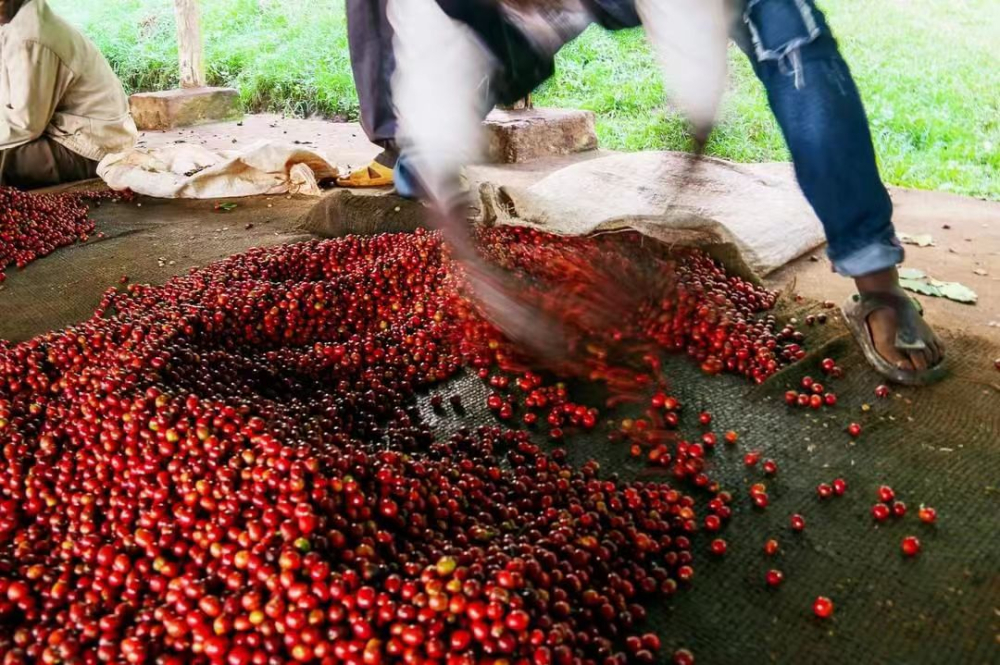
A key factor that sets Yirgacheffe apart is its washed processing technique. In earlier years, the region also used the natural (sun-dried) method, but due to its simpler technique, difficulty in quality control, and susceptibility to earthy or overripe fruit off-flavors, the defect rate was high and market acceptance limited. It wasn’t until 1972, when Ethiopia introduced the washed processing system originating from Central and South America, that the situation improved significantly.
The steps of washed processing include: first using floatation to remove unripe or overripe coffee cherries, then removing the skin and pulp, followed by placing the beans in fermentation tanks for 18 to 36 hours (depending on local temperature and humidity) to break down the mucilage layer. Next, water channels are used to wash the beans for 30 to 60 minutes, separating defective parchment beans by density. The remaining quality beans are then dried on African beds for about two weeks until they reach the standard moisture content. This processing method not only reduces the defect rate but also highlights the beans’ inherent bright citrus notes and elegant floral aromas, allowing Yirgacheffe to distinguish itself from the Sidamo region and become a globally recognized specialty coffee origin.
Of course, Yirgacheffe also produces many high-quality natural (sun-dried) batches. For example, some beans undergo red cherry natural processing, where the coffee fruits are slowly dried in the sun and manually turned at intervals to prevent over-fermentation. This method imparts a richer fermented fruity aroma and sweet aftertaste, offering a flavor profile distinctly different from washed processing and equally worthy of tasting and comparison.
In terms of roasting, light roasting is key to highlighting the bright flavors of Yirgacheffe. In the past, people often roasted coffee darker to achieve intense nutty and dark chocolate notes, but this approach tended to mask the beans’ original acidity and delicate aromas. With the rise of the specialty coffee concept, roasters have shifted to lighter roast levels to preserve more fruity acidity and floral notes, showcasing Yirgacheffe’s unique fresh and bright character. This also aligns with modern consumers’ preference for sweetness and low bitterness, making it one of the most popular coffee varieties worldwide.
To brew a high-quality cup of Yirgacheffe at home, using freshly roasted beans is essential. It is generally recommended to use the beans within 4 to 7 days after roasting, considered the optimal tasting window. The brewing example suggested in this article uses a V60 filter cone, whose spiral groove structure aids in the release of gases from the coffee grounds, further enhancing the release of acidic aromatic compounds and making the fruity and floral profile more expressive.
Brewing recommendations are as follows:
Filter cone:V60
Water temperature:91-92°C
Coffee dose:15 grams
Coffee-to-water ratio:1:15
Grind size:Medium-fine grind (approximately 78% through a #20 sieve)
Brewing steps (three-pour extraction):
1. Start with a 30-gram bloom pour and let it sit for about 30 seconds.
2. Then pour in a small circular motion until the total water volume reaches 125 grams for the first pour.
3. When the water level drops and is about to expose the coffee bed, pour again until the total reaches 225 grams, then let it drain.
4. Keep the overall extraction time around 2 minutes.
The brewed Yirgacheffe delivers a pronounced acidity of lemon and berry tones, with a naturally prominent sweetness reminiscent of sugarcane. As it cools, the mouthfeel shifts to a green-tea-like freshness, with a long-lasting and layered aftertaste. By mastering the key elements of processing, roasting, and brewing, you can fully appreciate the unique charm of this classic coffee.
The above content is compiled by CoffeeHunters, a coffee news website.


