







Introduction:Yunnan coffee is transitioning from commercial-grade to specialty, yet many remain unfamiliar with the varieties grown locally. This article delves into the historical roots of Yunnan’s small-bean coffee, details the characteristic differences between the mainstream varieties Catimor and Typica, analyzes the reasons behind their market share, and shares the hands-on experience of a brand that planted Typica itself and the story behind a series of natural-process beans. Practical brewing parameters and flavor notes are also provided to help you better understand the potential of this emerging origin.
When it comes to coffee, many people first think of Brazil, Colombia, or Ethiopia. However, in recent years, China’s Yunnan has gradually entered the conversation in the specialty coffee scene. With the rise of the domestic coffee consumption market, the term “Yunnan small-bean” has become increasingly common in coffee shops across the country. As a brand deeply rooted in the coffee field, one brand’s regular selections include several specialty beans from Yunnan, reflecting the growing professional recognition of this origin.
Yunnan’s connection with coffee dates back to 1904, when French missionary Téodore Monod planted the first coffee tree in Zhugula Village, Binchuan, thus beginning a century-long relationship between this highland region and coffee. However, it wasn’t until the 1950s that commercial-scale development truly began. Botanist Professor Qin Renchang identified the red coffee cherries found in the courtyards of Luxi County, Dehong Prefecture, as belonging to the small-bean variety, and subsequently conducted trial plantings in Mangshi and Baoshan’s Ludianba, laying the foundation for New China’s coffee industry.
Although Yunnan’s coffee history began early, it wasn’t until 1988, with the arrival of Nestlé, that the region truly broke into the international market. At that time, Nestlé introduced the high-yield and disease-resistant Catimor variety and promised to purchase the beans at U.S. futures prices, significantly boosting local farmers' willingness to grow coffee. Subsequently, brands like Starbucks and Maxwell also entered the region, leading to rapid expansion of coffee cultivation. However, in the early stages, due to a lack of professional cultivation knowledge among farmers and relatively rudimentary post-harvest processing methods, Yunnan coffee was mostly used for instant products, with prices also tied to global market trends. To break out of this situation, a shift toward specialty production became an inevitable path for the region’s development.
In recent years, with the rise in China’s coffee consumption and growing attention to sustainable agriculture, coffee professionals from around the world have flocked to Yunnan to exchange knowledge. From shade tree configuration, pest and disease control, soil and water conservation, optimal altitude selection, to harvest ripeness and post-harvest processing techniques, they have provided comprehensive assistance to improve coffee quality. These efforts have gradually helped Yunnan coffee stand out, attracting more market attention, and prompting consumers to actively inquire about Yunnan-origin options when choosing beans for pour over.
When discussing Yunnan small-bean coffee varieties, the early plantings were mainly the two classic Arabica lineages: Typica and Bourbon. The so-called “small-bean variety” refers to Arabica beans that are smaller in size compared to the medium-bean Robusta grown in places like Hainan. Typica is renowned for its rich flavor complexity and delicate mouthfeel, often exhibiting bright acidity, and serves as the base variety for many famous origins such as Blue Mountain and Hawaiian Kona. However, aside from its advantages of tall tree stature and good cold resistance, Typica also suffers from low yield, weak disease resistance, and is susceptible to leaf rust, berry disease, and nematode attacks, making it management-intensive. As a result, many farmers later turned to higher-yielding varieties.
In 1995, Yunnan Province launched the “18 Project” to vigorously promote coffee cultivation. In the same year, the Tropical Crops Research Institute of the provincial academy of agricultural sciences introduced the Catimor 7963 variety, a hybrid developed by Portugal’s Tropical Research Institute (HCT) specifically to address rust issues. It offers stable yield performance and extremely high disease resistance. The Catimor tree is compact and short, with dense branching, short fruit nodes, and strong growth vigor. Not only is it highly adaptable, but it is also known for its high yield and strong rust resistance. For these reasons, the variety quickly became widespread in Yunnan, and today over 90% of the coffee trees in the region are Catimor.
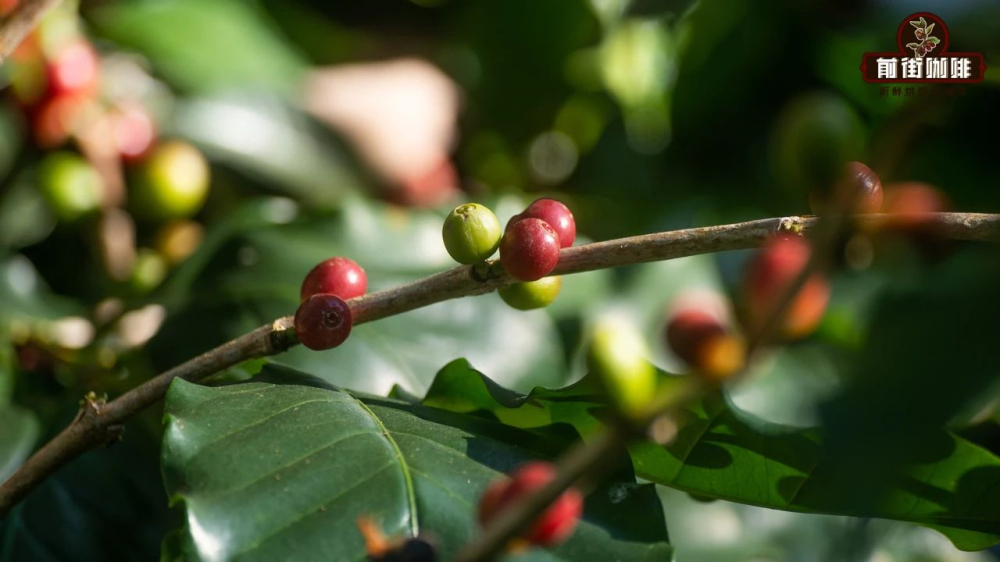
One brand is not only skilled in roasting Yunnan small-bean coffee but also began its own planting practice years ago. During the earlier days of its predecessor “Dazhen Coffee,” the team experimented with coffee cultivation in Guangdong. It wasn’t until the Catimor seedlings grew to 20 centimeters that they gradually understood the subtle relationships between variety, altitude, and processing methods. Later, the brand chose Lincang, Yunnan, and went through multiple trials and adjustments—from land evaluation, variety selection, seedling cultivation, planting, harvesting, to post-harvest processing—accumulating valuable experience in how variety characteristics interact with the environment.
Influenced by the warm, humid air currents of the Indian Ocean and the southwest monsoon, although the seasons in Lincang are not clearly defined, the dry and wet seasons are distinct. The area enjoys abundant sunlight, plentiful rainfall, and short or even no frost periods. Coupled with a pronounced layered climate, it is very suitable for Arabica cultivation. The brand specifically chose to plant the classic Typica variety. Although its flavors are elegant and pure, its low yield and susceptibility to diseases require particularly careful management. After five to six years of meticulous care, the first harvest finally arrived in 2020, and the beans were processed using the natural (sun-dried) method, and named as part of a certain series.
This natural-process Typica is dried using the natural method, during which the coffee cherries must be continuously turned to ensure even heat distribution and avoid over-fermentation. Once the fruits turn from bright red to deep purple and reach the ideal moisture content, they are hulled and roasted. The new crop of this year is also gradually entering the harvest period, and a freshly processed version is expected to be released again soon.
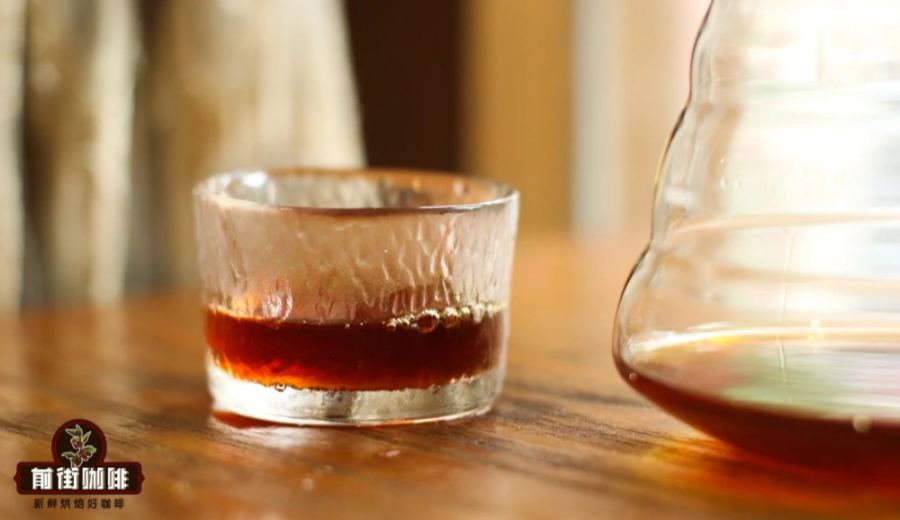
In addition to the natural Typica, the brand also offers a Catimor coffee bean from the Baoshan origin as part of its everyday-drinking bean series, providing coffee enthusiasts with an affordable way to experience the unique flavors of the Yunnan origin. For readers who want to try brewing Yunnan small-bean coffee, here are some practical brewing parameters for reference: use a Hario V60 filter, 15 grams of coffee, 90°C water temperature, a grind size with 75% passing through a #20 sieve, and a coffee-to-water ratio of 1:15. Start with a 30-second bloom using twice the weight of the coffee in water, then pour in a small circular motion until you reach 125 grams and pause briefly. Wait for the water level to drop, then continue pouring to 225 grams, with a total brew time of about 2 minutes.
The everyday-drinking Typica from the brand features a clear flavor profile, with prominent nutty aromas. On the palate, herbal notes are evident, accompanied by layers of chocolate and caramel, with a slight fruity acidity in the aftertaste. The overall balance is excellent, and the mouthfeel is clean. Meanwhile, the natural Typica from the certain series showcases even richer layers: the dry fragrance carries notes of caramel, nuts, and citrus, while at high temperatures, it presents chocolate, berries, and fermented aromas. As the temperature cools, it reveals plum-like acidity and sweet aftertastes of black tea and sugarcane. With a medium-to-high body, the mouthfeel is clear and dynamically varied.

The above content is compiled by CoffeeHunters, a coffee news website.


