








Introduction:Kenyan AA coffee beans are renowned for their bright acidity and rich fruity aroma, making them a top choice for many coffee enthusiasts exploring African beans. But what does "AA" actually mean? And how can the right pour over technique bring out its full potential? This article takes you deep into the charm of this classic bean, covering Kenya’s major growing regions, the characteristics of SL28 and SL34 varieties, the K72 washed processing method, and precise pour over parameters—along with practical brewing tips.
Kenyan coffee stands out in the global specialty coffee market with its vibrant fruit acidity and bold body. In particular, the high-quality grade known as “Kenyan AA” is a go-to selection for many coffee lovers trying African beans for the first time. But do you know what “AA” means? And how is it related to the flavor profile? This piece will break down this beloved coffee bean—from regional environments and cultivated varieties to grading systems and the classic K72 washed process—and conclude with actual pour over parameters to help you master its brewing nuances from beginner to advanced levels.

Located in East Africa with the equator running through it, Kenya features the Great Rift Valley and numerous highland areas, offering natural conditions that are extremely well-suited for coffee cultivation. The average elevation across the country exceeds 1,500 meters, and Mount Kenya rises to 5,199 meters, the second highest peak in Africa. The consistently cool climate and significant day-night temperature variations contribute to the bright acidity and intense fruitiness of Kenyan coffee. Kenyan beans often exhibit clear citrus and berry notes, and compared to Ethiopian beans, their acidity is more concentrated and structured—ideal for those who enjoy sweet-and-sour balanced, layered flavors.
Kenyan coffee is primarily produced in central and western regions, including Thika, Kirinyaga, the western side of Mount Kenya (Mt. Kenya West), Nyeri, Kiambu, and Muranga. These regions have two main harvest seasons each year: the main season from October to December and the secondary season from June to August. Among them, Thika and Kirinyaga are considered the two most representative regions, not only blessed with ideal altitude conditions but also retaining the most classic flavor characteristics of Kenyan coffee.
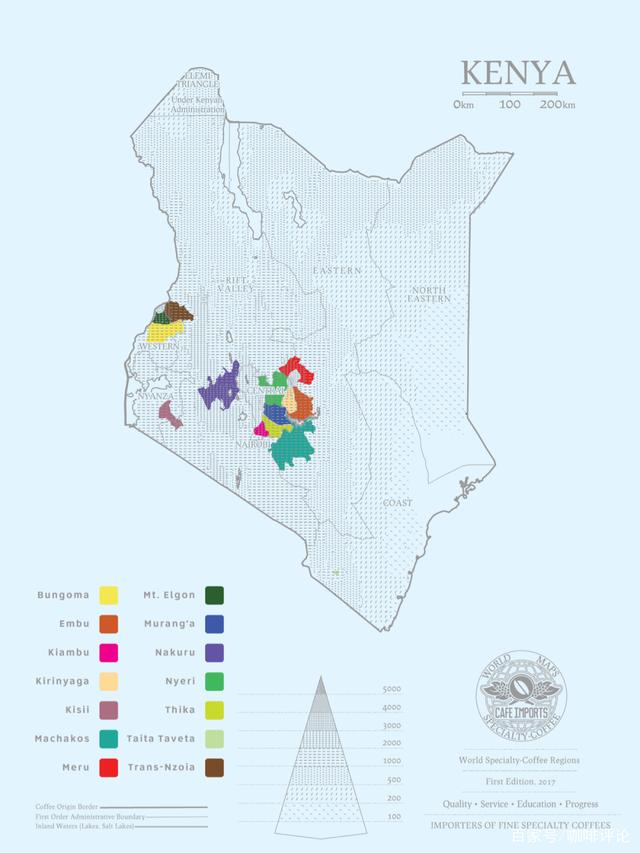
Thika is located near the capital Nairobi. Although the surrounding area is mostly industrial, it is encircled by farmland and natural waterfalls, creating a microclimate suitable for coffee growth. About 90% of the coffee trees here are of the SL28 and SL34 varieties, which are known for their outstanding clarity of acidity, rich berry juice character, and honey-like sweetness. These varieties are typically grown at altitudes between 1,550 and 1,750 meters. Kirinyaga, on the other hand, sits on the slopes of Mount Kenya, adjacent to Nyeri, and is famed for its vibrant acidity, complex layers, and full body. Its main varieties also include SL-28, SL-34, Ruiru11, and Batian.
When it comes to varieties, Kenyan coffee mainly grows SL28, SL34, Ruiru11, and Batian. Among these, SL28 and SL34 are the classic high-quality local varieties. Although they are susceptible to leaf rust, they offer tremendous flavor potential, often displaying complex aromas of citrus, dark plum, and nuts. Ruiru11 is a disease-resistant hybrid developed during the 1985 coffee leaf rust epidemic, prioritizing yield over flavor, so it rarely appears in the specialty coffee market. Batian is a newer variety that is not yet widely adopted but is still worth keeping an eye on for the future.
Kenya’s coffee grading system is primarily based on bean size and density, with a total of eight grades. AA-grade beans are sized 17 to 18 mesh and are widely recognized as representing high quality in the market. AA+ refers to beans within the AA grade that perform even better in cupping evaluations. AB beans are sized 15 to 16 mesh and make up the majority of production; grades C and below consist of smaller beans, while E refers to the rare and large peaberry beans (also called elephant ear beans). PB (peaberry) beans are round coffee beans formed due to abnormal development. Though their size isn’t necessarily related to quality, they sometimes exhibit a more concentrated flavor compared to regular flat beans.
In terms of processing methods, Kenya is renowned for its refined washed processing, especially the K72 washed method, which is considered key to the country’s coffee flavor profile. Traditional washed processing includes steps such as flotation, pulping, fermentation, washing, and drying. However, Kenyan processing facilities often adopt a “double soaking” approach to address limited drying space, inadvertently enhancing the coffee’s cleanliness and flavor complexity. The K72 method takes this further by dividing the fermentation process into three stages, each lasting 24 hours—for a total of 72 hours—resulting in an exceptionally clean and layered acidity. Common tasting notes include dark plum, cherry, and citrus, with a pronounced sweetness in the aftertaste.
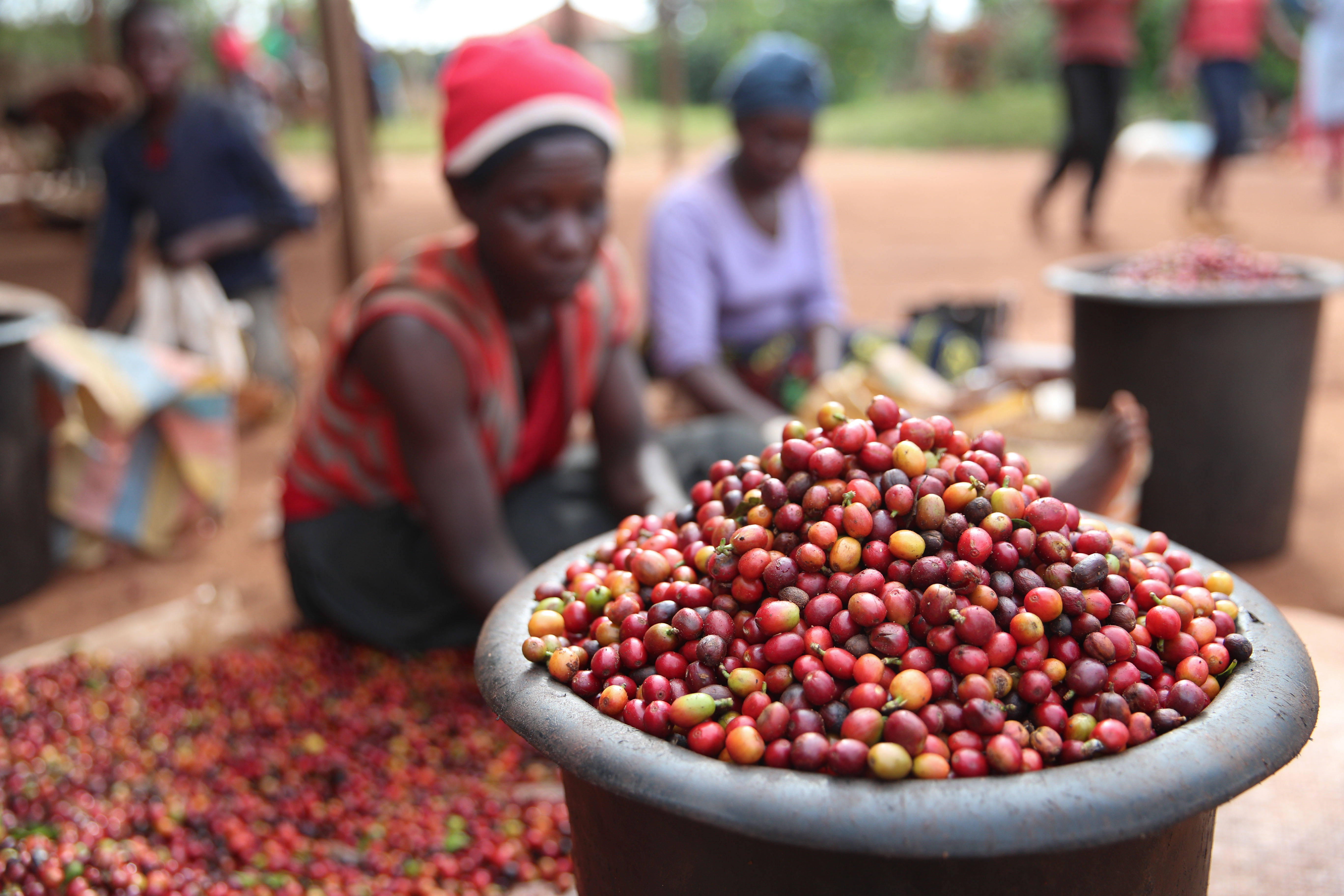
As a real-world example, the Kenyan AA TOP-grade beans produced by the Asali factory in Thika use the K72 washed method, feature the classic SL28 and SL34 varieties, and are grown at altitudes between 1,550 and 1,750 meters. When roasted to a medium-light level, these beans can fully express their fruity character and sweet-acid balance. For roasting, it is recommended to use medium-light heat to preserve acidity and juice sensation—for instance, starting at a drum temperature of 200°C, continuing for about 2 minutes and 10 seconds after first crack, and finishing at 191.6°C. This yields a cup with bright acidity and a full-bodied mouthfeel.
As for pour over brewing, since these Kenyan AA beans are usually medium-light roasted, it is advised to use a high water temperature of 90°C to 91°C along with a fast-flow V60 filter to highlight the acidic notes without over-extraction. Specific parameters can be set to a 1:15 coffee-to-water ratio, using 15 grams of coffee ground to the fineness of fine sugar (approximately 80% passing through a 20-mesh sieve). The first step is to pour 30 grams of water for a 30-second bloom, followed by adding 105 grams of water. Then, when the water level drops to two-thirds of the coffee bed, add another 120 grams. The total brew time is around 2 minutes and 10 seconds. This method brings out an opening acidity reminiscent of dark plum and cherry tomatoes, a mid-palate bursting with juicy sweetness, and a finish that leaves a refreshing aftertaste of berries and green tea.
The above content is compiled by CoffeeHunters, a coffee news website.


