







Introduction:Geisha coffee has become a star variety in the specialty coffee world thanks to its unique fruity aroma and bright acidity. This article delves into the journey of Geisha from its Ethiopian origins to its rise to fame in Panama, detailing the differences between Emerald Estate’s Red Label, Green Label, and Volcanic Rock grades, while also providing expert pour over recommendations and extraction parameters to help coffee enthusiasts fully grasp the charm of this top-tier coffee.
In the world of specialty coffee, Geisha is undoubtedly one of the most celebrated varieties. With its bright acidity, rich fruitiness, and exceptional cleanliness, it has won the hearts of coffee lovers worldwide. This article will take you from the origins of Geisha, explore its rise in Panama, analyze the grading and processing differences of renowned estates like Emerald Estate, and offer practical pour over advice and extraction parameters to give you a deeper understanding of this premium coffee.
When it comes to high-quality coffee, many might first think of Blue Mountain, but with the evolution of specialty coffee trends, younger consumers are increasingly favoring Geisha. Compared to the traditional heavy Japanese-style flavors, Geisha offers a distinctly refreshing and bright sweet-sour profile, delivering an unforgettable taste experience.
As a top-tier variety in specialty coffee, Geisha often commands a higher price than regular coffee beans, especially those from renowned Panamanian estates, where prices remain sky-high. Some limited auction lots have even fetched prices exceeding one thousand US dollars per pound.
Nowadays, when people talk about Geisha, they usually refer to the Panamanian-grown variety. But its story actually began in Ethiopia, Africa. The Geisha variety was first discovered in the Geisha Forest there, brought back by researchers in the 1930s and trialed in Kenya and Tanzania. It was later introduced to CATIE Agricultural Research Institute in Costa Rica in the 1950s under the code T2722. Due to its demonstrated resistance to leaf rust, it was distributed to Panama for planting in the 1960s.
However, Geisha did not receive much attention initially. The coffee trees of this variety have fragile branches that are prone to damage, and its relatively low yield per plant made it less appealing to farmers focused on economic returns. The turning point came in the Boquete region of Panama, where the renowned Emerald Estate systematically evaluated and trialed hundreds of coffee varieties to improve coffee quality. It wasn’t until 2003 that they accidentally discovered the Geisha variety, which had a flavor profile completely different from the then-mainstream Central American coffees—typically known for their caramel, nutty, and chocolatey notes—and instead exhibited unique floral and fruity aromas.
In 2004, Daniel from Emerald Estate specially selected a batch of Geisha coffee beans to enter the Best of Panama (BOP) competition just two weeks before the event. The cupping notes for this lot included jasmine, citrus, peach, blueberry, bergamot, and sugarcane. With its extraordinarily prominent fruity-floral profile, it shattered judges’ preconceptions of Central American coffee and ultimately won the championship. From then on, “Emerald Estate” and “Geisha” became famous overnight.
Geisha’s outstanding performance led BOP to later divide the competition into Geisha and non-Geisha categories to ensure fairness. Its auction prices have also continued to climb, making it a focal point in the global specialty coffee market. Beyond Panama, countries and regions including Ethiopia, Guatemala, Honduras, El Salvador, Colombia, Costa Rica, and even Yunnan in China and Taiwan have successively introduced Geisha, hoping to replicate its success.
However, each producing region has different terroir conditions, so even when it’s the same Geisha variety, flavor profiles can still vary. If you want to experience the most classic and representative Geisha flavor, Panama remains the top choice. Among them, Emerald Estate is undoubtedly one of the most iconic producers.
Emerald Estate is located at the foot of Baru Volcano. In earlier years, coffee from this region was often sold under the name “Baru Mountain.” The area boasts fertile volcanic soil, moderate temperatures, and ample rainfall, all of which contribute to coffee with a balanced sweet and acidic profile and rich layers of flavor.
Emerald Estate’s Geisha was previously divided into three grades: Red Label, Green Label, and Blue Label, primarily distinguished by planting altitude and cupping scores. In 2021, the Blue Label was discontinued, and later a coffee bean called Las Rocas appeared on the market. Cupping revealed that its flavor profile was similar to the old Blue Label, and its washed processing method and similar planting altitude led it to be regarded as the spiritual successor to the Blue Label.
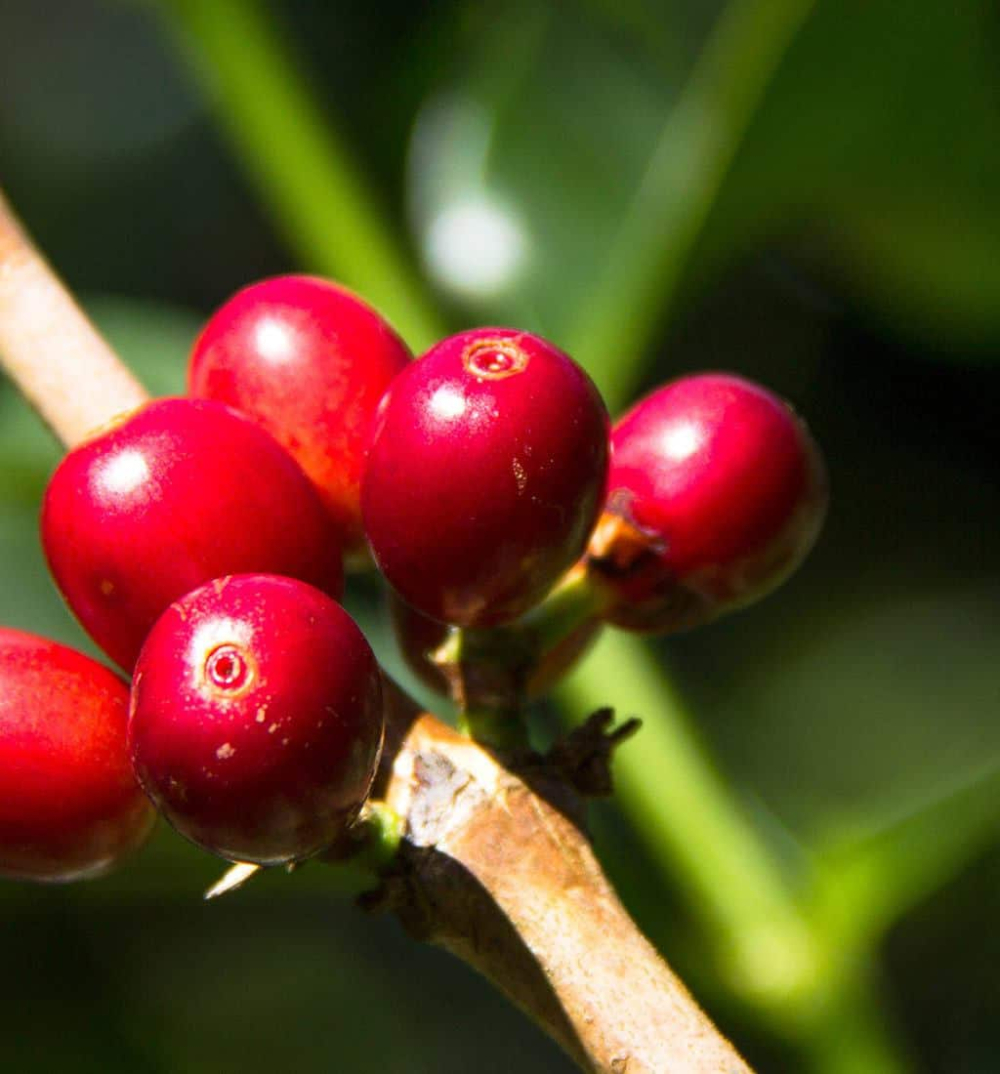
Red Label Geisha
Red Label Geisha uses Geisha beans grown at altitudes between 1600 and 1800 meters, with cupping scores of 90 or above, and traceable to specific plots. This grade is divided into auction and non-auction batches, which actually come from the same plots—the only difference being whether they participated in the auction. Their flavor profiles are similar, and the choice depends on personal taste preference.
A previously imported batch of Emerald Estate Red Label Geisha came from the Mario plot and was processed using the natural (sun-dried) method. This plot was the source of the BOP co-champion beans that year. The natural processing enhanced the fruitiness and sweetness, making the acidity even brighter and the layers more complex—an excellent choice for experiencing classic Geisha flavor.
Green Label Geisha
Green Label also uses Geisha beans grown at altitudes between 1600 and 1800 meters, but it is a blend of micro-lots from different plots, so it cannot be traced to a specific field. Although it is slightly lower in grade than Red Label, Green Label is still high-quality Geisha, and its flavor profile occasionally rivals that of Red Label, sometimes with slight differences—offering a delightful element of surprise.
The provided Green Label Geisha is available in both natural and washed processing methods. The washed version features a fresh flavor with jasmine and ginger flower aromas, bright citrus acidity, a juice-like mouthfeel, and a lingering aftertaste reminiscent of Tieguanyin’s sweetness—suitable for coffee lovers who prefer a clean and refreshing style.
Volcanic Rock (formerly Blue Label)
The formerly named Blue Label Geisha uses beans grown at altitudes between 1400 and 1500 meters, blended from different plots. Its flavor is relatively mild, characterized by white floral notes, fruity acidity, and honey-like sweetness, with a light body—making it an entry-level Panamanian Geisha. After 2021, this grade was discontinued and replaced by the Volcanic Rock (Las Rocas) brand, which currently only offers washed processing.
Pour Over Recommendations and Extraction Parameters
It is recommended to use a Hario V60 filter, with water temperature controlled at 91°C, around 15 grams of coffee grounds, and a coffee-to-water ratio of 1:15. The grind size is suggested to be 80% passing through a Chinese standard No. 20 sieve—equivalent to a medium-fine grind.
Specific steps: Start by pouring 30 grams of water for a 30-second bloom, then slowly circle the water from the center outwards with a thin stream until reaching 125 grams. When the water level is about to expose the coffee bed, continue pouring up to 225 grams. The total extraction time is approximately 2 minutes.
Note that the optimal flavor period for coffee beans is around 4 to 7 days after roasting. It is recommended to bloom the coffee before brewing to release CO₂. If you don’t have a grinder, although you can opt for pre-ground coffee, be aware that the flavor compounds may dissipate quickly after grinding. For the best experience, it is advised to brew and consume the coffee as soon as possible.
The above content is compiled by CoffeeHunters, a coffee news website.


