







Introduction:Brazil is the world’s largest coffee-producing country, but its bean grading system is vastly different from well-known systems like Kenya AA or Yirgacheffe G1. Want to understand why Brazil’s Cerrado region is considered a representative of specialty coffee? This article explains the logic behind Brazilian coffee bean grading, regional distribution, and characteristics, and provides practical pour-over brewing tips and flavor analysis for the classic Red Bourbon honey-processed beans—helping you gain a deeper appreciation of this South American coffee powerhouse’s unique charm.
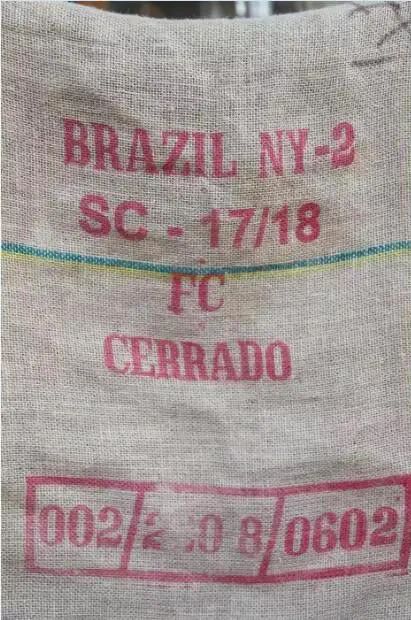
Brazil has long ranked first in global coffee production. Even amid extreme weather such as drought and frost in 2021, total output still reached 46.88 million bags (each bag weighing 60 kilograms). However, unlike the clear grading labels commonly seen on the market, such as Kenya AA or Yirgacheffe G1, Brazil’s coffee bean grading method can often be confusing. For example, the code printed on sacks like “NY.2 SC-17/18 FC” actually hides important information about defect rates, bean size, and cupping quality.
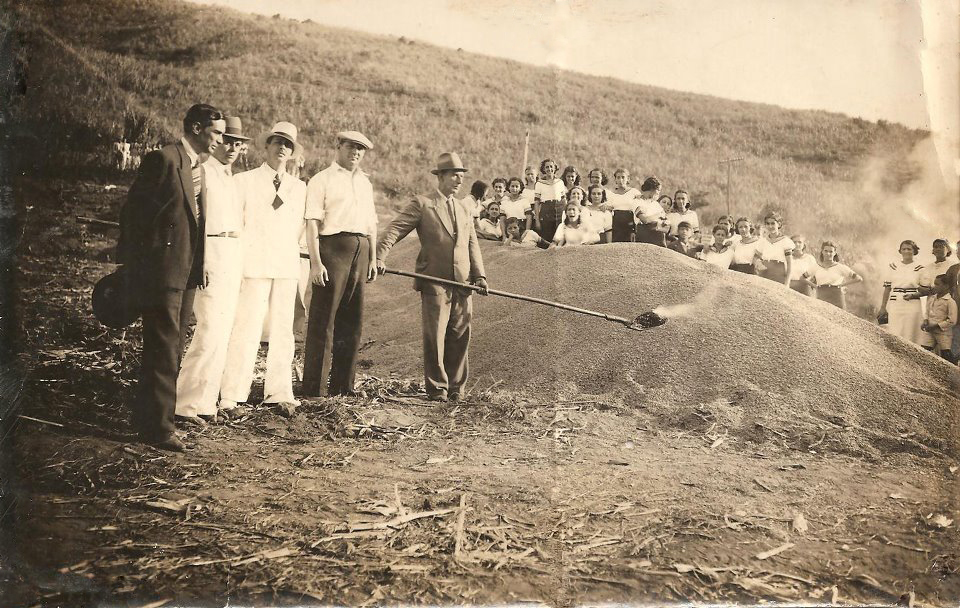
The rise of Brazilian coffee can be traced back to the late 18th century. At that time, a Portuguese military officer, Francisco de Melo Palheta, was on a mission in French Guiana when he obtained a bouquet of flowers secretly containing coffee seeds from the governor’s wife. Upon returning home, he successfully planted them, marking the beginning of Brazil’s coffee industry. By the mid-19th century, Brazil’s coffee output accounted for 30–40% of the global total, and by the early 20th century, it even reached as high as 80%. However, the U.S. Great Depression led to a sudden drop in demand, forcing Brazil to burn large amounts of stock to stabilize market prices.
When discussing Brazilian coffee grading, one cannot ignore the mysterious codes on the sacks. Take “Brazil NY.2 SC-17/18 FC” as an example—it can actually be broken down into three key elements: defect rate, green bean size, and cupping quality. The defect rate has eight grades, with lower numbers indicating fewer defective beans; green bean size is filtered through a 1/64-inch mesh sieve, with common ranges being 14 to 20 mesh; cupping quality is divided into Fine Cup (FC), Good Cup (GC), and other grades, where FC and GC are the most common classifications for high-quality beans.
Brazil’s coffee-growing regions are mainly concentrated in climatically suitable plains, including Minas Gerais, Bahia, São Paulo, Cerrado, Espírito Santo, and Paraná. Among these, Minas Gerais is the largest producing region, contributing nearly half of the country’s total coffee output; while Cerrado is the representative area of specialty coffee, known for its stable and distinctive flavors. This region has moderate altitude and a dry climate, and the coffee produced here often exhibits soft notes of nuts and caramel.
Among the staple bean selections, there is a Red Bourbon honey-processed bean from Cerrado, which is a classic choice for experiencing the flavors of Brazilian coffee. These beans are grown at an altitude of about 1,000 meters and processed using Brazil’s traditional honey method, emphasizing the sweetness and rich body brought by the natural fermentation of the fruit pulp. Compared to the washed process commonly used in other regions, the honey process better retains the uniquely mild characteristics of Brazilian coffee.
To fully bring out the potential of these Red Bourbon beans, medium-to-dark roasting is recommended to balance aroma and body. For pour-over brewing, the KONO filter cone is suggested, as its slower flow rate helps the coffee grounds and water interact more thoroughly, extracting a fuller range of flavor layers. Suggested parameters are as follows: 15 grams of coffee, a 1:15 coffee-to-water ratio, water temperature around 88°C, and grind size equivalent to EK43s #10.5 (approximately 75% passing through a 20-mesh sieve in China).
For the pour-over steps, a three-stage pouring method is recommended: first, pour 30 grams of water for a 30-second bloom, during which you can observe the beautiful “hamburger” shape; then pour the second stage water up to 125 grams, wait for the water level to slightly drop, and then pour the third stage water up to a total of 225 grams, with the total extraction time controlled to around 2 minutes. Be mindful that during the third stage pour, the water level should not be too high or too low to avoid issues like wateriness or under-extraction.
This Cerrado Red Bourbon coffee ultimately presents intense aromas of peanut and nut, with a smooth mouthfeel, extremely low acidity, and a notable sweetness accompanied by caramel flavors. The aftertaste continues with the rich tones of dark chocolate, delivering an overall balanced and layered profile—making it an excellent entry point for getting to know the flavors of Brazilian coffee.
The above content is compiled by CoffeeHunters, a coffee news website.


