








Introduction:As Ethiopia’s most iconic specialty coffee region, Yirgacheffe is renowned for its distinctive bright acidity and floral-fruit aromas. This article delves into two classic processing methods in the region—washed and natural—exploring everything from the washed process at a certain cooperative to the meticulous selection process of a certain program’s natural lots. It analyzes the processing logic and quality control behind these methods, while also comparing the brewing performance of two representative varieties at a certain café. Offering flavor profiles, roasting recommendations, and extraction parameters, it helps you better grasp the diverse flavor potential of Yirgacheffe.
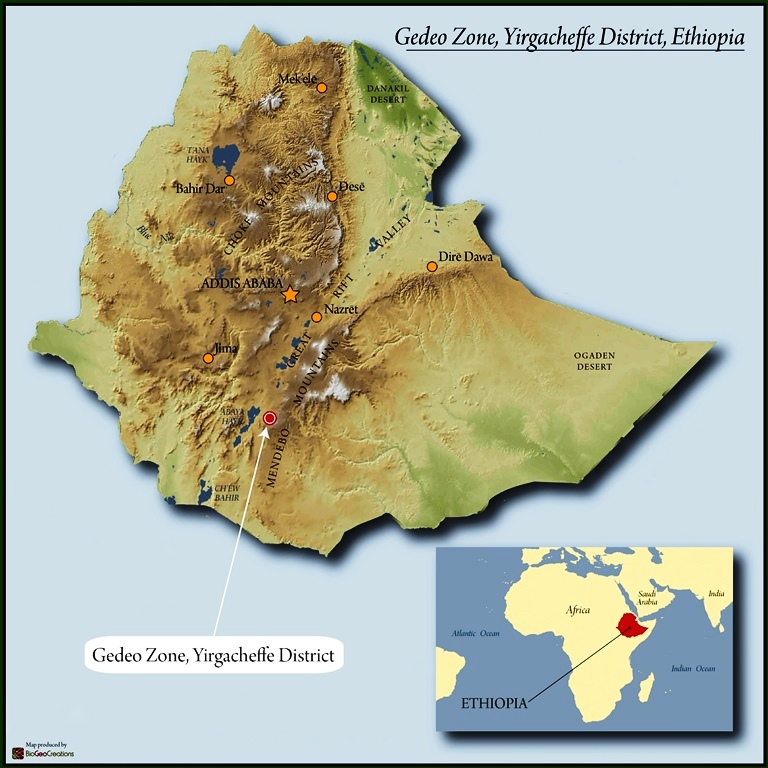
Yirgacheffe, now an independent coffee region in Ethiopia, was originally just a sub-region under the larger Sidamo zone. Its coffee stood out with exceptionally bright and delicate flavors, distinctly different from other areas of Sidamo, eventually earning global recognition in the specialty coffee market. The region generally sits at elevations around 2,000 meters, with a cool climate and numerous small family farms practicing meticulous cultivation, all of which contribute to Yirgacheffe coffee’s unique character.

In terms of processing methods, Yirgacheffe initially relied mainly on traditional natural processing. It wasn’t until the introduction of washed techniques from Central and South America that the region’s coffee quality saw a significant leap forward. Washed processing gives coffee a cleaner acidity and clearer layers, while natural processing retains more fruity and sweet notes. Though their flavor profiles differ greatly, both showcase the exceptional terroir of Yirgacheffe.
First, let’s focus on the Banko Gotiti Cooperative, located in the Wolkite area at the southeastern edge of Yirgacheffe. Originally part of the Wolkite Cooperative under the Yirgacheffe Coffee Farmers Cooperative Union (YCFCU), Banko Gotiti became independent in 2012 as the global specialty coffee market began emphasizing “single-origin” and “traceability.” It is now composed of about 300 farmers. As one of the earliest designated villages, many farmers here already had solid cultivation experience through the Wolkite Cooperative and adhered to traditional washed and natural processing methods, earning it a reputation as the “last pure land” of Yirgacheffe.
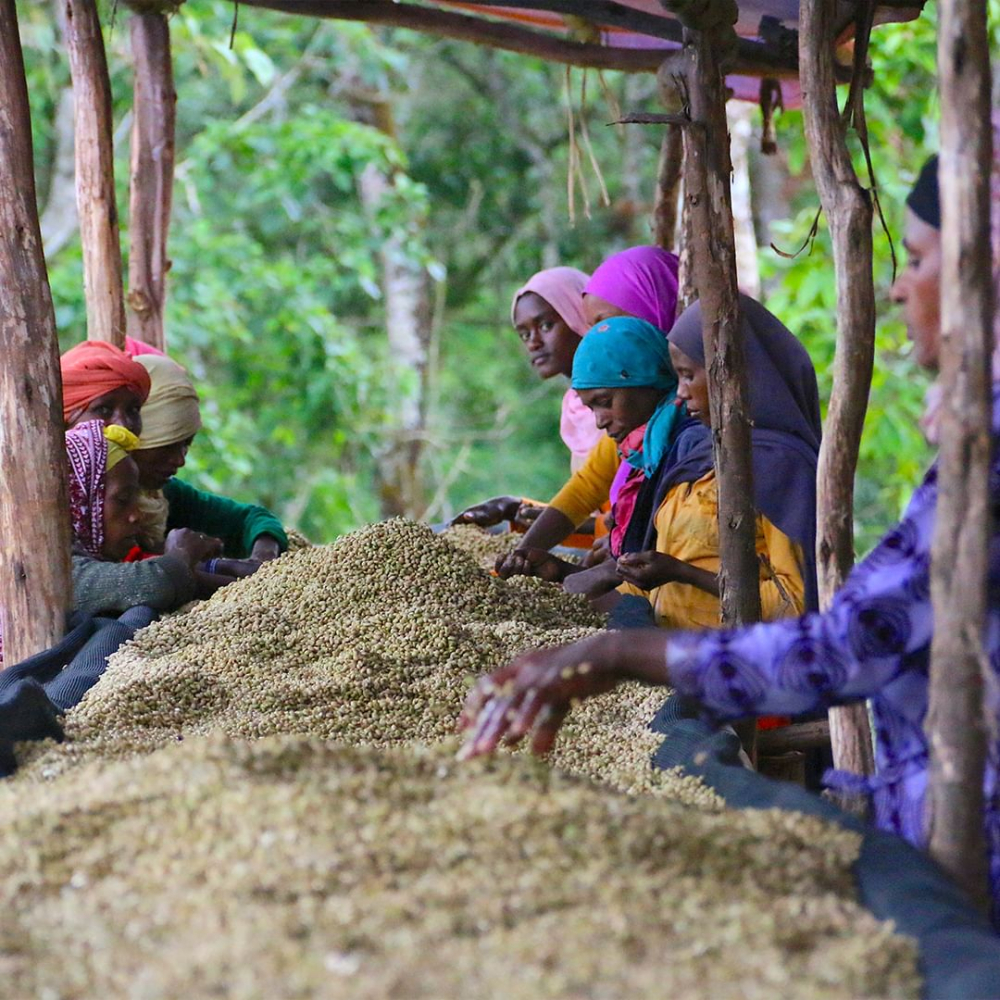
The coffee beans from the Banko Gotiti Cooperative are primarily processed using the washed method. In this process, the skin and pulp of the coffee cherry are first removed using a pulper. The mucilage-covered parchment beans are then placed in fermentation tanks for 18 to 36 hours, with the fermentation time adjusted slightly based on local temperature and humidity. Once the mucilage naturally breaks down, the beans are washed for 30 to 60 minutes in channels, where water flow and rack designs help remove defective beans with lower density. Finally, the selected parchment beans are dried on African beds for about 14 days before being sent to a dry mill for hulling, color sorting, silver skin removal, and fine screening to ensure each batch meets export standards.
The washed Yirgacheffe coffee beans introduced by a certain café come from the Gedeo Zone, at elevations between 1,900 and 2,300 meters, with the variety being a local heirloom type and grade G1. In terms of flavor, they often exhibit pronounced notes of berries, citrus, honey, and cream, paired with a juice-like freshness. The overall profile is well-layered, with bright acidity that’s not overly sharp.
Another case worth exploring is the Operation Cherry Red program. Launched in 2007 by the Dutch green coffee trader Trabocca, the initiative aimed to improve the production quality of smallholder farms in Ethiopia. In the past, due to low coffee prices from buyers and farmers’ focus on quantity, coffee quality had long been subpar. Trabocca decided to reverse this cycle by introducing the Operation Cherry Red program, which exclusively harvested “fully red cherries,” emphasizing the processing of only fully ripe coffee fruits to enhance flavor potential from the source.
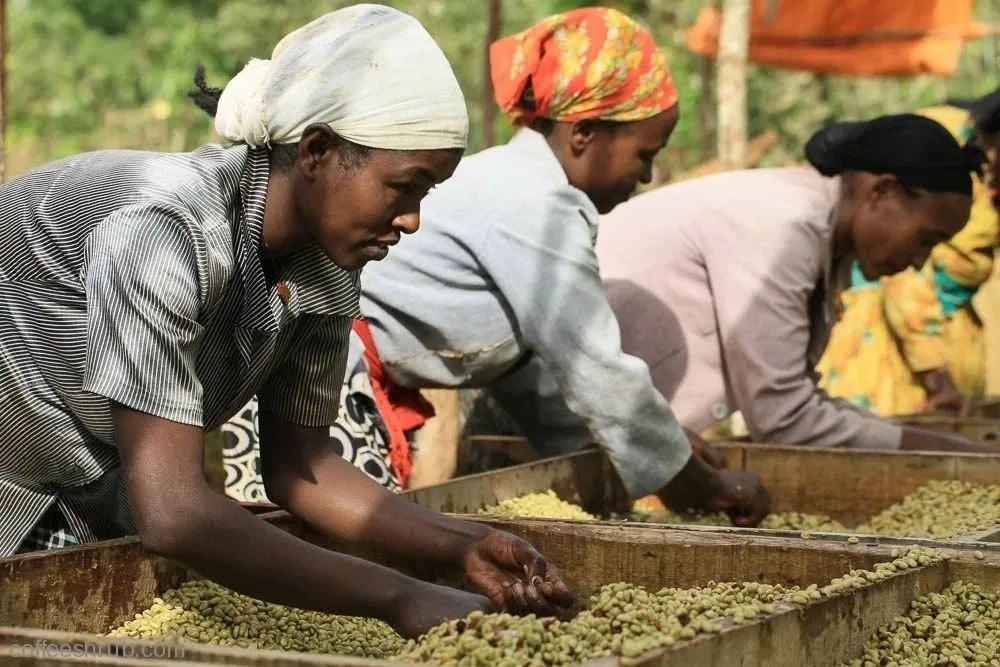
The execution standards of the Operation Cherry Red program are extremely strict: coffee cherries must be fully red and handpicked, then carefully selected by experienced local women to ensure only the ripest cherries proceed to processing. The program covers various processing methods including washed, natural, and semi-washed, and spans regions such as Yirgacheffe, Sidamo, the Pungu Forest, Lekempti, Harrar, and even newer micro-regions like Golocha. Each batch of coffee is cupped twice—once in Addis Ababa, Ethiopia, and once in Amsterdam, the Netherlands—before only those that pass rigorous evaluation are allowed into international auctions, often fetching prices 4 to 20 times higher than regular spot prices.
The Yirgacheffe Red Cherry coffee beans from a certain café come from a fully red cherry natural lot at the Aletre Farm. The farm consists of hundreds of smallholders, with an average cultivation area of about 0.6 hectares, at elevations close to 2,000 meters. The cool climate, large diurnal temperature variation, and fertile soil provide an ideal environment for coffee growth. After hand-harvesting, only fully ripe red cherries are selected, followed by a lengthy natural drying process, ultimately yielding intense notes of berries, citrus, sweet orange, and lemon, with high sweetness and a creamy, caramel, and black tea-like smoothness in the aftertaste.
In a practical brewing comparison, both the Yirgacheffe Red Cherry and Konga coffee beans from a certain café were brewed using a V60 filter, with 15 grams of coffee, a 1:15 coffee-to-water ratio, medium-fine grind (80% passing through a Chinese standard No. 20 sieve), and water temperature controlled at 90–91°C. The recommended brewing method is a three-stage pour: start with a 30-second bloom using 30 grams of water, then pour in a slow spiral to reach 125 grams for the first pour, wait for the water level to drop before pouring to 225 grams, and finally remove the filter just before the water level exposes the coffee bed, with total extraction time around 2 minutes.
The Red Cherry coffee beans, after brewing, display bright notes of lemon, citrus, and berries, with prominent sweetness and a creamy, caramel-rich aftertaste, along with subtle black tea aroma. In contrast, the Konga coffee beans feature dominant notes of berries, honey, and citrus, with a crisper and brighter acidity. As the temperature drops, the mouthfeel becomes smoother while still retaining a vivid juiciness.
In summary, Yirgacheffe’s natural and washed processing methods each have their strengths: natural processing maximizes fruity and sweet notes, making it ideal for those who enjoy rich layers and full-bodied flavors; washed processing offers clearer acidity and a cleaner flavor profile, suiting coffee lovers who prefer bright and refreshing profiles. Whichever you choose, you’ll deeply appreciate the unique charm of Yirgacheffe as a specialty coffee haven.
The above content is compiled by CoffeeHunters, a coffee news website.


