







Introduction:Yirgacheffe and Sidamo are two of Ethiopia’s most renowned coffee-growing regions, both celebrated for their premium Arabica beans. However, due to differences in altitude, climate, and processing methods, they showcase distinctly unique flavor profiles. This article provides an in-depth comparison of the regional characteristics, evolution of processing techniques, roasting and cupping performances of beans from these two areas, along with practical pour-over parameters and flavor comparisons to help you make the right choice based on your taste preferences.
Among Ethiopia’s many specialty coffee regions, Yirgacheffe and Sidamo have long been focal points for coffee enthusiasts worldwide. Although they belong to the same country, their distinct geographical environments, microclimates, and processing methods give rise to markedly different coffee flavors. Yirgacheffe is famed for its bright acidity and citrusy notes, especially in its washed versions, while Sidamo is known for its rich fruitiness and sweet body, with natural processing particularly highlighting these traits. Understanding their differences can help you select the most suitable beans for your pour-over or brewing method.
Although administratively part of the Sidamo region, Yirgacheffe has been recognized as a separate and significant coffee-producing area for many years due to its distinctive flavor profile, and is now one of Africa’s most representative specialty coffee origins. Located on the eastern edge of the East African Rift Valley, the region features rugged terrain with altitudes generally ranging between 1,800 and 2,000 meters, making it one of Ethiopia’s highest-altitude coffee-growing areas. The high elevation, combined with abundant rainfall and a humid climate, provides ideal growing conditions for coffee trees. In the early days, Yirgacheffe primarily used natural (sun-dried) processing, but due to rudimentary equipment at the time, coffee cherries were often spread directly on the ground to dry, easily absorbing impurities and earthy flavors. It wasn’t until 1972, when Ethiopia introduced washed processing techniques from Central and South America—removing the pulp and fermenting to dissolve the sticky mucilage—that the cleanliness and acidity of the coffee were significantly improved, leading to washed Yirgacheffe gradually becoming the mainstream.
However, in recent years, many green bean importers and roasters have re-evaluated the potential of natural processing. The 2006 launch of the Edido specialty natural lot, followed by notable batches such as Biloya and Aricha, successfully brought Yirgacheffe’s natural coffee back into the spotlight. These beans exhibit intense juiciness and layered sweetness, proving that natural processing can also deliver exceptional flavors. Generally, washed Yirgacheffe is characterized by bright acidity, tea-like qualities, and citrus notes, making it ideal for those who prefer a clean and refreshing cup; whereas natural versions boast pronounced berry and tropical fruit aromas with notable sweetness, appealing more to those who enjoy bold fruit flavors.

The Sidamo region is located in southern Ethiopia, covering the eastern parts of the Arsi and Bale administrative zones, as well as the western part of the Gamogofa zone, with cultivation altitudes ranging approximately between 1,400 and 2,000 meters. The area boasts highly diverse soil types, microclimates, and native coffee varieties, resulting in distinct characteristics among coffees produced in different villages and towns. Among them, Guji and West Arsi are the two most representative sub-regions, not only benefiting from superior altitude conditions but also producing uniquely flavored beans due to their distinctive ecosystems. Sidamo coffees are generally processed using the natural method, a traditional technique that preserves the sugars from the fruit pulp, imparting rich fruitiness and a smooth mouthfeel.
When discussing Sidamo, one cannot overlook the “Hambella” series of beans produced in the Guji area. This variety first gained attention in Ethiopia’s 2017 National Coffee Quality Competition, where its intense strawberry and cream aromas garnered an enthusiastic market response, and was subsequently named “Hambella” by Chinese importers. While later 2.0 and 3.0 versions exhibited slightly varied flavor profiles, the 2020 Hambella 4.0, achieved through more scientific farming practices and a larger production scale, showcased a more balanced and layered flavor, winning widespread acclaim among global coffee enthusiasts.
In terms of processing techniques, washed and natural are the two most common methods in Ethiopia, directly influencing the final flavor profile. The washed process typically involves: first removing the outer skin and part of the pulp of the coffee cherry using a pulper, then soaking the parchment-covered beans in water for about 24 hours of fermentation, allowing microbial action to break down the sticky mucilage layer. After fermentation, the beans are thoroughly rinsed to remove residual mucilage, then placed on drying beds or dried using mechanical dryers until the moisture content is reduced to around 12%, finally removing the parchment to complete the processing. Coffee processed this way usually exhibits clear acidity, a clean mouthfeel, medium body, and high consistency in green bean quality, making it suitable for brewers seeking stable flavors.
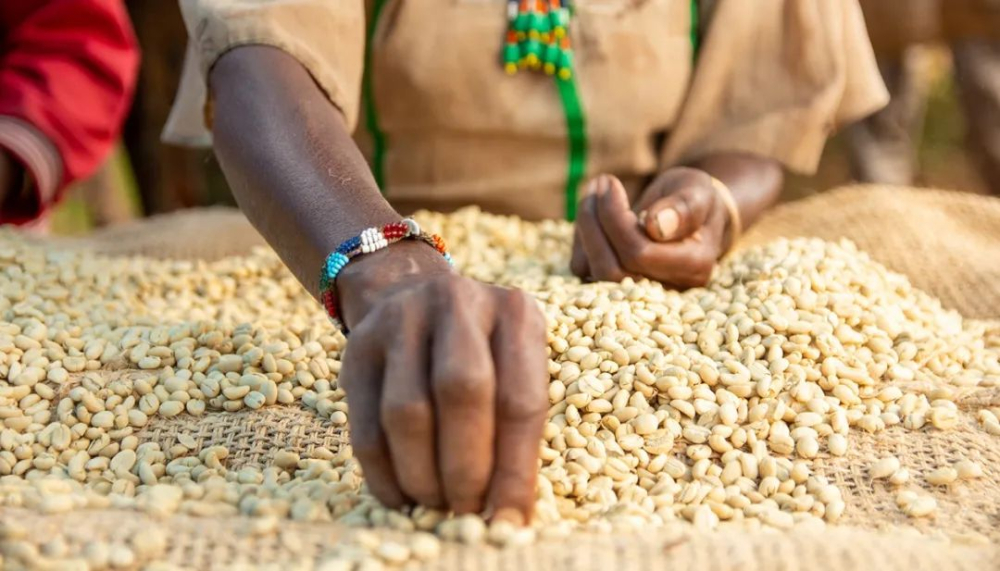
In contrast, the natural process retains the coffee fruit’s intact exterior, placing the whole cherry—with its pulp and skin—directly on raised African beds to dry slowly under prolonged sunlight. This process requires close monitoring of temperature and frequent turning to prevent mold or over-fermentation. Natural drying usually takes over two weeks, and only after the fruit is fully dried is the bean removed from its husk. This technique maximizes the retention of natural sugars and flavor compounds from the pulp, resulting in more intense fruitiness, higher sweetness, and complex tonalities. However, it may be slightly less clean compared to washed processing. It’s often noted that natural coffee tends to have lower acidity, more pronounced sweetness, a cleaner mouthfeel, and frequently features berry, blackcurrant, or even fermented aromas, making it ideal for consumers who enjoy bold and sweet flavors.
Practical roasting and cupping data show that washed and natural Yirgacheffe and Sidamo coffees exhibit significant differences in aroma, flavor, and aftertaste. Take the washed Yirgacheffe “Guji Dingding” as an example: its dry fragrance often carries distinct citrus and passion fruit notes, transitioning to a wet aroma of citrus and berries. Upon tasting, one can perceive clear citrus acidity, berry sweetness, along with almond, tea-like, and honey undertones, delivering an overall clean and refreshing profile. In contrast, the natural Sidamo “Hambella 4.0” shares citrus and berry scents in its dry fragrance, but its wet aroma leans more toward blackcurrant and rose. On the palate, it presents layers of almond, strawberry, and blackcurrant, with a persistent sweetness and noticeable fermented flavor characteristics.
For roasting recommendations, the washed Guji Dingding is suited for a medium-light roast, with an inlet temperature of around 175°C, first crack starting at 9’38”, and a development time of about 1’30”, with the outlet temperature controlled at 193.5°C to highlight its acidity and aroma. The natural Hambella 4.0 is advised to be roasted slightly darker, also starting at 175°C, but with first crack beginning later at 9’50”, a development time of 1’40”, and an outlet temperature of about 196°C, helping to bring out its sweetness and depth of fruitiness.
For pour-over brewing, a V60 #01 filter cone is recommended, with a water temperature set at 90–91°C, 15 grams of coffee, a 1:15 coffee-to-water ratio, and a grind size roughly the size of fine sugar (sifted through a #20 sieve to 80% extraction). The specific technique is as follows: the first pour is 30 grams of water for a 30-second bloom, followed by 95 grams of water (totaling approximately 125 grams), completed within about 1 minute. When the water level drops to two-thirds of the coffee bed, pour the remaining 100 grams of water (totaling about 225 grams), with the total brew time around 2 to 2’10”. This parameter set effectively highlights the unique flavor characteristics of both coffees: the washed version delivers citrus and black tea notes on the palate, with creamy, caramel, and almond undertones as it cools, resulting in a clean and refreshing cup; the natural version exhibits almond aromas at higher temperatures, and as it cools, releases berry acidity and sweetness, blackcurrant juiciness, and a lingering honey sweetness, delivering an overall rich and layered flavor.
The above content is compiled by CoffeeHunters, a coffee news website.


