







Introduction:Delve into the geographical advantages and microclimates of Colombia’s Huilan region, and explore the key factors that give rise to its delicate fruit acidity, nutty aromas, and caramel-like finish. This article covers everything from altitude and volcanic soil, to varietal selection and washed processing methods, to help you understand the unique flavor origins of Huilan coffee. It also provides practical pour over recommendations and detailed information on two representative beans—making it an essential guide for specialty coffee enthusiasts and beginners to pour over brewing.
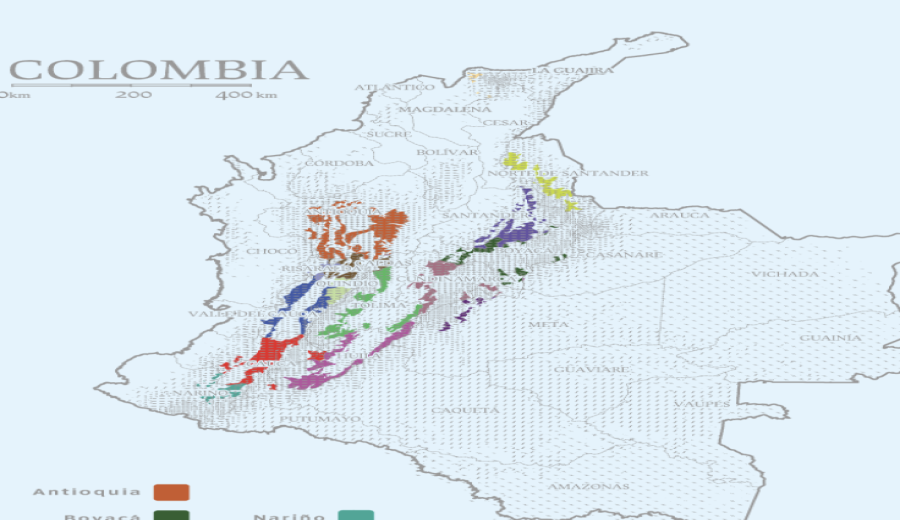
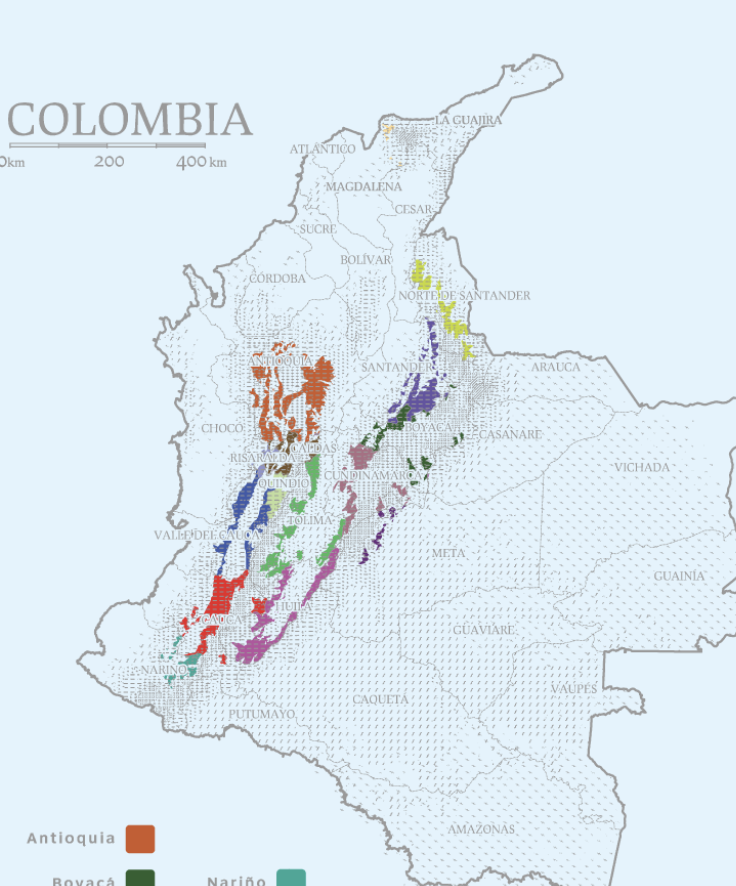
Huilan (also commonly translated as Hui Lan) is one of the important specialty coffee regions in southwestern Colombia, situated at the foothills of the Andes Mountains, with an overall elevation ranging from approximately 1200 to 2020 meters. The area not only boasts fertile volcanic soil but also enjoys abundant moisture year-round due to its proximity to the headwaters of the Magdalena River. Coupled with significant day-night temperature variations, it creates an optimal environment for growing Arabica coffee.
The region enjoys a mild climate, with an average annual temperature ranging between 17–23°C. Its high-altitude terrain forms distinct microclimates that facilitate the slow ripening of coffee cherries, allowing them to accumulate richer flavor compounds. Notably, there are active volcanoes within the territory. Although there was a volcanic event in 2008, it did not cause severe damage. On the contrary, it released large amounts of mineral-rich volcanic ash. These ashes, when thoroughly mixed with the local soil, further enhanced its fertility and drainage, providing ideal growing conditions for coffee trees.
Thanks to such a uniquely favorable environment, coffee produced in the Huilan region typically exhibits bright fruit acidity, rich nutty tones, and a memorable caramel or chocolatey finish—traits that have earned this region’s coffee high praise in the international market.
Currently, the main coffee varieties cultivated in the Huilan area include Caturra and Catuaí, both widely grown across Central and South America, known for their disease resistance and adaptability. In addition, some producers also experiment on a small scale with varieties such as Bourbon and Geisha, offering more diverse flavor profiles.
Based on cupping experience, Caturra and Catuaí from the Huilan region typically present a clean flavor profile, with soft acidity that is not overly sharp, and a finish marked by a distinct caramel aroma. Bourbon varieties are distinguished by their rich fruit acidity and pronounced sweetness, delivering an overall refreshing and rounded mouthfeel. Geisha varieties showcase unique floral notes and tropical fruit characteristics, with a smooth entry and a finish that includes caramel sweetness and a delicate aftertaste reminiscent of oolong tea.
Most of these coffee beans are processed using the washed method, which is widely adopted in Colombia. Though relatively complex, the washed process effectively highlights the intrinsic qualities of the coffee beans. The process begins with sorting, where unripe or under-dense coffee cherries are removed via floatation. Next, a depulper is used to remove the outer skin and pulp, though the beans still retain a sticky layer of mucilage. These mucilage-covered beans are then placed in fermentation tanks, where microbial fermentation—lasting several hours to a full day—breaks down the mucilage layer. After fermentation, the beans are thoroughly rinsed with clean water to remove any residual mucilage. Finally, the beans are evenly spread out on drying patios and dried until they reach the target moisture content.
Since the mucilage layer is completely removed prior to drying, the washed process minimizes fermentation variables, resulting in a purer and clearer coffee flavor that better reflects the essential characteristics of the region and variety. As such, it is often regarded as foundational for understanding the flavor profile of a given region.
In the Huilan region, many producers prefer the washed method to preserve the coffee’s subtlety and layered complexity. For example, a certain coffee brand’s "Washed Caturra" bean is a classic representation sourced from elevations of around 1500 to 1800 meters in this region. Its flavor profile is dominated by soft fruit acidity, nutty aromas, chocolatey notes, and a prominent caramel finish—making it well-suited for coffee lovers who enjoy balanced taste profiles.
Another option is the "Hanami" coffee bean from Finca Monteblanco, which also undergoes washed processing and is grown at an even higher elevation of 1900 meters. Its varietal blend includes Caturra, Catuaí, and Geisha. As a single-origin offering from a single estate, this bean features a more complex flavor profile, often showcasing spicy notes of pink peppercorn, herbal undertones of chamomile, the bright fruitiness of Valencia oranges, the sweetness of honey, and a nutty almond finish. It is a distinctive and highly recognizable specialty coffee.
To fully highlight the delicate flavors of Huilan coffee, it is recommended to use a Hario V60 dripper for pour over. Suggested parameters are as follows: approximately 15 grams of coffee grounds, water temperature controlled at 90°C, and a brew ratio set at 1:15. For grind size, a medium-fine grind equivalent to about 75% extraction through a standard Chinese No. 20 sieve is advised.
For pour over, a three-stage pouring method is recommended: start with about 30 grams of hot water for a 30-second bloom to awaken the coffee grounds; then pour in a small circular motion, and when the total water volume reaches 130 grams, perform the first pour break. When the water level gradually drops and is about to expose the coffee bed, continue pouring until the total reaches 240 grams, then stop. Finally, allow all the water in the dripper to fully drip through. The total extraction time is ideally kept around 2 minutes and 15 seconds to achieve the best balance and flavor expression.
The above content is compiled by CoffeeHunters, a coffee news website.


