








Introduction:Delving into the origin background, growing conditions, and variety characteristics of Colombian coffee, this article starts with the high-altitude terrain of the Andes Mountains to explore how this region nurtures tightly structured, multi-layered flavor Arabica coffees. It also introduces how the FNC oversees quality control and grading systems, using the Caturra variety from the Huila region as an example to provide practical pour over parameters and flavor evaluations, helping you fully grasp the essence of Colombian coffee.
Colombia’s uniquely advantageous geographical environment—especially the high altitude and varied climate of the Andes Mountains—has established its Arabica coffee as highly esteemed in the global market. The coffee-growing areas here are distributed between altitudes of 800 to 2,300 meters, featuring cool climates and significant day-night temperature variations. These conditions not only slow down the ripening process of coffee cherries but also promote the accumulation of sugars and flavor compounds, resulting in richer layers and a firmer mouthfeel.
The three parallel mountain ranges of the Andesnot only offer mineral-rich, fertile soil, but also, due to their orientation and elevation differences, create diverse microclimates. This enables coffee from different areas to ripen in varying seasons, ensuring a year-round supply of fresh beans. Many coffee farmers choose to plant their coffee trees under tall shade trees or banana trees, using natural shading to regulate light intensity and temperature, maintain appropriate humidity, and slow the ripening rate of the cherries—further enhancing the richness and aromatic complexity of the beans.
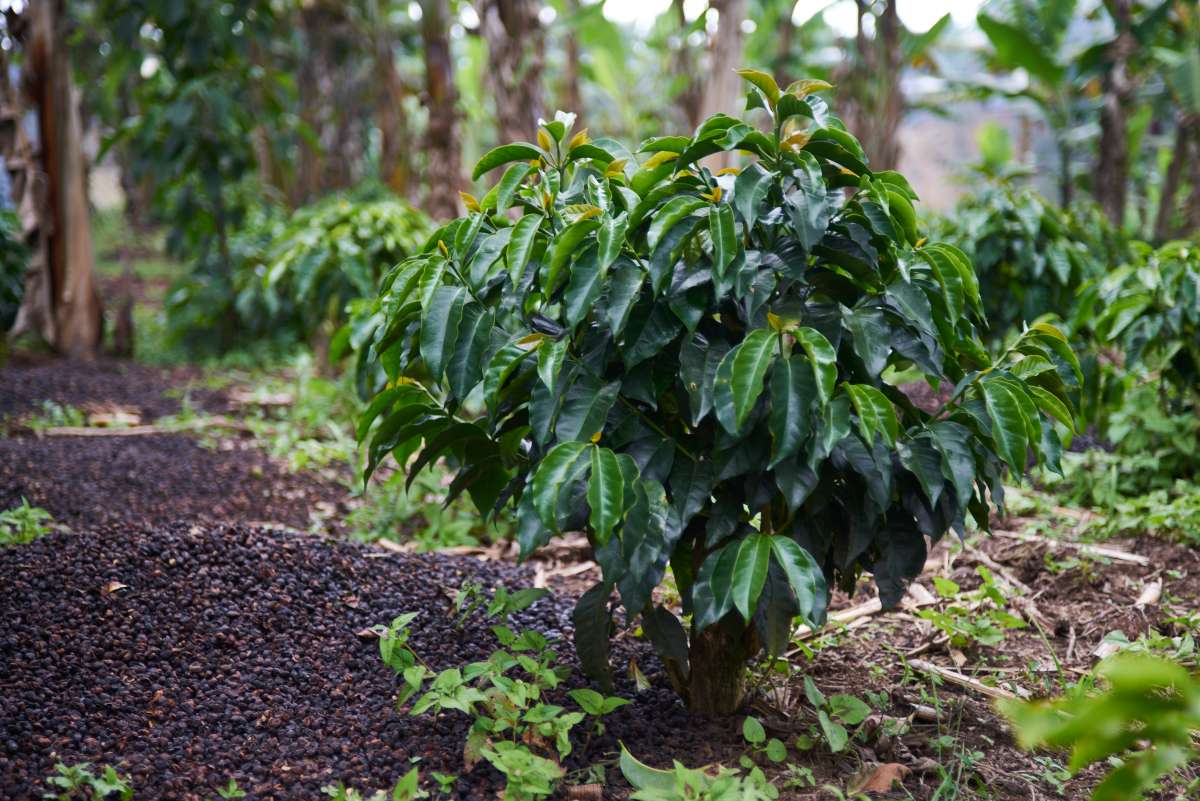
Unlike Brazil’s production model, which is dominated by large-scale mechanization and flatland cultivation, Colombian coffee is mostly grown by numerous smallholder farmers, with an average farming area of only about 2 to 3 acres. Due to the rugged terrain, many processing steps still rely on traditional manual methods and community wet mills. Coffee farmers typically send their harvested coffee cherries to nearby washed processing facilities for depulping, fermentation, and washing to ensure bean cleanliness and consistency. The beans are then graded by quality before export.
The development of Colombia’s coffee industry is inseparable fromthe Federación Nacional de Cafeteros de Colombia (FNC, National Federation of Coffee Growers of Colombia). Established in the early 20th century, the FNC is not only the most representative coffee organization in the country but also one of the largest agricultural NGOs globally. It shoulders the responsibilities of promoting the Colombian coffee brand, establishing quality standards, and providing technical support and market information. Through the FNC’s coordination, over 590 municipalities across 14 major coffee-growing regions are now involved in cultivation, covering a total area of 875,000 hectares, with the vast majority operated by small family farms.
Before exporting green beans, Colombia employs a rigorous grading system that evaluates beans based on size, appearance, defect rate, and moisture content. Commonly used screens are distinguished by mesh count,with higher numbers indicating larger beans that can pass through the screen. Common export grades include UGQ, EP (European Preparation), and Supremo, whileExcelso is currently the most mainstream and consistently high-quality export grade. Its standards require that at least 50% of the beans in a 500g sample be larger than 15 mesh, with no more than 5% between 12 and 14 mesh, and all beans must be larger than 14 mesh. Additionally, the beans must be free from pests, show no significant defects, have uniform color, a moisture content not exceeding 12.5%, and a total defect count not exceeding 24 points.
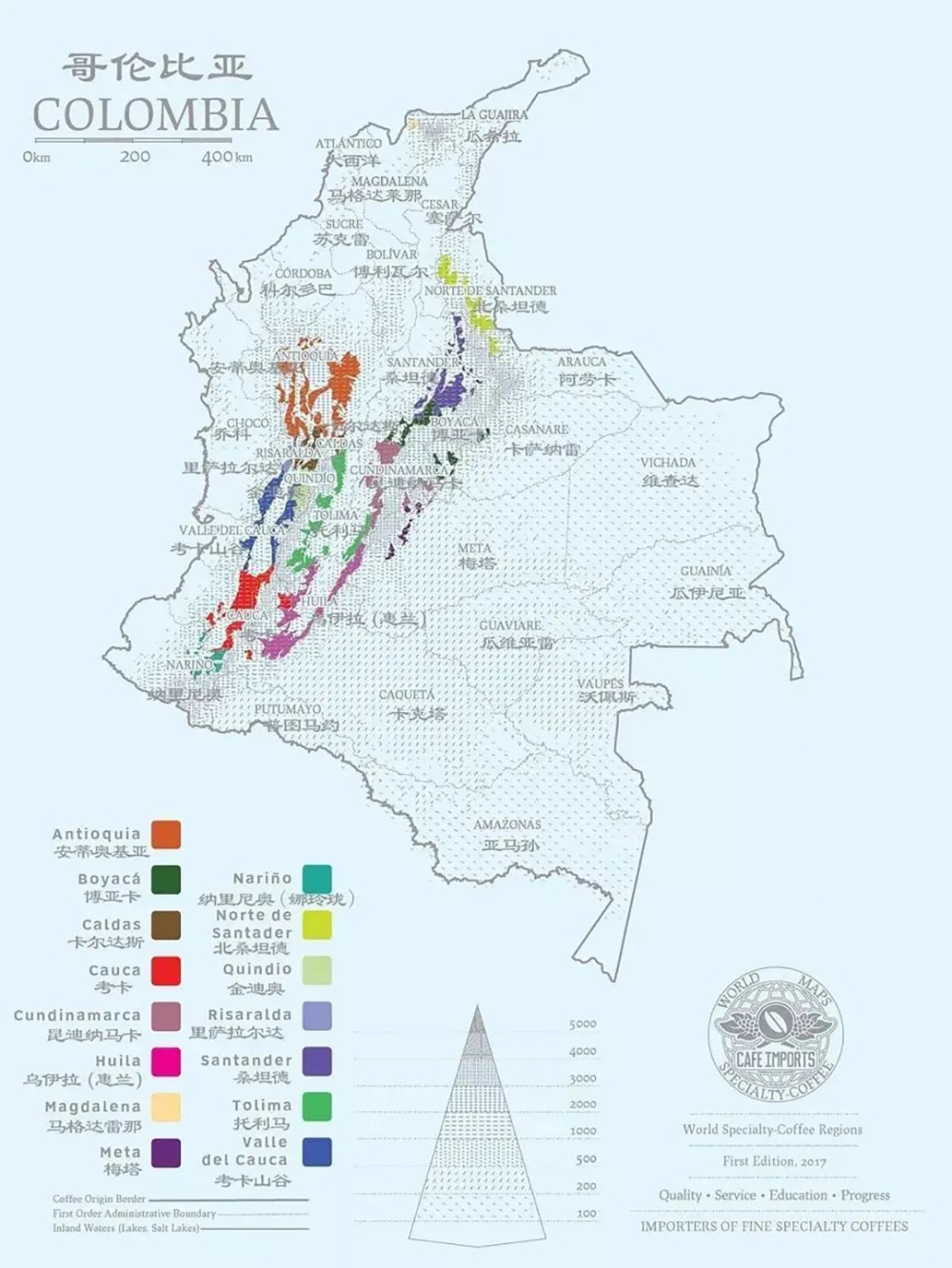
Each batch of exported Colombian green beans is labeled with information on the producing region, grade, and screen size. A common naming format is “Colombia Huila Supremo SC17/18 FNC,” where “Huila” indicates the Huila region, “Supremo” is the grade, “SC17/18” specifies the screen size, and “FNC” confirms that the beans meet national standards and are traceable.
In terms of varieties, Colombia primarily grows traditional Arabica types, includingCaturra, Bourbon, Typica, and Pacamara. These varieties generally offer good acidity, aroma, and balanced body. In recent years, a small amount of the popular Geisha variety has also entered the market, attracting coffee enthusiasts seeking unique flavors. For instance, the widely planted Caturra variety in the Huila region, when processed using the washed method, often exhibits pronounced sweetness, fruity notes, and balanced acidity—making it ideal for everyday drinking or advanced cupping.
If you’d like to try brewing Colombian Huila Caturra coffee at home, you can refer to the following practical parameters: use a KONO filter, control the water temperature at around 90°C, and use medium-fine coffee grounds ground to approximately 75% through a #20 standard sieve (with a texture similar to fine sugar). Set the coffee-to-water ratio at 1:15. Using 15 grams of coffee as a base, employ a three-stage pouring technique. First, place the coffee grounds in the filter and pour about twice the weight of the grounds (around 30 grams) of hot water for a 30-second bloom. Then, pour with a small stream in circular motions from the inside out. When the total water volume reaches 125 grams, perform the first pour. Once the coffee bed has settled to the middle of the filter, continue pouring steadily until reaching 225 grams to complete the extraction, keeping the total brew time around 2 minutes.

This Colombian Huila Caturra pour over coffee delivers noticeable aromas of chocolate, nuts, and caramel upon tasting. It has a rich, smooth mouthfeel with soft yet vibrant acidity. As it cools slightly, delicate fruity acidity and layered sweetness become more apparent—making it a classic Central and South American-flavored coffee that balances harmony and complexity.
The above content is compiled by CoffeeHunters, a coffee news website.


