







Introduction:Want to learn about high-value, small-bean coffee from Yunnan, China? This article dives deep into the evolution of Yunnan’s Catimor variety, analyzes the clean taste and balanced flavor brought by the washed processing method, and provides insights into the actual flavor profiles and professional pour over recommendations of two popular Yunnan beans. Whether you’re a beginner or a seasoned coffee enthusiast, you’ll find a brewing style that suits you.
In recent years, Yunnan small-bean coffee has gradually made a name for itself in markets across the Greater China region and internationally. With its relatively affordable price and stable quality, it has become one of the go-to daily brews for many coffee lovers. This article starts with the origin of the variety, detailing how Catimor evolved from a commercial bean to a specialty coffee contender. It also focuses on the washed processing method, helping you understand its contribution to the coffee’s clarity and overall balance. Additionally, we’ve compiled two representative Yunnan-grown coffee beans, describing their flavor profiles and ideal pour over parameters to give readers a more comprehensive understanding of this locally distinctive coffee.
 Nowadays, the presence of “Yunnan small-bean coffee” on café menus has noticeably increased, showing that this domestically produced coffee is steadily gaining market recognition. Especially among cost-conscious consumers, Yunnan-grown beans are often the first choice due to their reliable supply and pleasing flavor profile.
First up, we introduce a highly praised Yunnan bean — a washed Catimor grown in the Baoshan area at an altitude of about 1,200 meters. Processed using the washed method, this bean showcases layers of nuts, herbs, chocolate, and caramel, with a hint of fresh acidity in the aftertaste. The overall flavor is clear and layered. This coffee is suitable for pour over, moka pot, or even home espresso machines. It not only offers great value but also lets you experience the unique terroir of Yunnan.
Another recommendation is a 2013 natural Typica from the Lincang area, grown at around 1,300 meters. This coffee belongs to the traditional Typica variety and is processed using the natural method. It features pronounced berry acidity and nutty tones, with a sweetness akin to brown sugar, and a tea-like freshness in the finish. The overall flavor is smoother and more nuanced. This bean is also excellent for pour over or cold brew and is a great entry point for those wanting to explore authentic Yunnan small-bean flavor.
 When talking about “small-bean coffee,” many may not be familiar with its botanical classification. In fact, Yunnan’s small-bean variety falls under the Arabica species (Coffea arabica L.). Going back to the 1950s, the main varieties cultivated in Baoshan included Typica, Bourbon, and S288. Among them, Typica had an elegant and clean flavor but suffered from low yield and susceptibility to diseases, making its cultivation less efficient. To enhance the overall productivity and disease resistance of the region, Yunnan later introduced the Catimor variety. Due to its adaptability to low altitudes, high yield, and strong disease resistance, Catimor gradually became the dominant cultivar in Yunnan. Therefore, what people commonly refer to as “Yunnan small-bean coffee” today mostly means Catimor.
Interestingly, the origins of Catimor can be traced back to 1959, when it was developed by a research team in Portugal. The goal was to create a small coffee plant with strong disease resistance, suited for low altitudes and high yield — so it was initially bred as a “commercial bean.” However, because of its commercial breeding background, Catimor has long been questioned in cupping evaluations. Its flavor is often considered lacking in complexity and subtlety, and some producers even hesitate to label the variety on their packaging.
The genetic lineage of Catimor is actually quite unique — it is the offspring of Caturra (a natural mutation of Bourbon known for its excellent flavor) and Timor (a natural hybrid of Robusta and Arabica). The Timor variety, originating from Timor Island in Southeast Asia, boasts extremely high disease resistance and adaptability, but its flavor tends to be bold and rough. As a result, while Catimor inherited advantages such as high yield and disease resistance, it also faced flavor challenges. Early Yunnan coffee farmers, lacking systematic planting and post-harvest techniques, often grew Catimor at low altitudes and used relatively crude processing methods. This led to generally mediocre coffee quality, with most of it flowing into the instant coffee market.
As specialty coffee culture has gradually risen in China, more professionals and research institutions have invested in the Yunnan region. Comprehensive optimization and improvements have been made in areas such as pest and disease management, shade tree arrangement, soil conservation, appropriate altitude selection, as well as fresh fruit harvesting and post-harvest processing. Today, through professionally refined production processes, Yunnan Catimor is able to exhibit surprisingly fragrant and clean profiles, gradually breaking the previous stereotypes associated with the variety.
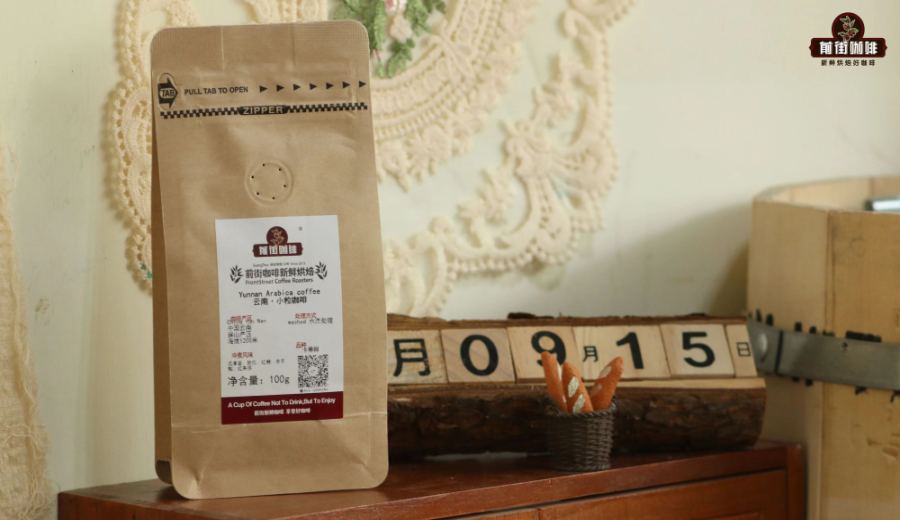
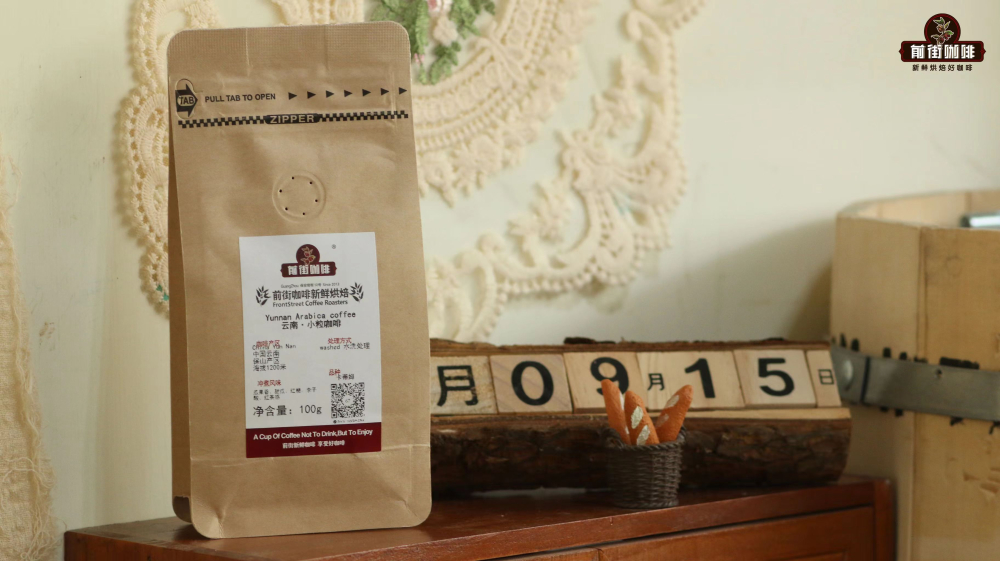
So, what kind of flavor characteristics does washed Yunnan small-bean coffee present? During the development of our everyday coffee bean series, after multiple cuppings, we ultimately selected a washed Catimor from the Baoshan region as the representative and launched it in a 100g small pack, allowing consumers to easily taste a representative “taste of Yunnan.” This washed bean has a flavor profile based on nuts, complemented by hints of plum-like fruitiness and a brown sugar-like sweetness. The overall profile is balanced and smooth, making it an excellent representative of Yunnan flavor for beginners.
The washed processing method generally involves: first mechanically removing the outer skin and pulp of the harvested coffee cherries, then placing the mucilage-covered beans into fermentation tanks where microbial fermentation breaks down the mucilage layer. Afterward, the beans are thoroughly rinsed with water to completely remove the mucilage, and finally, they are evenly spread out and sun-dried for 1 to 2 weeks. This processing method not only effectively reduces the percentage of defective beans but also results in a more stable and clean final cup, allowing the regional characteristics and processing flavors of the beans to shine through more clearly.
For readers who enjoy pour over, here is a set of tested and effective brewing parameter suggestions: use a Hario V60 filter cone, with a coffee dose of 15 grams recommended. Water temperature should be controlled around 90°C, and the grind size is advised to be 75% passing through a #20 sieve (or equivalent to medium-coarse). The coffee-to-water ratio is set at 1:15. It’s worth noting that since Yunnan coffee tends to have a balanced flavor profile, excessively high water temperature or overly fine grind can lead to over-extraction, releasing too much bitterness; conversely, too low a temperature or too coarse a grind may result in under-extraction and a thin flavor. Therefore, it’s recommended to use moderate water temperature and grind size — for example, the EK43 grinder commonly used in our shops set at 10.5, which effectively balances acidity, sweetness, and body.
During actual pour over, it is recommended to use the three-pour method: start with a bloom using twice the coffee dose (about 30 grams) of water for about 30 seconds to help release aroma; then pour water in a slow, circular motion from the inside out using a thin stream. When the total water volume reaches 125 grams, perform the first pour break, wait for the coffee bed to slightly settle, then continue pouring with the same thin stream until reaching 225 grams, until there is no more noticeable dripping from the filter cone. The entire process takes about 2 minutes. This brewing technique helps bring out the layers of nuts, chocolate, and subtle fruit acidity in Yunnan Catimor, showcasing the best flavor characteristics of this variety.
The above content is compiled by CoffeeHunters, a coffee news website.


