







Introduction:Brazil is the world’s largest coffee-producing country, and its grading system combines defect rates, screen sizes, and cupping performance—setting it apart from other producing regions. This article takes you deep into Brazil’s three grading standards, from NY grades to cupping flavors, teaching you how to understand coffee quality from sack labels. We also recommend two Brazilian beans that represent distinct flavor profiles, ensuring both pour over enthusiasts seeking delicate floral and fruity notes, and dark roast lovers who prefer rich chocolatey bases, can find their ideal match.
As the world’s top coffee producer, Brazil’s coffee grading system stands out with its unique integration of three key metrics: defect rate, screen size, and cupping flavor. This comprehensive evaluation method distinctly differs from the single-standard approaches used in most other producing countries. By simply understanding labels on sacks such as ‘Brazil NY.2 SC – 17/18 FC Cerrado,’ you can quickly grasp the regional characteristics and quality grade of that particular lot.
With an annual production volume accounting for about one-third of the global total, Brazil firmly holds the top spot, maintaining its leading position in 2021 with a 37.4% production share. As its producing regions span 14 states—with significant variations in microclimates and processing methods—multi-dimensional grading criteria are essential to ensure consistent quality.
The Brazilian coffee grading process consists of three key steps: first, inspecting the number of defects in a 300g sample of green beans; next, measuring the screen size that the beans pass through; and finally, evaluating flavor performance through cupping after roasting. This combination of ‘defect rate + physical specifications + sensory evaluation’ is the essence of Brazil’s grading system.
Information on sack labels typically includes: country of origin, defect grade, cupping taste profile, screen size, flavor evaluation, and region name. Take the classic example ‘Brazil NY.2 SC – 17/18 FC Cerrado’: this indicates coffee beans from the Cerrado region, with green bean sizes between 17 and 18 screens, where SC (Strictly Soft) denotes extremely mild cupping characteristics, FC (Fine Cup) represents a high-quality cupping grade, and NY.2 is a strict grading based on defect levels.
Defect Grading System
The NY series standards use the number of defective beans per 300g of green coffee as the basis for judgment, with grades ranging from NY.2 (best) down to NY.5/6 (worst). Among these, NY.2 allows for a maximum of 6 defective beans, while NY.5/6 exceeds 60. It’s worth noting that although NY.1 signifies zero defects, its stable supply is difficult to ensure, making NY.2 the de facto benchmark for the highest export grade in Brazil.
Screen Size Classification
Brazil uses a screen system measured in 1/64-inch increments—for example, a size 17 screen corresponds to a hole diameter of 17/64 inch (approximately 6.75 mm). The higher the number, the more intact and larger the green beans are, with mainstream export specifications concentratedbetween17 and 18 screens, as beans in this range generally offer better density and extraction performance.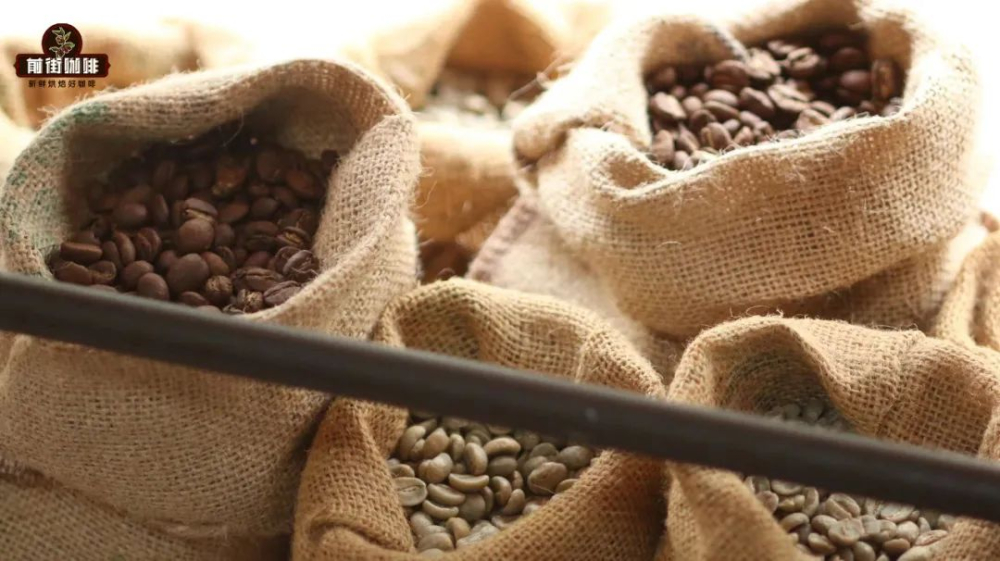
Cupping Flavor Evaluation
After undergoing a standardized roasting process, professional cuppers assess various dimensions including aroma, acidity, sweetness, body, and aftertaste. Since most Brazilian coffee is grown at low-altitude plains and primarily processed via natural (sun-dried) methods, it generally exhibits low acidity with a rich, full-bodied nutty and chocolatey base. Therefore, evaluations particularly emphasize flavor balance and mouthfeel smoothness.
Brazilian cupping taste profiles are divided into six grades, with the first three levels falling under the ‘mild system,’ showcasing harmonious acidity and sweetness along with a smooth entry. The latter three levels may exhibit off-flavors such as iodine as quality declines—these defects often stem from sulfur-contaminated soils around Rio de Janeiro. Flavor evaluations are also divided into six levels, with top-tier Fine Cup representing exceptional overall performance, while Good Cup serves as a qualified high-quality benchmark.
Taking an actual label interpretation as an example, ‘Brazil NY.2 SC – 17/18 FC Cerrado’ fully conveys the core information of that lot: sourced from Cerrado, sized between 17–18 screens, with an NY.2 defect grade, mild taste, and excellent cupping results—this is also the Brazilian base profile commonly used in many espresso blends.
Premium Brazilian Beans: Practical Recommendations
Queen’s Estate Yellow Bourbon is a flagship example of high-altitude Brazilian coffee. This rare variety, cultivated at elevations of 1400–1950 meters and processed using the natural method, offers creamy peanut notes and sugarcane sweetness. The Yellow Bourbon, distinguished by its uniquely yellow fruit skin due to genetic traits, accumulates abundant fructose under ample sunlight, and has achieved outstanding results in two consecutive Brazilian ‘Cup of Excellence’ competitions.
For everyday drinking needs, the staple beans from the Cerrado region provide a balanced option. This Red Bourbon honey-processed (semi-washed) bean, grown at 1000 meters altitude, delivers a classic combination of nuts, chocolate, and caramel after roasting—ideal for those who prefer bold flavors. Special attention should be paid to freshness management; it is recommended to choose products shipped within five days post-roasting to achieve optimal extraction flavor.
The above content is compiled by CoffeeHunters, a coffee news website.


