







Introduction:Kenya AA coffee is renowned for its bright acidity and clean profile, making it a top choice for many coffee enthusiasts trying pour over for the first time. This article delves into the characteristics of Kenya’s major coffee-growing regions, the country’s official bean grading system, and how the K72 washed processing method influences flavor. It also provides practical hand brewing recommendations for light-roasted Kenyan beans, including filter selection, water temperature control, grind size adjustment, and three-phase pouring techniques to help you consistently extract the outstanding flavors of black plum, cherry tomato, and yellow sugar in a well-layered profile.
Kenyan coffee has long been celebrated for its vibrant acidity, refreshing taste, and full body, serving as a benchmark for acidity in the global specialty coffee community. From the volcanic soils of the Nyeri highlands to the quality-focused smallholder production in Kirinyaga, this East African nation leverages its unique geographical conditions and refined post-harvest processing to produce coffee with richly layered and highly distinctive flavors.
Kenya boasts an exceptionally favorable geographic location, with the equator running through its center and the East African Rift Valley stretching from north to south. Most of the country consists of highland terrain, with an average elevation of about 1,500 meters. Among them, Mount Kenya (also known as Mount Kirinyaga), Africa’s second-highest peak, stands at 5,199 meters and is perpetually snow-capped, bringing abundant rainfall and significant diurnal temperature variation to the surrounding areas—creating an ideal environment for coffee cultivation.
Kenya’s coffee growing seasons are concentrated around two main periods each year: October to December and June to August, corresponding to the two distinct rainy seasons. The main coffee-growing regions lie at elevations between 1,600 and 2,100 meters within volcanic soil zones. The high altitude slows the ripening process of coffee cherries, aiding the accumulation of aromatic compounds and contributing to the uniquely high acidity and bold body that define Kenyan coffee.
The history of coffee cultivation in Kenya dates back to the late 19th century. In 1893, missionaries introduced the Bourbon variety from Brazil, and in 1895, Britain began colonizing Kenya, establishing it as the “East Africa Protectorate” and taking full control of local crops, including coffee. Between 1900 and 1933, the colonial government formed the Coffee Board (CB) to manage the coffee industry, and it wasn’t until 1935 that the first official coffee auction was held. The subsequent establishment of the Coffee Marketing Board (CMB) became fully operational in 1947 but was officially disbanded in 1971.
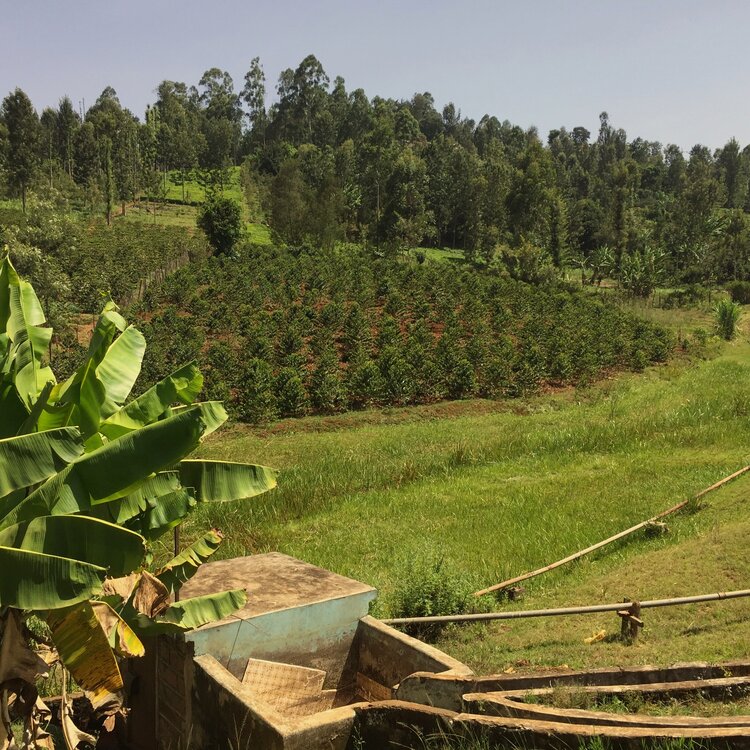
Kenya is home to ten major coffee-growing regions, each with its own unique characteristics:
Nyeri: Located in central Kenya, Nyeri features fertile volcanic red soils surrounding Mount Kenya and is dominated by cooperatives formed by smallholder farmers, with few large estates. The elevation ranges from 1,200 to 2,300 meters, making it one of the key sources of high-quality Kenya AA.
Murang’a: Situated in Central Province, Murang’a was an early gathering place for missionaries and is home to around 100,000 coffee farmers, mostly smallholders. The elevation ranges from 1,350 to 1,940 meters, and the fertile soil produces coffee with both bright acidity and sweet undertones.
Kirinyaga: Located east of Nyeri, Kirinyaga also has volcanic soils and is home to mostly smallholder farmers and high-quality processing facilities. The elevation ranges from 1,300 to 1,900 meters, often yielding delicate floral and fruity notes.
Embu: Adjacent to Mount Kenya, about 70% of the residents here are engaged in smallholder farming. Production is limited but consistent in quality, with elevations between 1,300 and 1,900 meters.
Meru: Nestled at the foothills of Mount Kenya and the Nyambene Hills, the Meru people were among the first ethnic groups legally permitted to grow coffee, benefiting from the protection of the 1923 White Paper. Elevations range from 1,300 to 1,950 meters.
Kiambu: A major central-producing region, Kiambu was historically dominated by large estates, though urbanization has gradually reduced their number. Some are now sold under sub-region names such as Thika, Ruiru, and Limuru, at elevations between 1,500 and 2,200 meters.
Machakos: A smaller central county where coffee is produced by both estates and smallholders, at elevations between 1,400 and 1,850 meters.
Nakuru: Among the central producing areas, Nakuru has the highest elevation, and some high-altitude regions are prone to coffee berry disease. Elevations range from 1,850 to 2,200 meters.
Kisii: Located in southwestern Kenya near Lake Victoria, this smaller-producing region is mostly cultivated by small cooperatives, at elevations between 1,450 and 1,800 meters.
Kenya has an extremely detailed official coffee grading system, primarily based on the size, shape, and density of green beans:
E Grade (Elephant Bean): 18+ mesh, includes peaberry (PB), and is quite rare;
AA Grade: 17–18 mesh, generally regarded as the highest grade with outstanding flavor performance;
AB Grade: 15–16 mesh, a blend of A and B grades and a common mid-to-high-tier bean in the market;
TT Grade: Lighter beans sorted from AA and AB via air classification;
PB Grade (Peaberry): 15+ mesh, accounting for about 10% of total production, often with more concentrated flavors;
C Grade: 12–14 mesh and some lighter beans;
T Grade: Below 12 mesh, mostly defective or broken beans;
HE Grade: Other unclassified grades.
Additionally, beans not meeting official standards are classified as UG1 (such as E, AA, AB, PB that don’t meet specs) and UG2 (such as C, TT, T, HE). Sun-dried beans are collectively referred to as MBUNI, further divided into MH (heavier beans, no defects) and ML (lighter beans, may have minor defects).
Beyond the national standards, exporters or traders often apply additional grading to AA and AB grades, such as TOP, PLUS (+), FAQ, etc., to offer buyers more refined selection options.
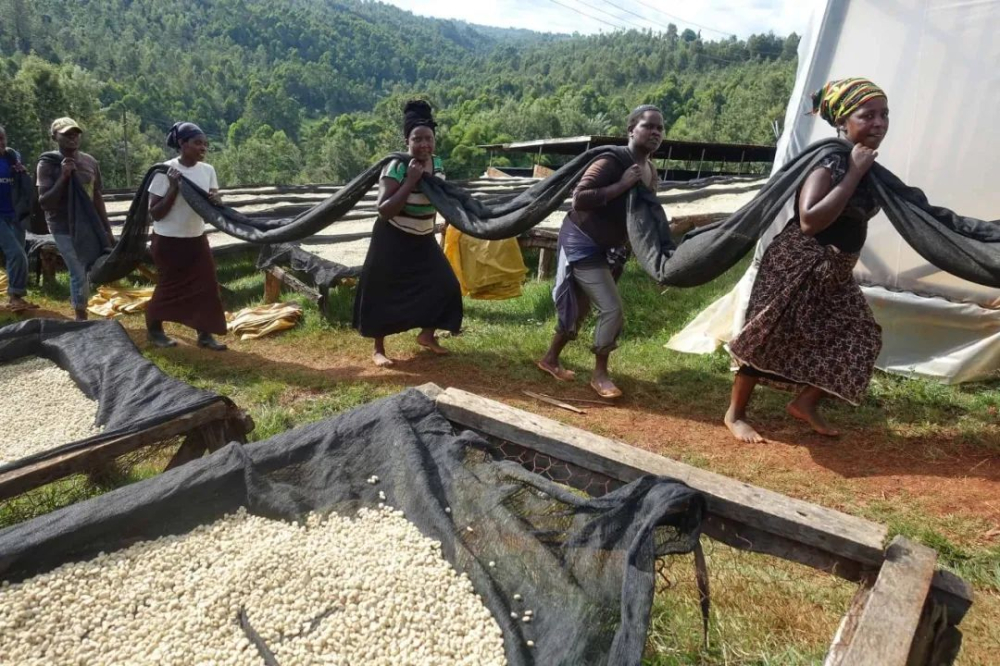
A significant part of Kenyan coffee’s unique flavor profile comes from its extended washed fermentation process. While most Central and South American washed processes complete fermentation within 36 hours, Kenya employs a72-hour fermentation, and after mucilage removal, the beans undergoa 24-hour clean water soak. This intricate process is a key reason why Kenya AA coffee delivers clean, bright acidity and a distinctly layered flavor profile, with the K72 washed process being the most representative method.
Taking a common light-roasted Kenyan bean like Asali as an example, its recommended pour over parameters are as follows:
• Filter Selection: It is advised to useV60a filter cup with relatively fast flow rate to prevent fine coffee grounds from settling and causing blockage in the later stages, which helps release bright acidity and clarity in flavor.
• Water Temperature Control:90–93°CGenerally, 90–91°C is recommended to bring out livelier acidity and a tea-like aftertaste; if you prefer bolder fruit acidity and a fuller mouthfeel, you can increase to 92–93°C.
• Grind Size: Suggested to be fine to medium-fine, adjustable based on extraction time. If the total brew time is less than 1 minute 40 seconds, the grind may be too coarse; if it exceeds 2 minutes 20 seconds, it may be over-extracted and should be adjusted coarser.
• Suggested Coffee-to-Water Ratio:1:15 to 1:16, adjustable according to preference: 1:15 yields a richer flavor, while 1:16 offers a cleaner and more expansive taste.
It is recommended to use a three-phase pouring method with a total water volume of about225 grams(based on 15 grams of coffee):
1. First phase: Pour30 grams of water for a 30-second bloom, using a gentle stream to circle from the center outward, ensuring even saturation of the coffee bed;
2. Second phase: Pour95 grams of water, lifting the coffee bed with a vertical and even stream, reaching approximately 125 grams by around 55 seconds;
3. Third phase: When the liquid level drops halfway, pour100 grams of waterwith a small stream in tight circles to avoid disturbing the coffee bed. Total dripping time should be controlled to around 2 minutes, with a total water volume of 225 grams.
Mastering these parameters and techniques will help you consistently extract the captivating flavors of black plum, cherry tomato, yellow sugar, and fruit notes from Kenyan coffee, offering you a unique coffee experience born of high-altitude terroir.
The above content is compiled by CoffeeHunters, a coffee news website.


