







Introduction:To consistently extract an espresso with balanced flavors at home, adjusting the grind size is key. This article delves into how to identify the optimal grind coarseness by observing flow rate and tasting flavors, and provides practical adjustment tips and reference parameters to help you precisely control the extraction process—avoiding under- or over-extraction, and elevating the performance of every shot.
Grind size is one of the core factors influencing coffee extraction quality, and it's especially critical for espresso. Compared to pour over coffee, espresso uses coffee grounds as fine as powdered sugar, where even slight deviations significantly alter extraction efficiency, leading to flavor distortion—not enough extraction results in weak, thin flavors, while over-extraction brings harsh, burnt bitterness. Therefore, mastering the correct grind settings and fine-tuning methods is an essential skill for every coffee enthusiast.
How fine should espresso coffee grounds be?
Many assume that pour over coffee already requires finely ground beans, but in fact, espresso demands even finer. Because extraction happens under high pressure in a short time, any difference in particle size is greatly magnified. One shop likens the fineness of their grounds to “powdered sugar level,” where the uniformity of particles is nearly indistinguishable to the naked eye—this also makes using sieves for testing rather impractical.
If the grind is too fine, water passes through the coffee bed slowly, easily resulting in over-extracted bitter and astringent impurities; conversely, if the grind is too coarse, water flows through too quickly, leading to under-extraction and bland flavors. These extreme differences can sometimes come from just 0.1 of a grind setting change, so in practice it’s recommended to use flow rate observation and actual flavor feedback as the basis for adjustments.
How to preliminarily determine a suitable grind range?
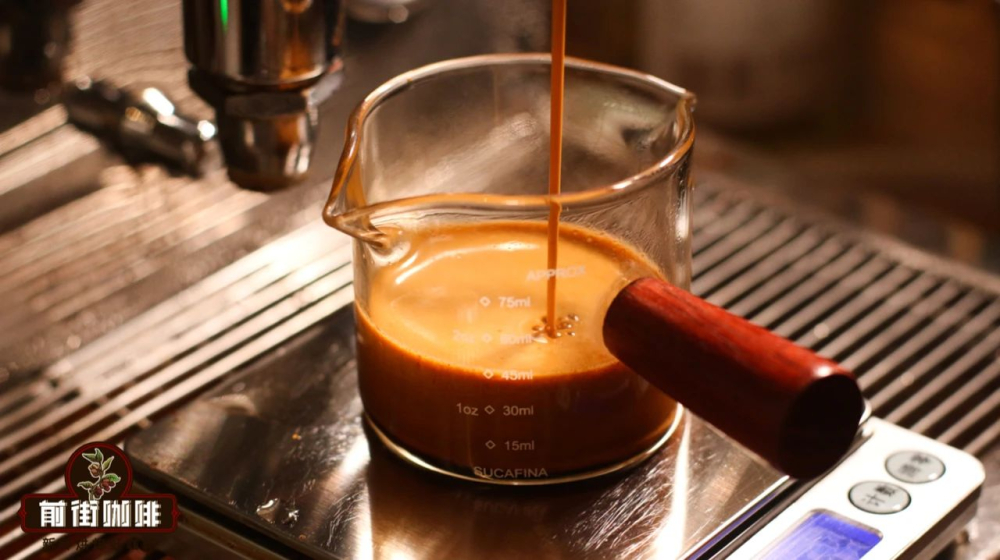
When facing newly opened coffee beans or changing grinders, the first step is to find a rough starting point for the grind. It’s recommended to use a 1:2 brew ratio—that is, about 2 grams of coffee liquid extracted per 1 gram of coffee grounds. For a double shot of espresso, use 20 grams of coffee grounds, aiming to extract 40 milliliters of liquid, and the extraction time should fall within 20 to 30 seconds. If the time is less than 20 seconds, the flow is too fast, and you need to adjust the grind finer; if it exceeds 30 seconds, then you should adjust the setting coarser to extend the extraction time.
Initially, you can test using a middle grind setting on your grinder (for example, starting at 2.0), where the coffee grounds feel similar to powdered sugar—it’s a relatively safe starting reference. If you’re not yet familiar with your grinder’s scale, you can also try grinding small amounts of beans at different settings. When you feel the texture is as fine as flour with no noticeable particles, you’ve usually reached an appropriate range.
Fine-tuning the grind setting based on flow rate and flavor
Once the initial extraction time falls within the ideal range, the next step is to further refine based on actual flavor performance. If the extraction time is too fast (under 20 seconds), it usually means the grind is too coarse—the water flows too quickly, leading to under-extraction and flavors that are thin and overly acidic. In this case, gradually adjust the grind finer. If the difference is small (e.g., just within 5 seconds), it’s recommended to adjust 0.2 of a settingeach time; if the time difference is larger, then you can adjust 0.5 to 1 settingat a time, gradually approaching the ideal flow rate.
Conversely, if the extraction time is too long (over 30 seconds), it may be because the grind is too fine, impeding the water flow—this not only extends extraction time but can also over-extract undesirable impurities, giving the coffee noticeable bitterness or astringency. In this case, you should adjust the setting coarser to improve water flow.
How to precisely optimize extraction flavor?
Although a 1:2 brew ratio and 20–30 second extraction time are common baseline references, not every coffee bean is suited to the same settings. If you find your espresso has an overly heavy burnt bitterness but normal concentration, it may be due to excessive extraction time—recommend adjusting the grind coarser to shorten the extraction time. If the crema color is pale or the texture is thin, you might consider reducing the liquid weight by adjusting the brew ratio to 1:1.5 to 1:1.7to reduce over-extracted flavors in the tail end.
If the coffee has rich flavor layers but lacks a satisfying finish, you can slightly increase the liquid weight, extending the ratio to 1:2.5, allowing more desirable compounds to be released. But note, these values aren’t absolute—different bean varieties, roast levels, and processing methods can all influence the optimal extraction range. Industry experts emphasize that in practice, you should be guided by “flavor performance” rather than rigid adherence to fixed numbers. Recording each extraction’s parameters and corresponding flavors can help you quickly understand the characteristics of your personal or home grinder, effectively reducing adjustment errors and coffee waste.
Finally, don’t forget that coffee bean selection is also key to espresso flavor. If you want to replicate café-grade espresso at home, choose beans that have undergone professional roasting and blending. A classic espresso blend combining beans from Brazil, Indonesia, and Vietnam delivers caramel sweetness and a rich body, with a dark roast to bring out intense crema—whether making Americano or latte, it performs steadily with impressive depth.
The above content is compiled by CoffeeHunters, a coffee news website.


