







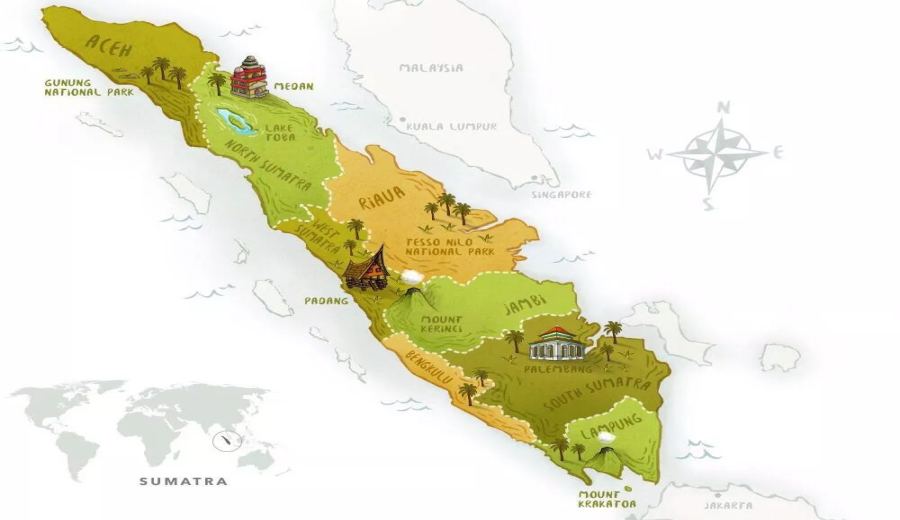
Introduction:Mandheling coffee, as Indonesia’s most iconic variety, originates from the high-altitude regions of Sumatra and is renowned for its wet-hulled processing method and distinctive rich flavor profile. This article will provide an in-depth analysis of Mandheling’s regional characteristics, varietal differences, processing techniques, as well as the flavor profiles and brewing recommendations for Lintong Mandheling and PWN Golden Mandheling, helping you gain a deeper understanding of this classic bean variety beloved by coffee enthusiasts worldwide.
Mandheling is one of the most recognizable types of Indonesian coffee. Although its name originally referred to an ethnic group that historically inhabited northern Sumatra, it has now become synonymous with high-quality Arabica coffee from the region. As Indonesia’s largest island, Sumatra lies within the equatorial zone and features a typical tropical rainforest climate, with high temperatures, high humidity, and abundant rainfall year-round. In addition, certain areas have elevations exceeding 1,000 meters, providing an ideal growing environment for Arabica coffee trees.
However, Indonesia’s overall topography is predominantly mid-to-low altitude, and areas truly suitable for cultivating Arabica are limited. Only about 25% of the country’s total coffee production consists of Arabica, with the majority being Robusta, which is better adapted to low altitudes and high temperatures. Thanks to its relatively higher-altitude regions, Sumatra has become an important producer of Arabica coffee in Indonesia, with Mandheling being the most representative specialty bean variety in the area.
Traditional Mandheling coffee is known for its bold, full-bodied, and richly textured flavor. It typically offers a well-balanced bitterness and sweetness upon entry, without being overly sharp or astringent. Many coffee enthusiasts note that Sumatran coffee beans often have a more irregular appearance, but this so-called “roughness” is often associated with greater depth and complexity in flavor. Even during the peak popularity of premium beans such as Blue Mountain, Mandheling has been regarded as one of the world’s most full-bodied coffees due to its unique herbal and woody aromas and consistently rich taste.
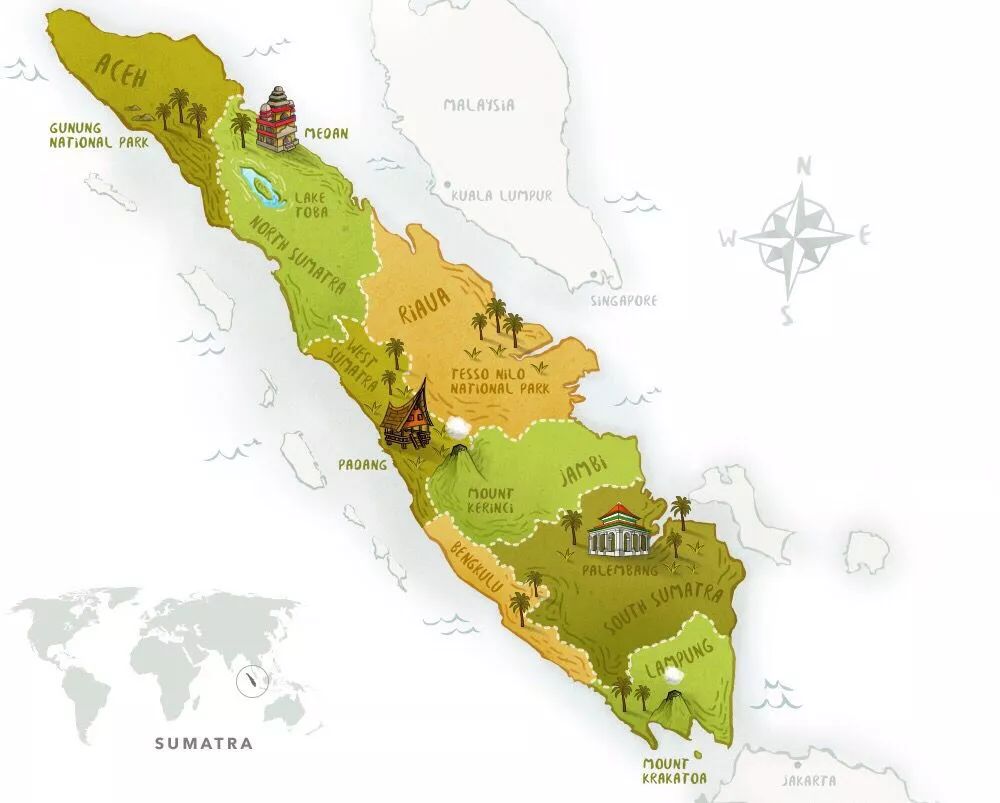
For those trying Mandheling for the first time, it is recommended to start with beans from the Lintong region. Located in central Sumatra, Lintong is one of the key producing areas of Mandheling, where the wet-hulled processing method (Giling Basah) is commonly used. This method involves removing part of the parchment layer while the coffee beans are still in a semi-fermented state, after the fruit pulp has been removed, followed by sun drying. This process causes the moisture content of the beans to drop rapidly while promoting the development of unique fermentation flavors, ultimately yielding a warm and mellow aroma profile featuring baked bread, hazelnuts, caramel, and unsweetened chocolate.
The wet-hulling process not only influences the flavor but also shapes the unique appearance of Mandheling beans—the beans often have a slightly oily sheen and may not be as uniform in appearance as those from other regions, but this is one of the hallmarks of Sumatran coffee. When paired with medium-to-dark roasting, this processing method can fully highlight the rich foundation of the coffee. It is suitable for brewing via pour over, moka pot, French press, or drip coffee makers, making it enjoyable even for those who prefer lower acidity.
For those wishing to explore the specialty tier of Mandheling further, PWN Golden Mandheling is an excellent representative choice. These coffee beans are grown in the Gayo Highlands of Aceh Province, Sumatra, at elevations between 1,100 and 1,600 meters. They belong to the Ateng variety cultivated at high altitudes and are processed using a strict wet-hulled method. Only whole beans larger than eighteen mesh are selected, with a defect rate below 3% (calculated based on a 300-gram green bean sample), meeting the highest G1 grade standard.
According to actual cupping and brewing observations, this batch of Golden Mandheling from the Gayo Highlands shows a slight adjustment in flavor profile compared to previous versions from Lake Tawar, exhibiting a more pronounced roasted toast aroma while offering an overall richer taste. Its flavor notes include roasted toast, nuts, pine, caramel, and herbs. The beans are a darker shade of green, with a uniform flat bean appearance. After rigorous screening, earthy off-flavors are significantly reduced, resulting in a cleaner and brighter flavor expression, making it ideal for coffee enthusiasts who seek detail and balance in their cup.
The above content is compiled by CoffeeHunters, a coffee news website.


