







Introduction:An in-depth exploration of the varietal evolution, mainstream processing methods, and flavor profiles of China’s Yunnan coffee-growing region, along with professional pour-over brewing recommendations and grind settings to help coffee enthusiasts master the brewing techniques for Yunnan small-bean coffee. Whether you’re a beginner or an advanced home brewer, you’ll find an extraction method that suits your taste.
As a powerhouse of China’s coffee industry, Yunnan produces approximately 26,000 metric tons of coffee annually, accounting for 90% of the national output. The beans are mainly cultivated in core regions such as Lincang, Baoshan, Dehong, and Pu’er. The small-bean coffee grown here is widely recognized for its rich yet non-bitter profile, soft aroma with subtle fruity notes. In the early days, Typica was the predominant variety, but with advancements in agricultural technology, Catimor and its improved strains have become the norm—these varieties offer better disease resistance and higher yields.
In recent years, as domestic coffee consumption has risen in China, Yunnan’s coffee has gradually entered the mainstream market and can now be found on the menus of many cafés. However, consumer opinions are divided: some find its flavor straightforward, while others praise its layered complexity. In truth, coffee taste is inherently subjective, and factors such as harvest season, processing methods, and roast levels all influence the final cup.
Yunnan small-bean coffee often exhibits nutty dry aromas, with a core flavor profile of chocolate, nuts, and creamy notes upon sipping, complemented by a distinct brown sugar sweetness. The overall balance is excellent. Depending on annual climate variations and processing differences, some batches may also carry tea-like nuances, piney undertones, or gentle fruity acidity, sharing similarities with renowned beans from Colombia’s Huila or Indonesia’s Mandheling. Yet upon closer tasting, Yunnan’s unique character emerges: Mandheling is bold with prominent herbal and piney notes, Huila excels in soft fruity acidity and dark chocolate, while Yunnan small-bean sits between the two—offering nutty aromas and tea-like qualities alongside clear fruity acidity.
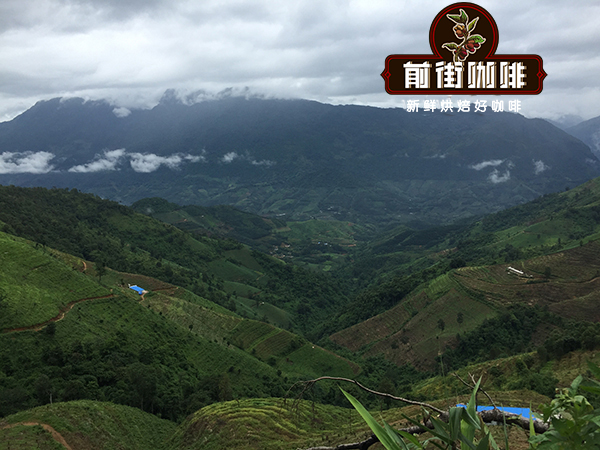
Located between 15°N and the Tropic of Cancer, Yunnan’s western and southern regions are predominantly mountainous and hilly, with elevations typically ranging from 1,000 to 2,000 meters. Abundant sunlight, ample rainfall, and significant day-night temperature variations collectively shape the classic “rich yet non-bitter, aromatic yet not overly intense” flavor profile of its small-bean coffee. Its geography and climate are similar to Colombia’s—both are low-latitude, high-altitude regions—resulting in coffee beans that, through cupping analysis, are classified as full-bodied and aromatic, with quality and taste comparable to those from internationally acclaimed origins.
Yunnan’s coffee cultivation history dates back 80 to 90 years, with planting now spanning 27 counties across 11 prefectures in the province. The suitable land area for coffee growth totals 650,000 mu (approximately 43,333 hectares), primarily concentrated in the four major producing regions of Lincang, Baoshan, Dehong, and Pu’er. Among these, Pu’er not only has the largest planting area and highest yield but also serves as a key hub for international coffee trade. Baoshan small-bean coffee, meanwhile, earned China’s National Geographical Indication Product certification in 2010 for its distinctive flavor.
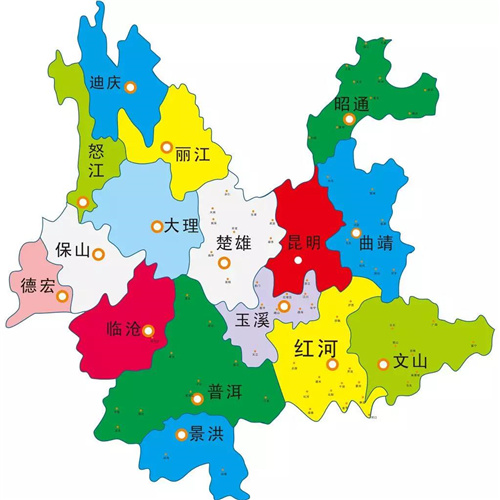
Lincang features a subtropical low-latitude plateau mountain monsoon climate, with complex terrain leading to diverse microclimates. Primarily influenced by warm, moist airflow from the Indian Ocean and the southwest monsoon, the region experiences distinct dry and rainy seasons, long sunshine hours (annual sunshine exceeds 2,000 hours), and frost-free conditions in some areas year-round. The average annual mountain temperature is around 13–15°C, making it ideal for coffee tree growth. A certain coffee brand owns estates in Lincang, primarily cultivating the Typica variety.
Coffee cultivation in the Pu’er region dates back 150 years. Since the 1990s, local governments have prioritized the coffee industry as a key project to adjust agricultural structure and boost farmers’ incomes. Influenced by a subtropical monsoon climate, most of Pu’er enjoys mild winters and cool summers, with an average annual temperature of 15–20.3°C, over 315 frost-free days per year, and annual rainfall of 1,100–2,780 mm—providing optimal conditions for coffee growth.
Coffee cultivation in Baoshan began in the mid-1950s, when the first coffee seedlings were introduced by patriotic overseas Chinese Mr. Liang Jinshan from Southeast Asia. In recent years, the small-bean coffee of Ludian Basin has gained international renown alongside expanding global trade. The area features a low-latitude mountainous subtropical monsoon climate, and its complex terrain creates a “four seasons on one mountain, different weather within ten miles” three-dimensional climate, fostering diverse microclimatic conditions.
Dehong Prefecture enjoys a mild climate, with no severe cold in winter or extreme heat in summer, abundant and well-distributed rainfall, small annual temperature variations but large diurnal temperature swings, short and infrequent frost periods, and proximity to the Tropic of Cancer. Influenced by the southwest monsoon from the Indian Ocean, it falls under a South Asian tropical monsoon climate, offering excellent overwintering and growing conditions for coffee trees.
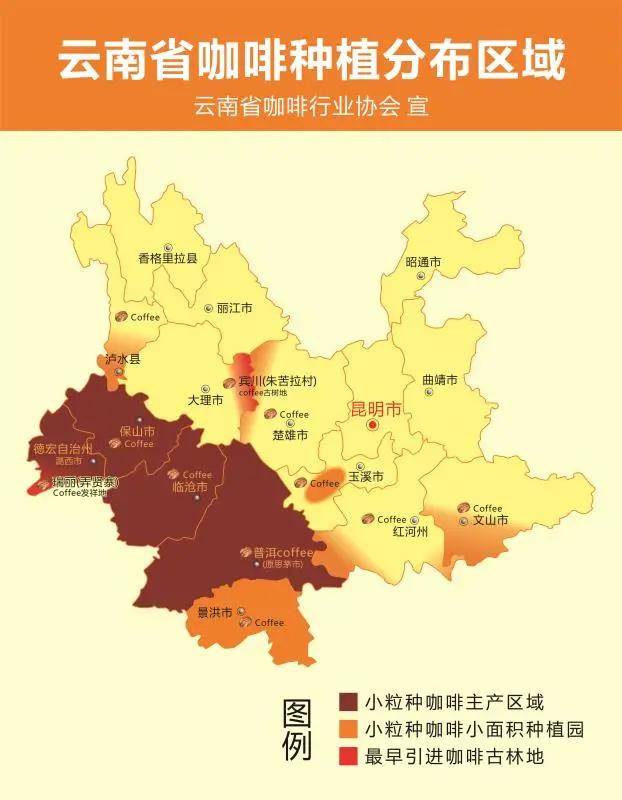
The evolution of Yunnan’s coffee varieties is also noteworthy. The early-introduced Typica variety can be traced back to 1904, when French missionary Tian Deneng brought seeds from Vietnam to Zhugula Village, Binchuan County, Yunnan Province, marking the origin of Yunnan’s coffee. Typica is a small-bean variety with robust plants but low yields, weak disease resistance, and copper-colored top leaves (commonly called “red-top coffee”). Though recognized as a premium specialty coffee variety, its high maintenance costs and limited market price advantages have led to its gradual replacement by newer varieties in recent years. Currently, the most widely planted variety in Yunnan is Catimor and its improved strains—the so-called “Yunnan small-bean coffee.”
Catimor is not of pure Arabica lineage but rather a hybrid of Timor (a cross between Robusta and Arabica) and Caturra (a mutation of Bourbon), containing 25% Robusta genetics. This genetic makeup can lead to issues such as insufficient aroma, pronounced bitterness, astringency, or even moldy notes. However, through optimized processing and roasting techniques, unique flavors can still be coaxed out.
The mainstream processing method for Yunnan coffee is washed processing, primarily due to the region’s rainy and foggy climate. Washed processing ensures stable fermentation and quality control. Its characteristics include cleanliness, bright acidity, and stable flavors, effectively showcasing the region’s distinctive flavor profile. The process involves: removing the coffee fruit’s skin and pulp, placing the mucilage-covered beans in fermentation tanks for enzymatic breakdown, thoroughly washing away residual mucilage with clean water, and finally sun-drying the beans.
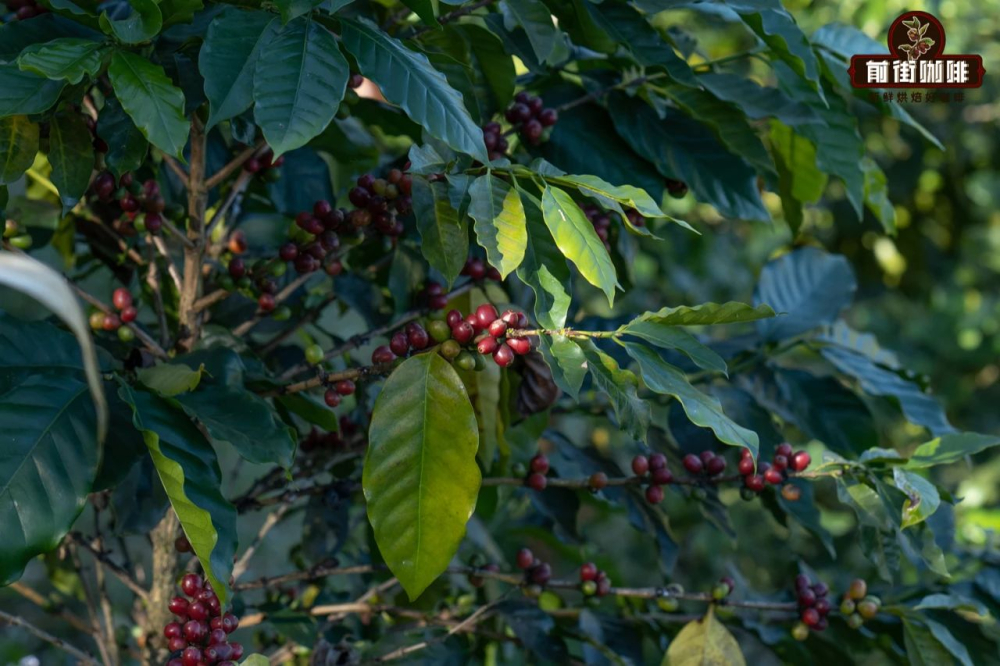
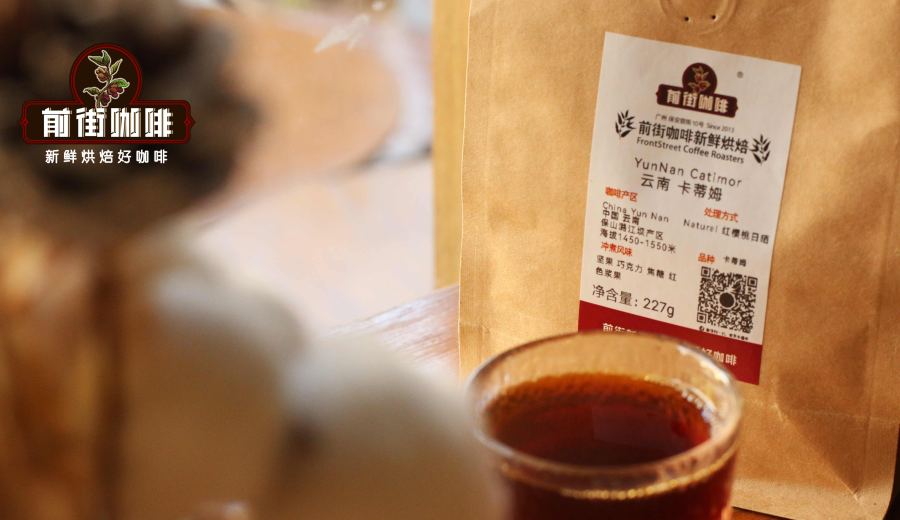
For pour-over brewing of Yunnan small-bean coffee, a medium roast is recommended—it preserves chocolatey aromas while maintaining moderate acidity. In actual cuppings, this variety often presents nutty, herbal notes paired with brown sugar sweetness and plum-like acidity, achieving a well-balanced overall profile. If opting for a natural-processed version (such as a certain brand’s 2013 offering), the fruit and melon sweetness becomes more pronounced, with a black-tea-like body and chocolatey aftertaste, delivering clear flavor layers and a clean finish.
Given its balanced profile, it is suggested to use a V60 filter cone for pour-over brewing, with the water temperature set to88°C(too high can result in scorching bitterness, too low leads to under-extraction). The V60’s wide spout and spiral rib design enhance water flow smoothness, intensifying flavor layers. For those preferring a fuller body, the KONO filter cone can also be tried, though flavor richness may slightly decrease.
Specific pour-over parameters are as follows: filter cone selectionV60, water temperature88°C, coffee-to-water ratio1:15, grind sizemedium grind (75% passing rate through a Chinese standard No. 20 sieve). A three-stage pouring method is recommended: the first stage involves pouring 30 grams of water for a 30-second bloom to fully saturate the coffee grounds; the second stage uses a slow, small circular pour to reach 125 grams; once the water level drops just above the bed of grounds, continue pouring to 225 grams before stopping, with a total extraction time of approximately2 minutes.
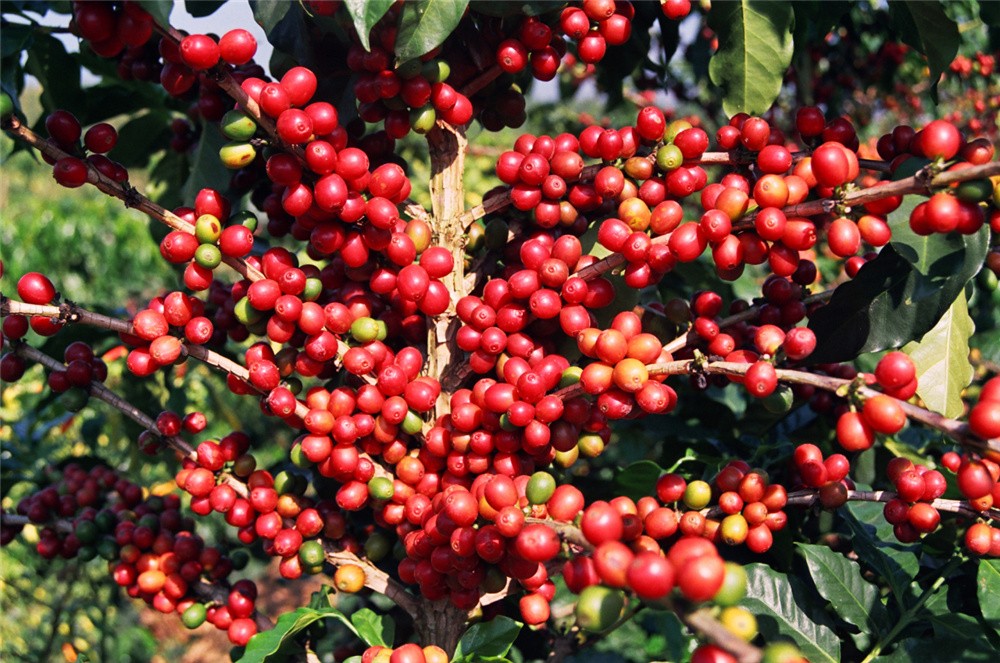
The final brewed Yunnan washed small-bean coffee features prominent nutty dry aromas, with herbal, chocolate, and caramel notes on the palate, and a lingering hint of fruity acidity. The overall profile is refreshing and layered, making it an excellent choice for coffee enthusiasts who appreciate balanced flavors.
The above content is compiled by CoffeeHunters, a coffee news website.


