








Introduction:Want to explore the unique charm of Peruvian coffee? This article takes you deep into the production regions, flavor profiles, processing methods, and roasting recommendations of this rising South American coffee star, while also analyzing the logic behind its grading system. Whether you're new to specialty coffee or seeking inspiration for your emerging-origin coffee menu, this beginner’s guide to Peruvian coffee offers practical insights.
Although Peru is the world’s eleventh-largest coffee producer, it is often misunderstood as merely a blending component. In reality, this country, home to ten distinctive growing regions, is gradually stepping onto the international stage with its clean, mild, and sweetly pronounced coffee beans. Most of its coffee is grown in high-altitude, shaded environments, predominantly Arabica, and its long history of organic cultivation has made it a model for sustainable agriculture.
The entire country can be divided into three major producing regions—northern, central, and southern—each with distinct flavor characteristics. The northern region, such as Cajamarca, sits at elevations of 900–2050 meters, where coffees often exhibit bright acidity and nutty tones; the central region, including areas like Huánuco with slightly lower altitudes (800–1200 meters), tends toward gentler and more balanced flavors; the southern region, such as Cusco, benefits from high altitude and unique microclimates, often showcasing complex layers of herbal and floral notes. This diversity allows Peruvian coffee to cater to the preferences of various roasters and consumers.
Coffee farming in the country is predominantly carried out by smallholders, with an average farm size of no more than two hectares per household and a yield of about 3,000 pounds per hectare. Organic farming has a long history, but in recent years, production has faced challenges due to climate change and the threat of leaf rust. Nevertheless, this has also encouraged producers to focus more on variety selection and innovative processing techniques. The main varieties include Typica (making up 70%), Caturra (20%), and a small amount of Catimor, among others. Most are processed using the washed method, though some farms have also experimented with new techniques such as red honey or anaerobic fermentation.
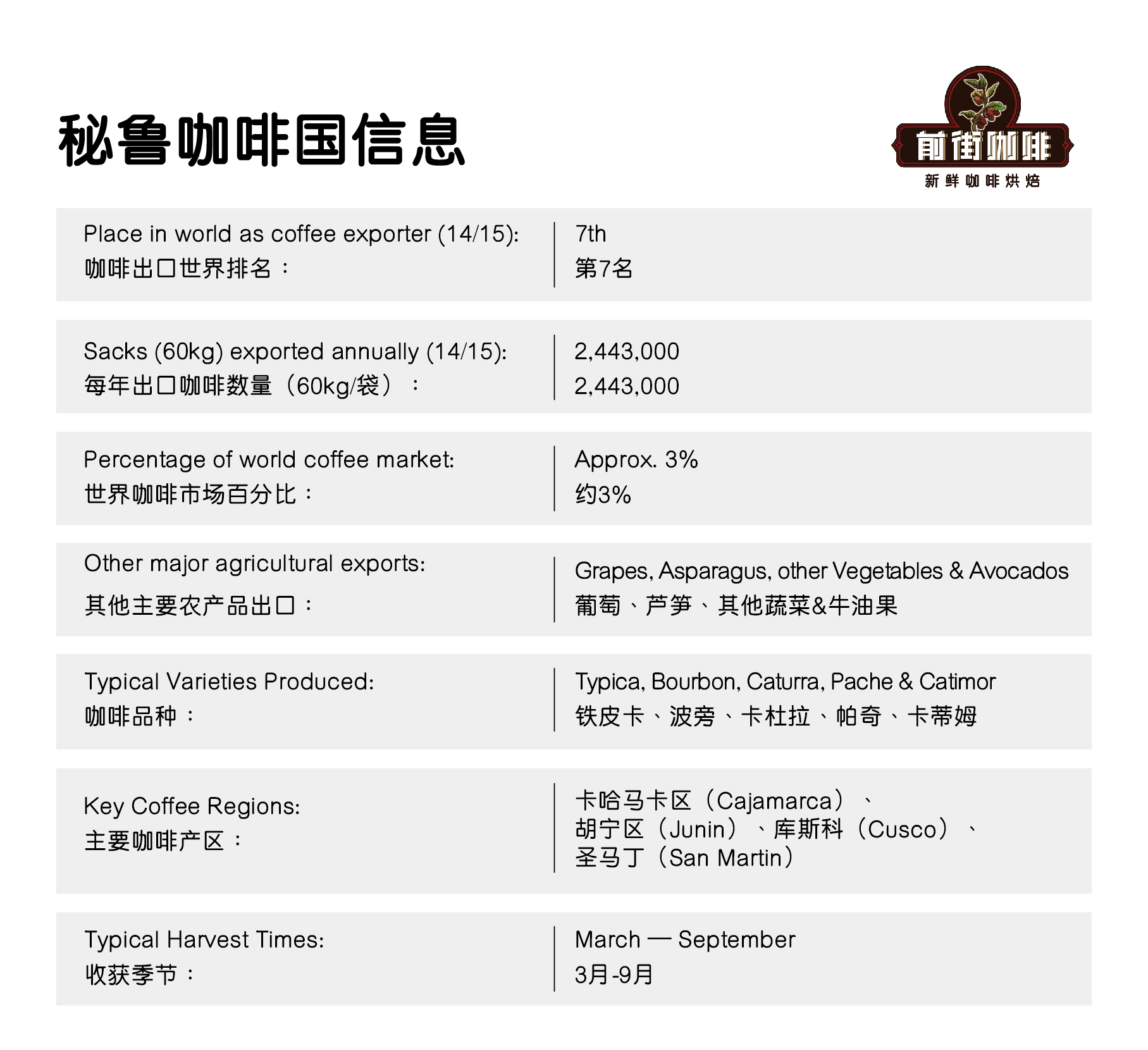
Looking at regional subdivisions, the northern region includes Amazonas, Cajamarca, Piura, and San Martín, accounting for about 43% of the national planting area. Among them, Cajamarca is known for its elevation of 900–2050 meters, where local smallholder organizations such as CENFROCAFE provide technical support and sales platforms, helping to promote local roasting and café development. The central region includes areas such as Huánuco and Junín, making up 34%. A typical example is Junín, at elevations of 1400–1900 meters, which was once affected by civil war and disease but has recovered in recent years. Coffees from this area are known for their gentle acidity and light aroma. The southern region comprises Apurímac, Cusco, and others, accounting for 23%. Cusco, at elevations of 1200–1900 meters, is mostly managed by smallholders, and the thriving tourism in the surrounding area has also contributed to improved coffee quality.
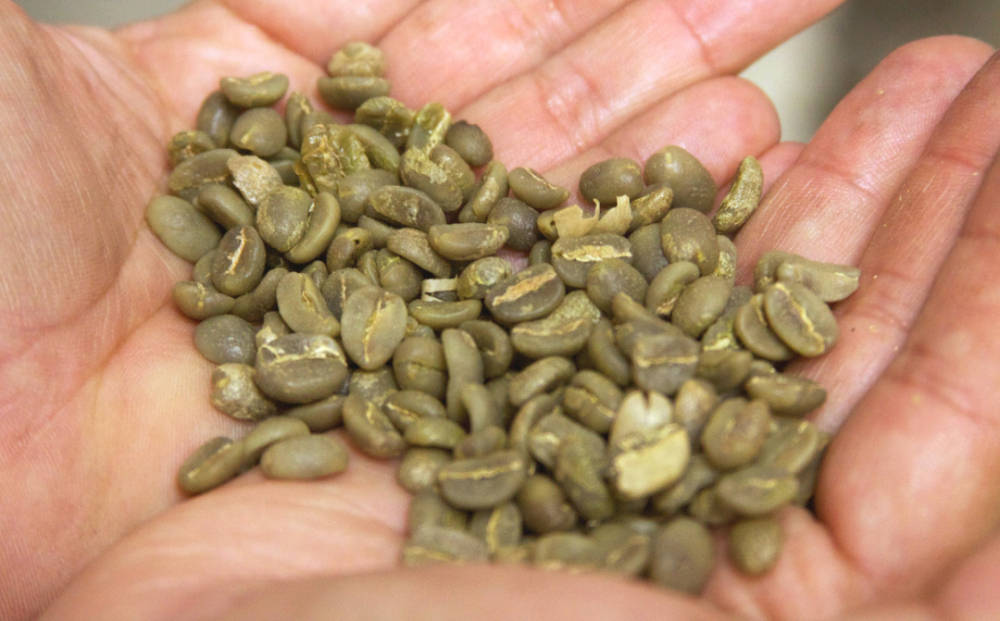
In terms of flavor, Peruvian coffee generally exhibits medium body, excellent balance, pleasantly bright acidity, and is often accompanied by nutty and sweet aromatic notes. The beans have an appearance similar to semi-washed, and the meticulous processing results in a mild, subtly acidic cup with clear layers. It’s worth noting that the bean color tends to be dark green or blue-green, similar to some sun-dried processed beans, so identification relies on processing method labels.
The grading system is based on altitude: SHG (Strictly High Grown) refers to very hard beans grown above 1350 meters, SG (High Grown) for hard beans between 1200–1350 meters, and SC (Central Standard) for those from medium-standard altitude regions. The slow growth at high altitudes leads to denser beans with more saturated flavor compounds, often resulting in superior acidity and sweetness profiles.
In terms of processing methods, thanks to abundant water resources, Peru mainly uses the washed process, though sun-dried options are also available. Some advanced farms have adopted innovative techniques such as red honey, double anaerobic fermentation combined with washed processing, or anaerobic fermentation paired with sun-drying. For example, the double anaerobic process involves 14 hours of pulp fermentation, followed by a second 24-hour fermentation after depulping, then three rounds of washing and temperature-controlled drying, with strict temperature control at 18–22°C (during fermentation) and 30–35°C (during drying).
For roasting, a medium to dark level is recommended to fully showcase its aromatic intensity and layered complexity. For actual pour over brewing, you can refer to French press parameters: 20 grams of coffee, BG grind 6M (70–75% passing through a Chinese No. 20 sieve), a brew ratio of 1:15, and a water temperature of 86–88°C. The procedure involves preheating the brewing vessel, adding the coffee grounds, pouring hot water and gently stirring, then steeping for three minutes before slowly pressing down. This method preserves a rich mouthfeel and sweetness, making it ideal for appreciating the delicate qualities of Peruvian coffee.
The above content is compiled by CoffeeHunters, a coffee news website.


