







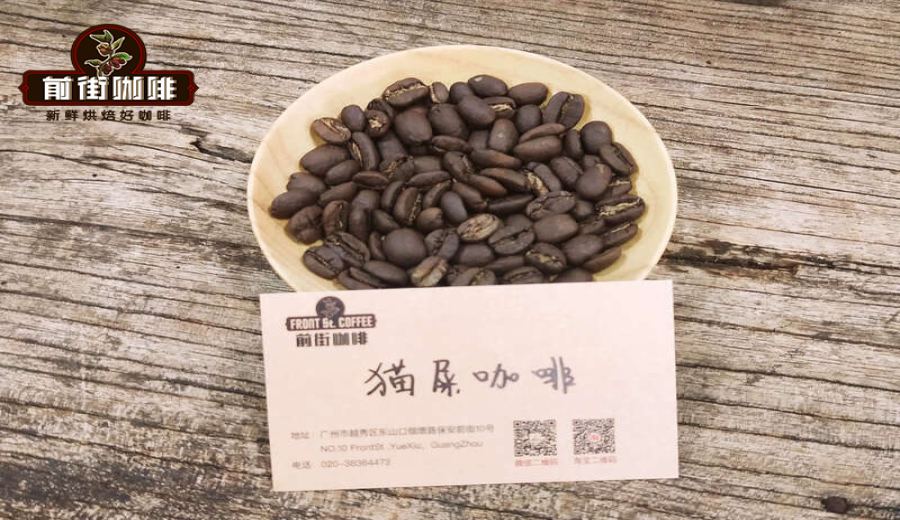
Introduction:Civet coffee (Kopi Luwak) has sparked widespread controversy due to its unique "internal fermentation" process, yet it continues to captivate the curiosity of countless coffee enthusiasts. This article delves into the natural habits of civets and how their digestive systems influence coffee flavor, dissects the reasons behind its exorbitant price, and provides practical roasting and pour-over parameters to help you better understand this legendary coffee bean from Sumatra, Indonesia, enabling you to make a more informed choice.
Civet coffee, also known as Kopi Luwak, is one of the most talked-about coffees in the world. It is famed for its special "animal internal fermentation" processing method but has also faced heavy criticism due to animal welfare concerns. In fact, the original form of this coffee did not come from factory farming but from Indonesian mountain dwellers collecting coffee beans excreted by wild civets. The focus is not on how the beans are formed but on the subsequent processing methods and whether the animals' nature is respected. Only by understanding the truth behind it can you truly appreciate the uniqueness of this coffee.

The high price of civet coffee is attributed not only to its unique production process but also to its extremely limited production. Traditionally, civets would select ripe coffee cherries to eat. After passing through their digestive tract, where acid breakdown, enzyme activity, and fermentation reactions occur, the coffee beans are excreted and then undergo drying and roasting. This process is believed to reduce the acidity of the coffee and impart unique flavors. However, the foundation of these benefits is that civets can forage freely and choose high-quality coffee fruits. In commercial production, however, many civets are kept in cages and force-fed unripe or flavored coffee beans, leading to a decline in both quality and animal welfare.
In terms of flavor profile, civet coffee typically exhibits pronounced herbal, nutty, and dark chocolate notes, with a rich and full-bodied mouthfeel. Some products may also carry a slight hint of fermentation. Since most civets live in low-altitude areas and consume mostly Robusta coffee cherries, the resulting flavor tends to be stronger and more robust than Arabica, sometimes with an earthy and vegetal undertone. These flavors may not suit everyone’s palate, but they are indeed highly distinctive.
What exactly is this so-called "internal fermentation processing method"?It is said that the civet’s stomach contains special enzymes that can break down proteins in the coffee beans, thereby influencing the flavor. However, in reality, the digestion time for coffee beans in a civet’s stomach is usually only 1 to 2 hours. Such a short retention time provides barely enough opportunity for deep protein breakdown or significant flavor transformation. Therefore, the claim that "enzyme breakdown alters flavor" is largely marketing rhetoric with limited actual impact.
So, is civet coffee worth trying? If you’re seeking a unique flavor experience rather than just a gimmick, choosing a product from a reliable source—one that ensures the civets forage freely and are not force-fed—is a more responsible option. Otherwise, this cup of coffee might just be a story about commercialization, rather than a true taste sensation.
Civet coffee from Sumatra, Indonesia, is generally graded as G1, with the variety being Arabica (though in most cases, it is mixed with Robusta genetics or influences). It is processed using the civet internal fermentation method. While this processing method is controversial, when operated correctly and with guaranteed animal welfare, it can still showcase a uniquely distinctive coffee character.
If you decide to try brewing this bold-flavored coffee bean, the following professionally recommended roasting and pour-over parameters will help bring out its rich layers of taste.
[Roasting Recommendations]
It is recommended to use the Yangjia 800N roaster.Preheat the drum temperature to 200°C., then lower it to160°Cbefore dropping the beans in.Set the air vent to 3.,with a heat setting of 130.The turnaround point is around1 minute and 28 seconds.Maintain the heat until5 minutes and 40 seconds,when the beans turn yellow. At this stage, the grassy aroma gradually fades as the beans enter the dehydration phase. Then increase the heat to140,and open the air vent to 4.The surface will begin to wrinkle, and the aroma shifts to toasted bread and early-stage coffee notes. Next, reduce the heat to100,and open the air vent to 5.Closely monitor the arrival of the first crack. Around9 minutes and 15 seconds,the first crack will begin. At this point,fully open the air ventto allow even development of the beans. The first crack development time is approximately4 minutes and 25 seconds,with a target drop temperature of203°C.

[Pour-Over Recommendations]
Use a KONO filter cone.Control the water temperature at 86–87°C.,with a recommended powder-to-water ratio of 1:15.The grind size should be medium-coarse, roughly equivalent to a 20-mesh Chinese standard sieve with a passing rate of75%. First, pour30 grams of water for blooming for about 30 seconds.Then, use a small stream to circle-pour water. When the total water volume reaches125 grams,perform the first pour. When the water level is about to expose the coffee bed, continue pouring until the total reaches225 grams,then stop. Wait for the water level in the filter cone to drop again and is about to expose the coffee bed, then remove the filter cone to complete the extraction. The total extraction time is approximately2 minutes..
This civet coffee has a clear flavor profile, often showcasing layers of herbal, nutty, and dark chocolate notes, accompanied by subtle fermentation aromas. It has a full-bodied and smooth mouthfeel, making it suitable for drinkers who enjoy intense-style coffee. However, due to the uniqueness of its origin and processing method, consumers are advised to pay close attention to its production background when purchasing and support animal-friendly and sustainable coffee industry practices.
The above content is compiled by CoffeeHunters, a coffee news website.


