







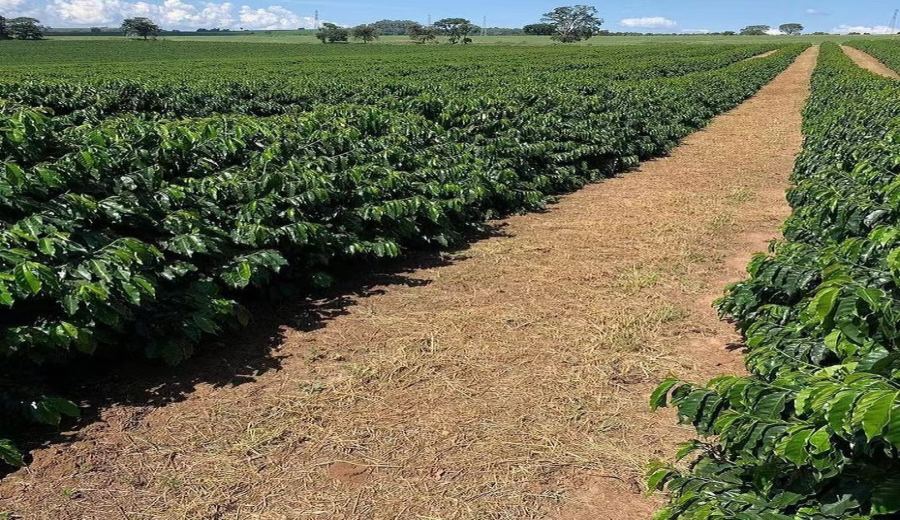
Introduction:Brazil is the world’s largest coffee-producing country, and its coffee is known for being low in acidity, rich in body, and featuring nutty and chocolatey notes — making it ideal for those who dislike overly acidic or astringent flavors. This article delves into the terroir characteristics of Brazil’s major producing regions such as Cerrado and Mogiana, compares the flavor differences between Red Bourbon and Yellow Bourbon, and provides practical roasting and pour-over parameters to help you master the correct way to enjoy Brazilian coffee.
Brazil is not only the top coffee producer in the world but also the source of many everyday coffees enjoyed by coffee lovers. Although Brazilian single-origin beans may not be as widely seen on the market as espresso blends, their unique balanced taste, low acidity, and rich nutty and chocolatey aromas make them a favorite among those who prefer milder flavors. This article will start with the historical background of Brazilian coffee, take you through the geography and climate features of key producing regions such as Cerrado, Sul de Minas, and Mogiana, analyze the distinctive flavors of two popular varieties — Red Bourbon and Yellow Bourbon — and finally offer professional roasting advice and pour-over parameters to help you more fully appreciate the charm of Brazilian coffee.
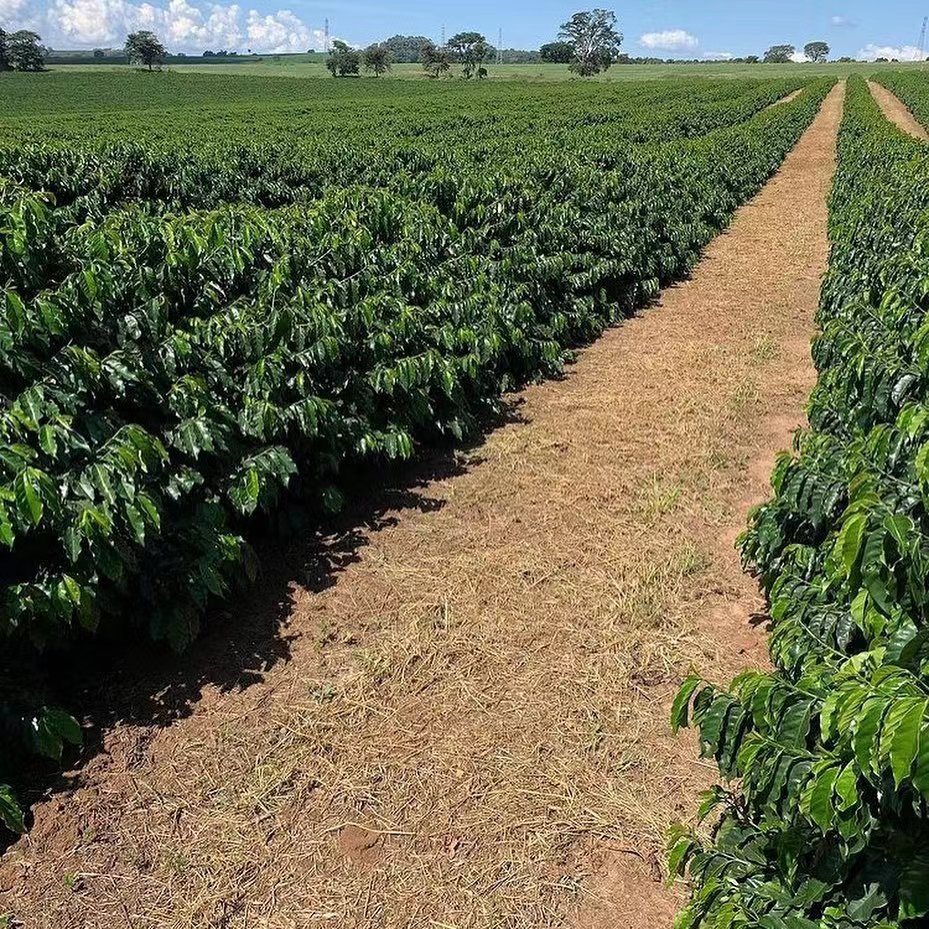
As the global leader in coffee production, Brazil’s coffee culture is as deeply rooted as China’s tea culture. Although most Brazilian coffee is used in blends, its single-origin beans — such as those from Cerrado and Fazenda Rainha Yellow Bourbon — also have a steady following among coffee enthusiasts. The reason Brazilian coffee often serves as the base for blends lies in its clear flavor profile, low acidity, full body, and often the characteristic aroma reminiscent of roasted peanuts. This balance makes it a stable element in blends and a friendly choice for those who dislike acidic or bitter tastes.
The rise of Brazilian coffee has an interesting history behind it. According to records, coffee cultivation in Brazil began in the 1720s when a Portuguese captain named Francisco de Mello Palheta managed to bring coffee seeds to Brazil through a friendship with the wife of the governor of French Guiana. Over the following decades, coffee spread from the north to the south, reaching regions such as São Paulo and Paraná. However, due to Paraná’s high latitude, frost damage during winter posed a significant threat to coffee crops.
It wasn’t until the 1970s and 1980s that Brazilian farmers gradually shifted their focus to northern São Paulo, such as the Minas region and Bahia. These areas have a warm climate with little frost, and have since become important regions for specialty coffee. Before 1990, Brazil’s coffee industry was heavily regulated by the government, which used policies such as minimum price protection to stabilize the market, but this also led to overproduction. With market liberalization in 1990, the former “Brazilian Coffee Institute” transformed into a non-interventionist national economic association, allowing producers and exporters to trade directly. This reform laid the foundation for Brazil becoming the world’s largest coffee exporter.
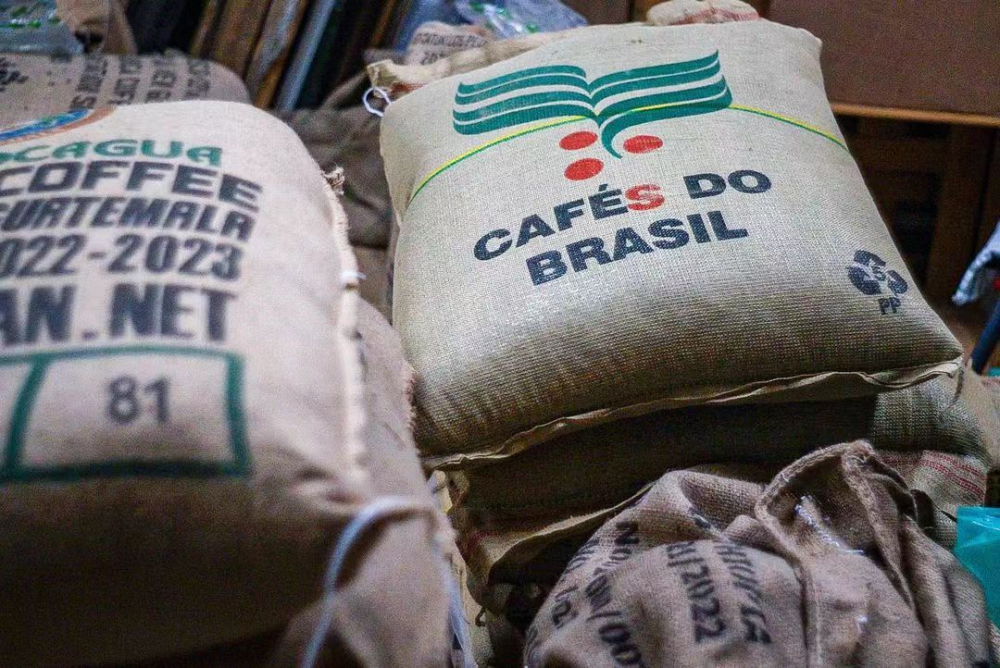
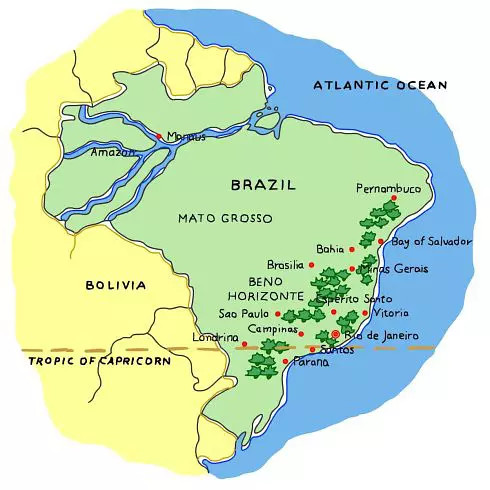
Brazil’s coffee-growing regions are mainly concentrated in the central-southern part of the country, covering approximately seven states and 14 major producing areas, including Sul de Minas, Minas Mountains, Chapada de Minas, Matas de Minas, Mogiana, Centro-Oeste de São Paulo, Montanhas do Espírito Santo, Conilon Capixaba, Cerrado, Planalto da Bahia, Baiano Atlântico, Paraná, Rondônia, and Cerrado. Among these, Cerrado and Sul de Minas are the two most representative regions, having a profound impact on Brazil’s international coffee image.
Sul de Minas is located in a hilly area at altitudes between 700 and 1200 meters and is considered the birthplace of commercial coffee in Brazil. Thanks to its favorable terrain and climate conditions — especially areas above 1100 meters in altitude with large day-night temperature differences — it is very suitable for growing Bourbon and Yellow Bourbon varieties and has laid the foundation for specialty coffee. In contrast, the Cerrado region is situated in the central savannah of Brazil, characterized by flat terrain, dry and cool weather, providing a unique growing environment for coffee. The true Cerrado coffee-growing area refers to the region in the central-western part of Minas Gerais at altitudes above 1000 meters, where the coffee is known for its rich body, cleanliness, and low earthy notes.
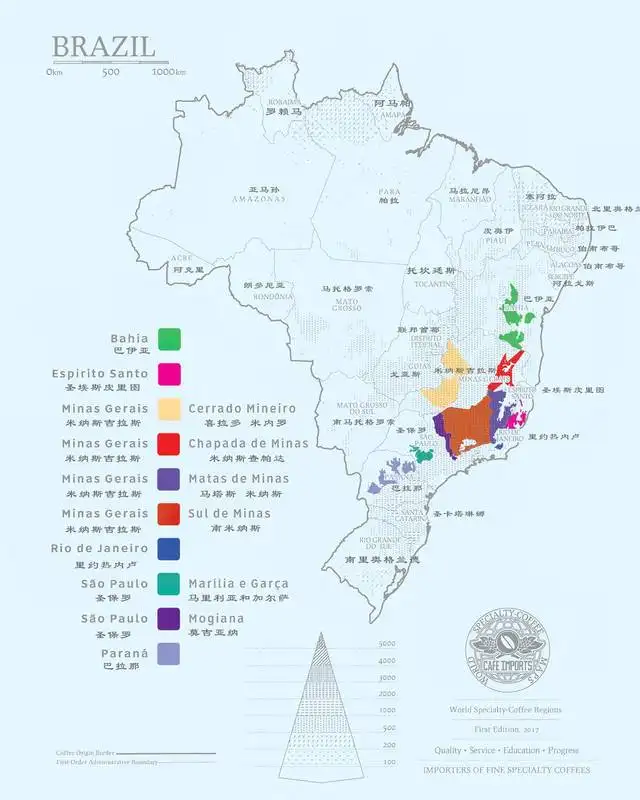
Mogiana is located near the southern part of Sul de Minas, with varied terrain where coffee plantations are scattered among shrubs and grasslands. This region has a planting culture that combines tradition with modernity, integrating mountainous environments with contemporary technology to produce many high-quality green coffee beans. It’s worth mentioning that the two Brazilian single-origin beans currently offered are from Red Bourbon in Cerrado and Yellow Bourbon in Mogiana, each showcasing distinct flavor profiles.
When it comes to Brazilian coffee varieties, Red Bourbon and Yellow Bourbon are the two most frequently mentioned stars. Red Bourbon is a mutation of Typica, with its cherries turning red when ripe. It generally offers a richer aroma, brighter acidity, and even wine-like complexity. This is also one of the most widely cultivated varieties in Brazilian growing regions. As for Yellow Bourbon, it is another variation within the Bourbon family, with its cherries ripening to an orange-yellow color. Due to being primarily grown at higher altitudes, it typically exhibits full-bodied nutty and chocolatey flavors, with soft acidity and an overall clean and refreshing taste.
In terms of roasting, Brazilian coffee beans usually have a solid texture and moderate moisture content. For example, beans with around 9.9% moisture content have strong heat absorption capacity. It is recommended to start roasting at 200°C, using high heat and a small air vent in the initial stage to accelerate dehydration. Once dehydration is complete, switch to medium heat and medium air vent to promote the Maillard reaction, and drop the beans near the end of the first crack to preserve optimal aroma and body. Specifically, using a Yangjia 800N roaster with a charge of 550g, preheat to 200°C before dropping the beans. Gradually adjust the air vent and flame to manage the balance between dehydration and development stages. The ideal drop time is about 3 minutes after the first crack at around 201°C, achieving the desired flavor profile.
Cupping data shows that Brazilian coffee often presents flavors such as roasted nuts, peanut butter, fermented fruit, and sugarcane sweetness — especially during the dry and wet aroma stages, where intense nutty and spicy notes can be detected. For pour-over brewing, it is recommended to use a Kono filter, with water temperature controlled at 89°C, a coffee-to-water ratio of 1:15, and a medium-fine grind (75% passing rate through a Chinese No. 20 sieve). Begin with a 30-second bloom using 30g of water, then pour in small circles to reach 125g before the first pause, followed by additional pouring to 225g to finish. Total extraction time is about 2 minutes, fully highlighting its balanced characteristics of sweetness, body, and low acidity.
In summary, Brazilian coffee, with its approachable flavors and diverse regional characteristics, is worthy of exploration by every coffee enthusiast. Whether you’re just starting out or looking for a reliable daily brew, Brazilian coffee offers a rich yet mild tasting experience. By understanding its regional traits, variety differences, and brewing parameters, you’ll be able to more fully appreciate the charm of this classic South American cup.
The above content is compiled by CoffeeHunters, a coffee news website.


