







Introduction:This article provides an in-depth analysis of two specialty coffee beans — the Java variety from Bolivia and the Geisha from Janson Estate in Panama — comparing their varietal origins, green bean appearances, roasting approaches, flavor profiles, and pour over brewing parameters. Whether you’re new to specialty coffee or a seasoned enthusiast seeking inspiration, this practical, comparative guide will help you better understand the unique characteristics and potential of both beans.
In the world of specialty coffee, Geisha has long been regarded as one of the finest coffee varieties, thanks to its distinctive floral and fruity aroma. Meanwhile, the Bolivian Java, a relative of Geisha, has gradually gained attention in recent years. Focusing on the Geisha from Panama’s Janson Estate and the Java variety grown in Bolivia, this article offers a comprehensive and practical comparison covering varietal background, green bean appearance, roasting curve, cupping flavor notes, and pour over brewing recommendations — providing clear direction when selecting or brewing these beans.
When it comes to Geisha, what stands out most is its vibrant and complex floral and fruity notes — one of the key reasons it shines among so many specialty coffees. The Bolivian Java, being genetically related to Geisha, is also stepping into the spotlight among coffee lovers. What are the actual similarities and differences between the two? Below, we will compare them across multiple dimensions, including sweetness, acidity structure, aftertaste layers, and even the most suitable brewing methods.
Geisha was first discovered in 1931 in the Gesha Forest of Ethiopia and was initially sent to the Kenya Coffee Research Institute. It was later introduced to Uganda, Tanzania, and Costa Rica, finally making its way to Panama by 1953, where it spread southward. After years of obscurity, it wasn’t until the Esmeralda Estate isolated and carefully cultivated it from other varieties that it began to shine in competitions. Cupping experience shows that Geisha often presents aromas of tropical fruits such as berries, citrus, peach, papaya, and mango, along with a refreshing bergamot (citrus) finish. It boasts a full sweetness and clean taste, making it a dream coffee for many enthusiasts.
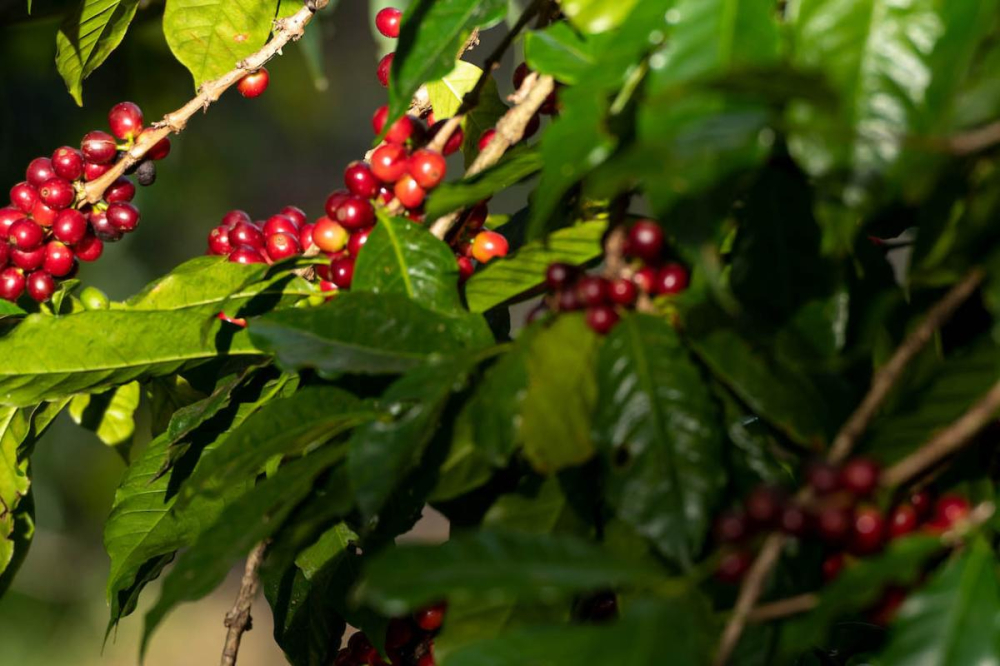
In terms of appearance, the green beans of Bolivian Java are typically slender and pointed at both ends; in contrast, the Janson Geisha beans are slightly shorter and more rounded and plump. These visual differences also reflect variations in their inherent flavor profiles and preferred processing methods.
Regarding roasting strategy, due to the high bean density and larger size of Janson Geisha, it requires greater heat absorption and a faster Maillard reaction during roasting. It is generally recommended to start with a slightly higher initial drum temperature, such as 200°C, and quickly adjust the heat and air damper within the first minute to stabilize the drying phase. In practice, when the drum temperature reaches around 153.3°C at the 1’32” turning point, the heat should be reduced to 140°C and the air damper set to 4. Once the bean surface turns yellow and the grassy notes fade, continue monitoring the bean surface. At the 9-minute mark, when wrinkles and black speckles appear signaling the approach of first crack, closely watch for the onset of first crack, which typically begins around 9’47”. Then maintain a low flame and extend the development time to 2’40”, finally dropping the beans at 197.1°C.

In comparison, the Bolivian Java is recommended to use an extended development phase roasting strategy to fully highlight the sweetness and cocoa-like characteristics brought by its sun-dried processing. Taking 500 grams of green beans as an example, using a Yangjia 800N roaster, it is suggested to start at a lower drum temperature of 170°C, with the air damper set to 3 and heat at 120. When the drum temperature reaches 111°C at 1’36”, adjust the air damper to 4 and gradually increase the heat to 140. At 151.1°C, once the bean surface turns yellow and the grassy notes dissipate, it enters a stable drying phase. By 7’56”, when the bean surface shows wrinkles and black spots heralding the approach of first crack, set the air damper to 5. First crack usually begins at 10’18”, and the post-first-crack development time is extended to 1’00”, with the roast completed at 190°C.
Cupping results show that Janson Geisha emits rich aromas of fermented ripe fruits in the dry stage, including maple syrup, lemon, citrus, apple, rose, dark chocolate, pomegranate, peach, and dark berries, forming a complex and layered aromatic profile. Upon tasting, it offers a balanced acidity and sweetness, with a cocoa and grape richness in the aftertaste, along with the elegant finish of rose tea. In contrast, Bolivian Java presents a distinctly different profile. The dry aroma features prominent hazelnut notes, followed by a creamy, nutty, and almond sweetness upon entry, then interwoven with citrus and tropical fruit acidity, accompanied by light fermented wine notes, resulting in a more three-dimensional flavor layering.
For actual pour over brewing, it is recommended to use a HARIO V60 filter cone, with water temperature controlled at 90°C and a powder-to-water ratio of 1:15. The grind size should be similar to that of fine sugar. Both beans are well-suited for a multi-pour extraction method: begin with a 30-second bloom using 30 grams of water, then pour in a small circular motion up to 125 grams for the first pour. When the water level drops and is about to expose the coffee bed, continue pouring to 225 grams before stopping. Finally, remove the filter cone when the water level drops again. The total extraction time is approximately 2 minutes.
In terms of overall flavor profile, Janson Geisha delivers pronounced tropical fruit and berry acidity with a highlighted maple sweetness, and the aftertaste reveals delicate notes of cocoa, grapes, and rose tea. The overall flavor is clear and the mouthfeel is extremely clean. On the other hand, Bolivian Java opens with citrus, lime, and hawthorn acidity, paired with a sweet orange-toned aftertaste. As it cools, it reveals a sugarcane sweetness and the soft floral notes of jasmine and rose tea, offering a richly layered and long-lasting finish. To put it simply, Geisha is like a refined perfume — distinct and refreshing, while Java is more like a classic floral tea — with lingering and evolving aromas.
The above content is compiled by CoffeeHunters, a coffee news website.


