







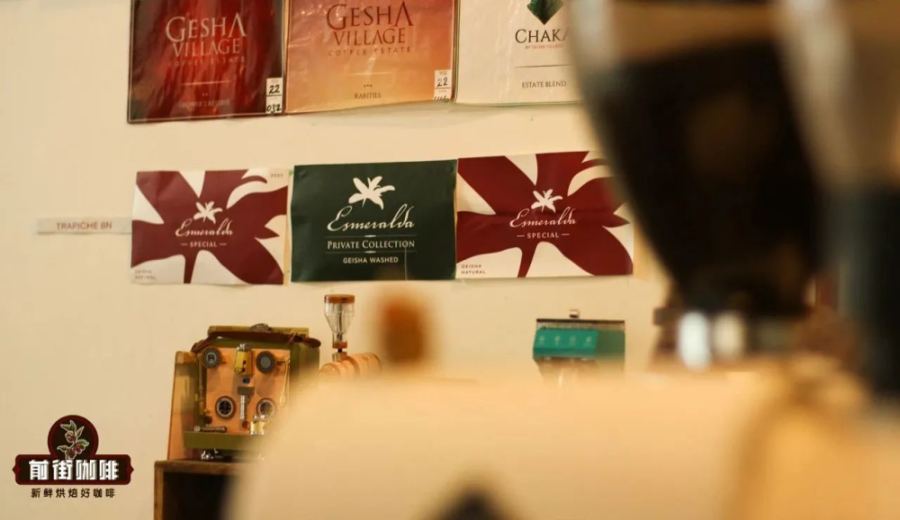
Introduction:Delve into Panama’s renowned Geisha variety, exploring everything from the characteristics of its key growing regions, famous estates and plot differences, to pour over recommendations and flavor profiles. This comprehensive guide will help you understand how different processing methods and roast levels bring out the multi-layered fruitiness and floral notes of Geisha. It also provides a practical three-stage pour over brewing method to help you precisely capture the charm of Panama’s specialty coffee.
Panamanian coffee is globally celebrated for its flagship Geisha variety, particularly its delicate floral and fruity aromas and distinct citrus notes, making it a dream coffee for many enthusiasts. This article starts with Panama’s main producing regions, analyzing in depth the environmental characteristics and microclimate differences of areas such as Boquete, Volcán, and Renacimiento, to help you understand how these elements shape the unique personality of the coffee. Additionally, it details the plot origins and processing differences of the three Geisha grades (Red Label, Green Label, and Blue Label) from Hacienda La Esmeralda, and compares the flavor profiles of other well-known Panamanian estate Geishas such as Flower Buzz, Elida, and Hartmann.
What makes Panamanian Geisha special is not only its rise on the international competition stage, but also the refined cultivation and processing craftsmanship it represents. In 2004, Hacienda La Esmeralda won first prize at the Best of Panama (BOP) competition with its Geisha variety, sparking a global specialty coffee craze for Geisha. However, even within Geisha, factors such as different producing regions, altitudes, processing methods, and microclimates can impart vastly different flavor profiles. Therefore, understanding these differences is where the deeper pleasure of appreciating Geisha lies.
Panama is located on the Central American isthmus, bordering Costa Rica to the north and Colombia to the south. Geographically, it connects North and South America, and climatically, it features both tropical and highland characteristics. The country’s terrain is predominantly mountainous, with a tropical maritime climate marked by significant day-night temperature variations. The average annual temperature ranges between 23–27°C, with distinct wet and dry seasons and an annual rainfall of about 1500–2500 mm. Such an environment is highly suitable for coffee cultivation, especially at high altitudes where it nurtures specialty coffee with delicate flavors and bright acidity.
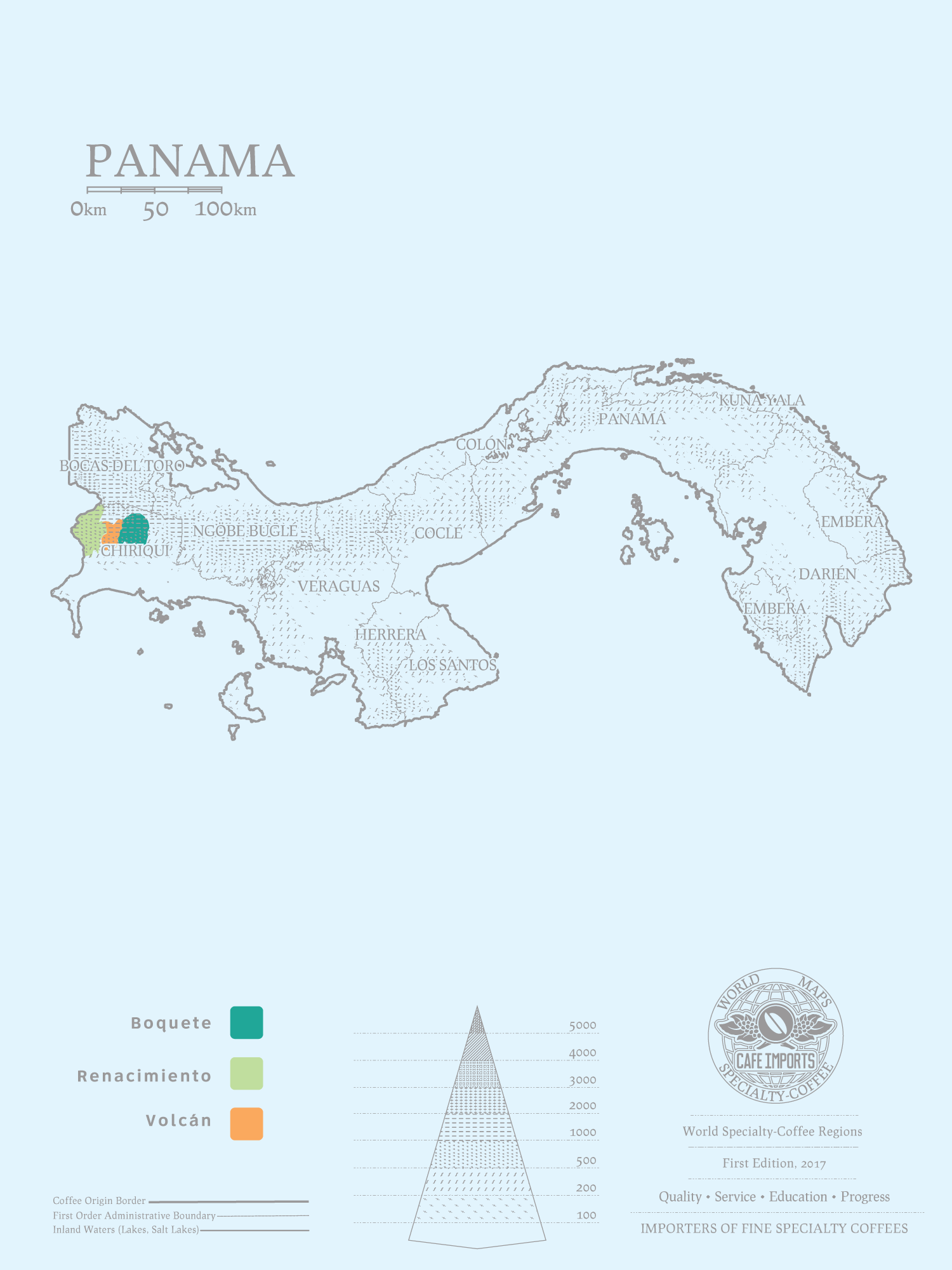
Panama’s specialty coffee regions are mainly concentrated in the western and northwestern parts, near the Costa Rican border and the Barú volcano. These areas not only have ideal elevations but also boast fertile volcanic soils and diverse microclimates, giving rise to numerous renowned producing regions.
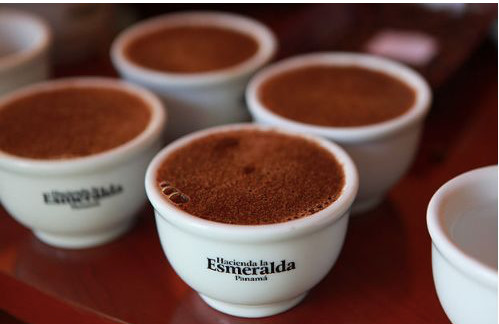
Boquete is one of Panama’s most prestigious coffee-growing regions, with elevations ranging from 1400 to 1900 meters. Nestled next to the Barú volcano, it enjoys a cool climate with significant day-night temperature variations. The volcanic soil, rich in minerals, makes it an excellent environment for growing Geisha. In addition to Hacienda La Esmeralda, estates such as Elida Estate and Finca Kotowa Duncan are also located here, producing a variety of high-quality specialty coffees.
Although less well-known than Boquete, the Volcán region has shown remarkable performance in recent years, gradually making a name for itself in international competitions. Some estates here have even won BOP championships. This area features even higher elevations, generally between 2000 and 3000 meters, and relatively lower rainfall, resulting in coffee with richer dried fruit aromas, high sweetness, and clear floral notes. The flavor profile is layered and uniquely distinctive.
The Renacimiento region is located in Chiriquí Province, bordering Costa Rica, at an elevation of approximately 1100 to 1500 meters. Though smaller in size and not a major coffee-producing area in Panama, it still holds potential and serves as a great choice for exploring regional diversity.
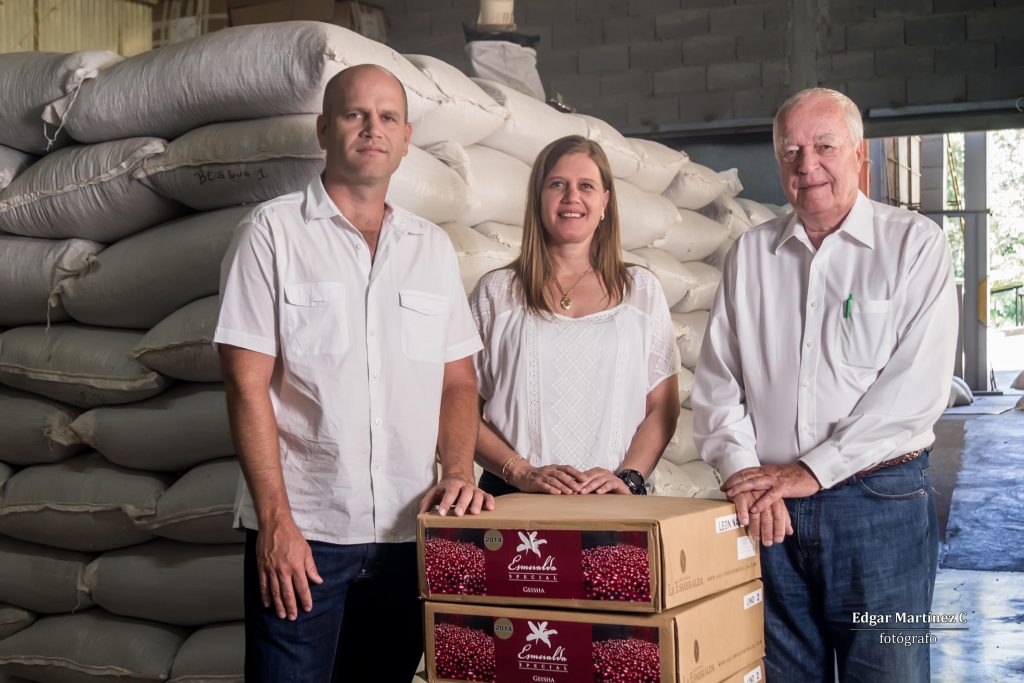
When it comes to Panamanian Geisha, Hacienda La Esmeralda Estate is undoubtedly the most iconic name. Purchased in 1964 by American banker Rudolph Peterson, the estate was initially focused on livestock farming. It wasn’t until 1987 when his son, Price, introduced the Caturra and Catuai varieties, and established a washed processing facility in 1994. In 1996, the estate acquired the neighboring Jaramillo farm, marking the beginning of the legendary chapter for the Geisha variety.
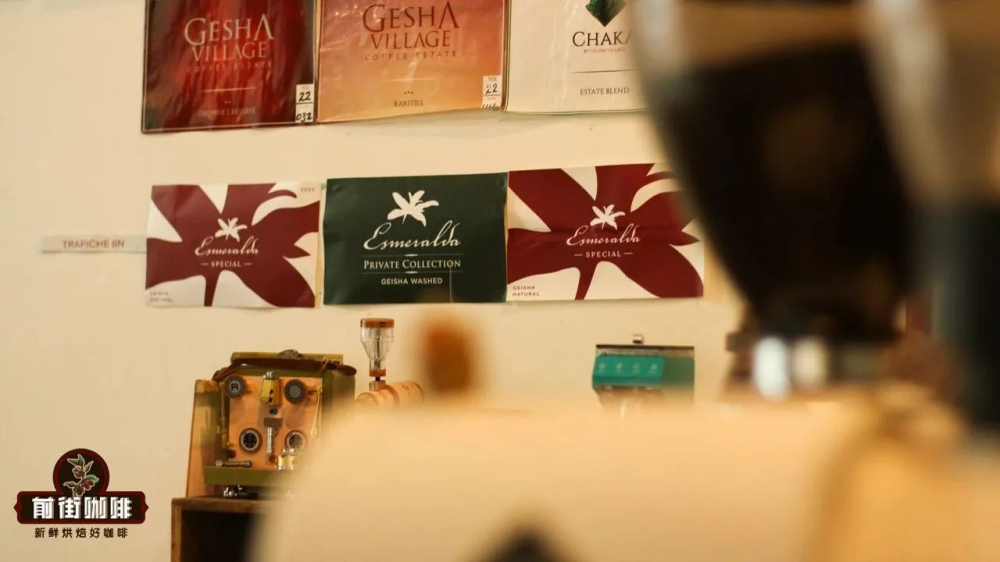
Hacienda La Esmeralda categorizes its planting areas into multiple brands based on altitude, microclimate, and cupping results. The Geisha variety is mainly grouped under three series: ‘Esmeralda Special’ (Red Label), ‘Private Collection’ (Green Label), and ‘Geisha 1500’ (Blue Label). Moreover, different plots such as Jaramillo, Cañas Verdes, and El Velo further influence the flavor profile due to variations in microclimate and soil details.
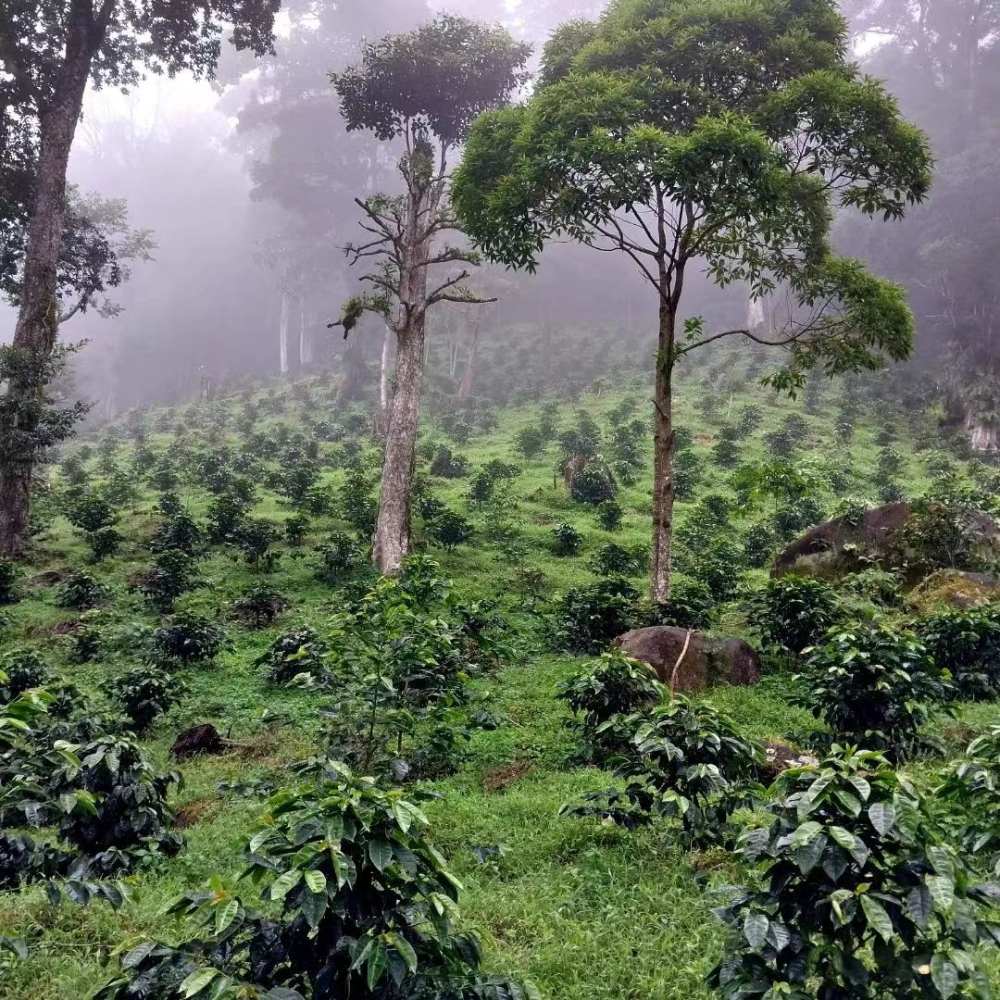
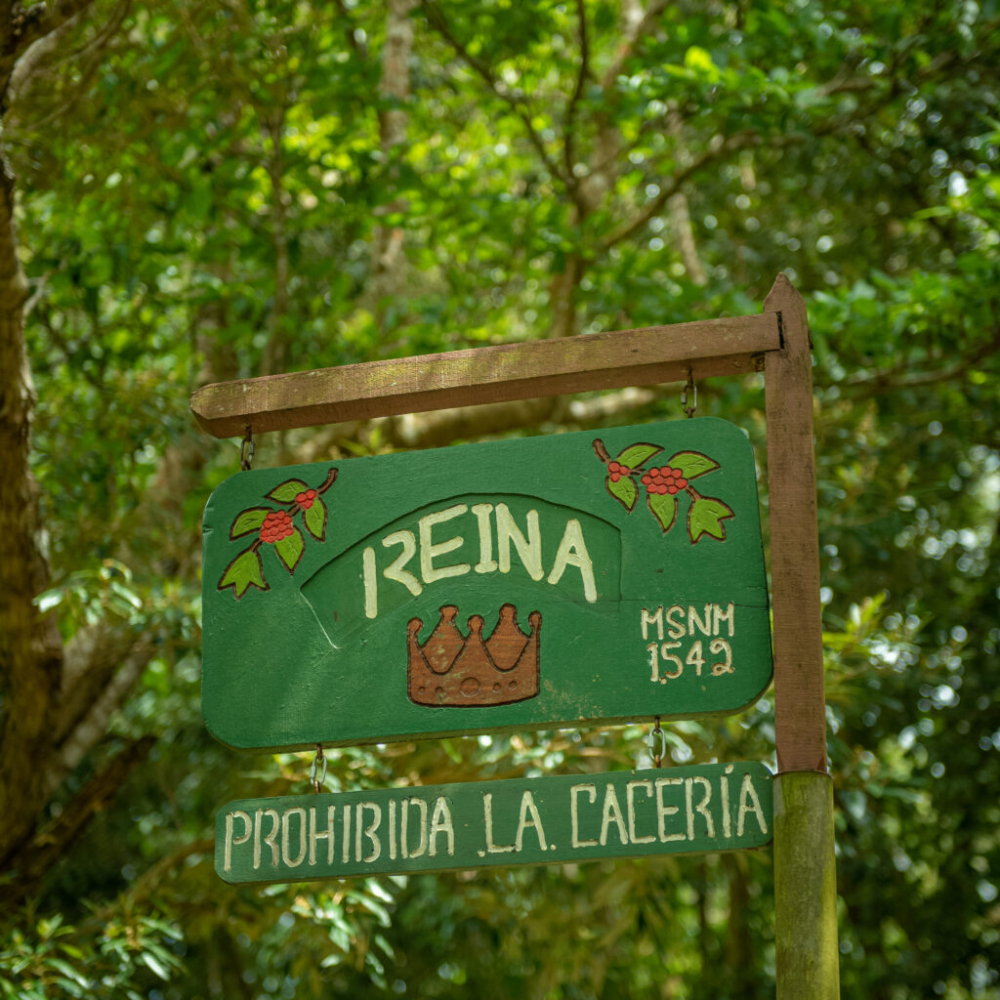
The Jaramillo plot, situated at an elevation of about 1600 to 1700 meters with an annual rainfall of up to 4000 mm and moderate day-night temperature differences, is one of the golden growing zones for Geisha. It is subdivided into several small plots including Mario, Noria, Reina, Bosque, and Buenos Aires. Among them, the Mario plot has drawn significant attention as the source of the 2004 BOP championship lot.
The Cañas Verdes plot sits at a slightly higher elevation, between 1600 and 1800 meters, with around 3500 mm of rainfall and includes nine smaller plots such as Lino, Coronado, and León. The newly acquired El Velo plot, ranging from 1700 to 1900 meters in elevation, also boasts climatic conditions highly suitable for Geisha cultivation. It has experimented with planting rare varieties such as Laurina and Pacamara.
The Esmeralda Special (Red Label) Geisha is typically selected from Jaramillo and Cañas Verdes plots at elevations of 1600 to 1800 meters, with cupping scores above 90, often sourced through auction lots. Its flavor is characterized by bright citrus, complex floral notes, and honey-like sweetness, commonly processed via washed or natural methods. The Green Label (Private Collection), though not auctioned, also uses high-elevation micro-lots, preserving the classic floral and fruity citrus profile of Geisha, with slight batch-to-batch variations in flavor. The Blue Label (Geisha 1500) blends Geisha from multiple plots at slightly lower elevations, offering a brighter, more refreshing profile. It was primarily washed processed in the past, but this series was discontinued after 2021.
Besides Hacienda La Esmeralda, Flower Buzz is another popular Panamanian specialty coffee. This blend of Geisha, Caturra, and Catuai is grown in the volcanic zone of Boquete at an elevation of 1600 meters. It is finely washed processed to highlight delicate floral and citrus notes, offering exceptional value for money. Elida Estate stands out with its high-altitude cultivation and anaerobic fermentation, producing Geisha with complex fermentation aromas and layers of berries. Hartmann Estate is known for its eco-friendly ethos, and its anaerobic natural processed Geisha showcases pronounced bergamot, passion fruit, and Earl Grey tea flavors.
If you wish to brew Panamanian Geisha at home using pour over, it is recommended to use a V60 dripper. Set the water temperature at 91–92°C, use about 15 grams of coffee, with a 1:16 coffee-to-water ratio, and grind the beans to a consistency where about 80% passes through a #20 sieve—similar to the fineness of fine sugar. For brewing, follow the three-stage method: the first pour is 30 grams of water for a 30-second bloom; the second pour adds 120 grams of water over approximately 55 seconds; the third pour adds another 90 grams, bringing the total brew time to around 2 minutes and 10 seconds with a total of 240 grams of water. These parameters help highlight the delicate acidity and floral-fruit notes of Geisha, while maintaining a rich mouthfeel and a sweet, lingering finish.
The above content is compiled by CoffeeHunters, a coffee news website.


