







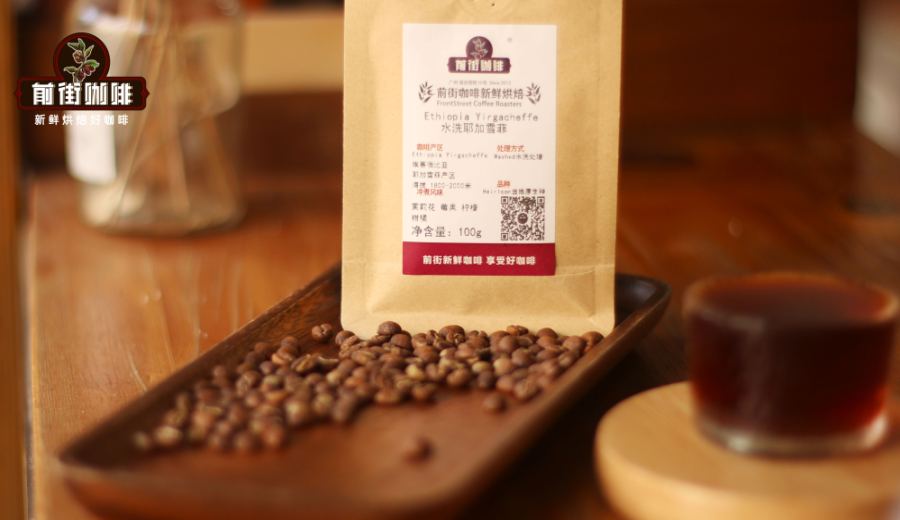
Introduction:Yirgacheffe Kochere is an exceptionally representative micro-region in Ethiopia, renowned for its washed processing method. It often boasts bright citrus acidity and vibrant floral and fruity aromas. This article will take you deep into the geography, production model, and details of the washed process in Kochere, along with professional roasting and pour-over parameter recommendations to help you fully grasp the characteristics of this balanced and premium specialty coffee bean.
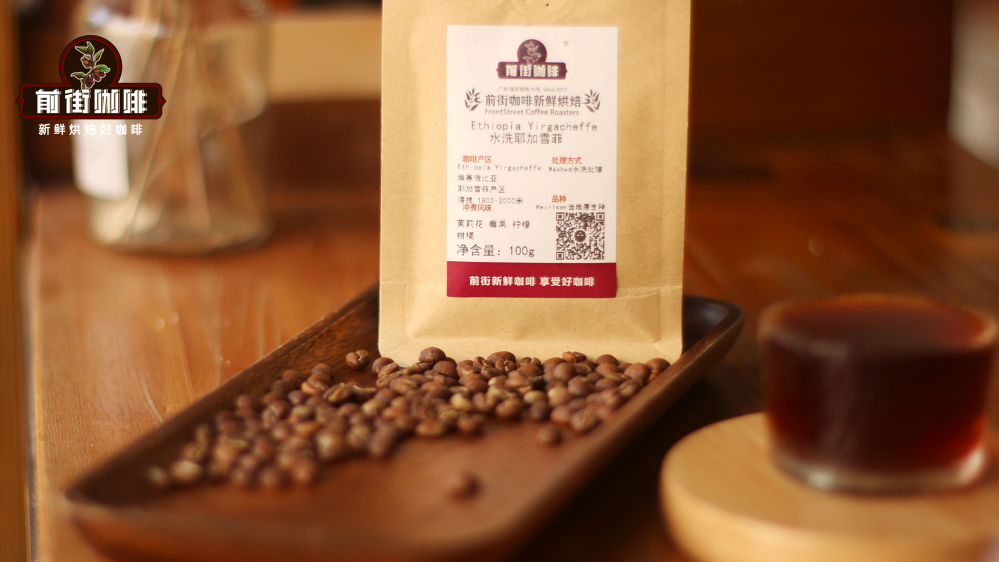
Yirgacheffe is a star-producing region within Ethiopia’s coffee map, and Kochere is one of its most notable micro-regions. The coffee beans produced here are known for their bright acidity, rich floral and fruity notes, and silky sweetness—qualities that become even more distinct under washed processing. Through multiple cuppings, the industry has found that Kochere washed beans not only have high cleanliness but also exhibit remarkable complexity and unique regional flavors.
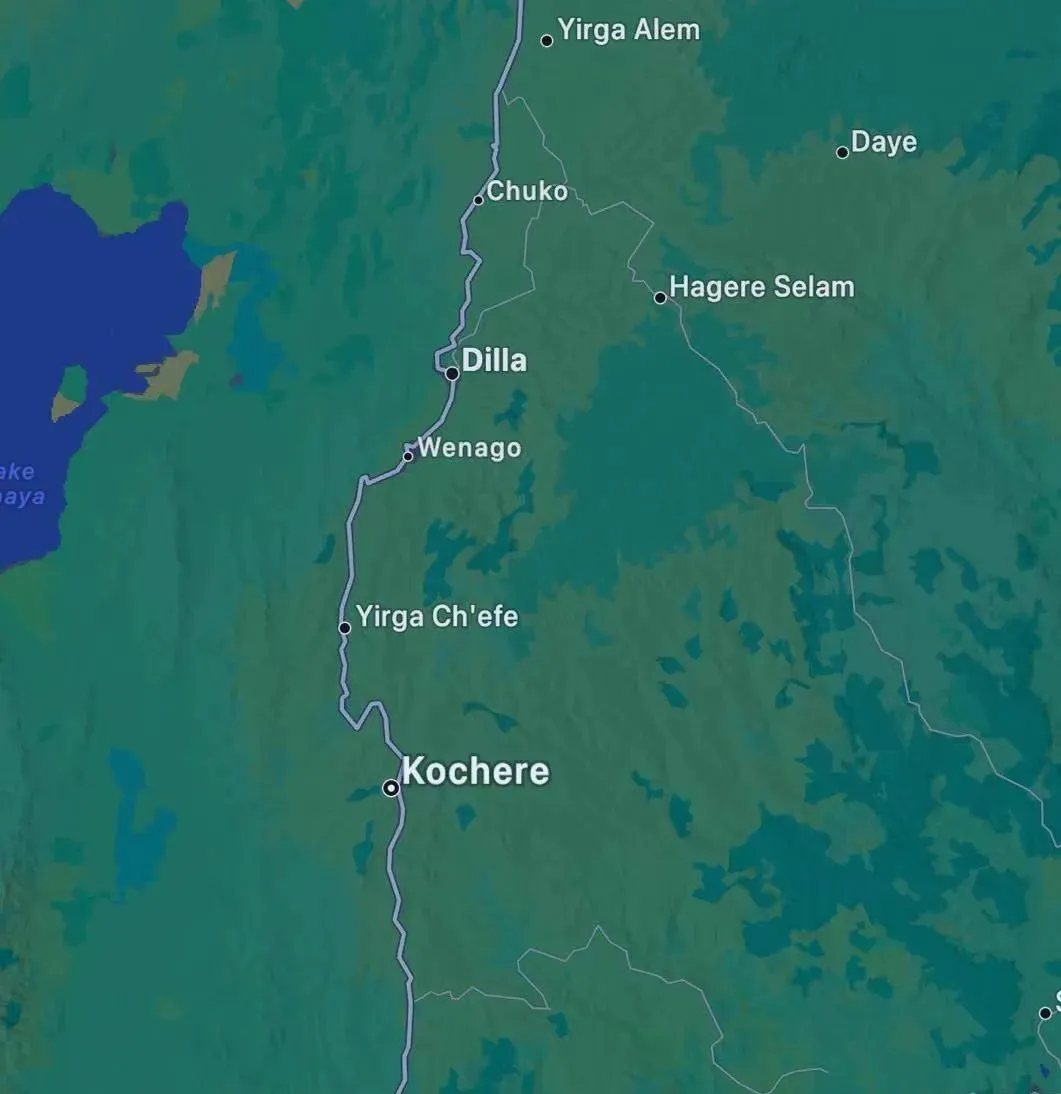
Kochere is located about 25 kilometers southeast of Yirgacheffe, at an altitude of approximately 1,650 to 1,800 meters, making it one of Ethiopia’s higher-altitude coffee-growing areas. Although Yirgacheffe itself is a small town with a population of only around 20,000, surrounding smaller regions such as Wenago, Kochere, and Gelena Abaya are also categorized under the Yirgacheffe region due to their similar coffee profiles. Among them, Kochere stands out for its consistent high quality and distinctive flavors, and has been designated as an independent producing area within the ECX (Ethiopia Commodity Exchange) system—highlighting its significance.
Kochere is not only a geographical micro-region but also one of the 77 Woredas (administrative districts) under the SNNPR (Southern Nations, Nationalities, and Peoples' Region), located in the Gediyo part of the Yirgacheffe area. More specifically, Kochere can be further divided into multiple micro-zones. Some coffee batches are even named after specific villages (such as Chelelektu or Teklu Dembel), processing stations (like the Alim Washing Station), or micro-topographies (such as Banko Gutiti). This detailed classification helps improve traceability, stabilizes annual flavor profiles, and enhances market value.

Coffee production in Kochere is primarily carried out by smallholder farmers, who deliver their harvested coffee cherries to local cooperatives for unified processing. For example, in Chalalacktu village, around 100,000 people rely on coffee as their main source of income. The coffee industry has not only improved the local economy but also driven infrastructure development, including health facilities and educational resources. Thanks to well-equipped processing facilities and skilled techniques, Kochere washed coffees generally showcase complex aromas of molasses and citrus, with clean and sweet flavors.
The Yirgacheffe Kochere beans introduced by the industry belong to the G1 grade, the highest-quality classification for green beans. These beans display a very typical Yirgacheffe flavor profile, including bright lemon acidity, elegant jasmine floral notes, as well as subtle tones of melon, citrus, ginger, and spiced tea. The overall profile is both lively and layered.
The washed processing method (Washed Process) used for Kochere washed beans is a traditional technique that gradually removes the outer fruit flesh and mucilage of the coffee cherry using water. The basic steps include: flotation to remove floaters → removal of pulp → fermentation to remove mucilage → washing → drying → hulling. Compared to the natural (sun-dried) method, the washed process requires a stable water supply and depulping equipment, but it effectively reduces defect rates, improves bean consistency, and highlights the coffee’s “cleanliness” and “bright acidity.” The dried coffee beans need to reach a moisture content of around 12% before the final hulling process.
When roasting this Yirgacheffe Kochere, the industry opts for a medium-light roast to highlight its acidity and clear flavors. Using a Yangjia 800N roaster, the charge weight is 550 grams, with an initial drum temperature set at 200°C, air vent at 3, and flame power at 160. At the turning point 1’32” into the roast, when the drum temperature is 151°C, the air vent is adjusted to 3.5, and at 140°C, the flame power is increased to 180. As the bean surface gradually turns yellow and the grassy aroma fades, the stable drying phase begins. Around 8’35”, when wrinkles and dark spots appear on the bean surface, it marks the turning point before first crack; by 8’53”, first crack begins, the air vent is adjusted to 4, and development continues for 1’45”, with the roast finishing at 195°C. This roasting curve helps preserve the bean’s inherent acidic and fruity notes while maintaining a good balance of sweetness.
During cupping, which is generally conducted within 8 to 24 hours post-roast, a 200ml ceramic cupping bowl is used, with water temperature controlled at 94°C and water TDS at approximately 150ppm. The grind size is standardized at 70%-75% through a #20 sieve, with a brew ratio of 1:18.18 (11 grams of coffee to 200 milliliters of water). Cupping results show an orange blossom dry aroma, soft wet aroma, and flavor layers including lemon, black tea, and fruity acidity—demonstrating outstanding clarity and complexity.
If you’d like to try a pour-over of this Yirgacheffe Kochere at home, it is recommended to use a V60 #01 filter cone, with water temperature maintained at 90–91°C, a coffee dose of 15 grams, a brew ratio of 1:15, and a grind size of about 10 on the EK43s (equivalent to the size of fine sugar or 80% through a #20 sieve). The grind fineness can be adjusted based on brew flow rate—if the flow is too fast, the grind may be too coarse; if too slow, it may be too fine.
The recommended pour-over process is as follows: first, wet the filter paper and preheat the equipment. The first pour is 30 grams of water for a 30-second bloom. Then pour 95 grams of water (total ~125 grams), completing this stage around the 1-minute mark. When the water level drops to two-thirds of the coffee bed, pour the final 100 grams of water (total ~225 grams), finishing this pour around 1 minute and 35 seconds. The total extraction time is about 2 minutes and 5 seconds, after which the filter cone can be removed. This method allows you to fully experience the coffee’s lemon, floral, citrus, and cane sugar flavors, with a honey and oolong tea-like aftertaste. The overall profile is clean, refreshing, and leaves a lasting impression.
The above content is compiled by CoffeeHunters, a coffee news website.


