








Introduction:This article delves into the washed Geisha coffee beans produced by Colombia’s Granja La Esperanza estate, exploring everything from its growing environment and varietal evolution to its unique processing method, gradually uncovering the story behind this high-altitude specialty coffee with distinctive flavors. Readers will learn how the estate, through scientific management and leveraging its local climate advantages, has crafted an exceptional Geisha with notes of blueberry, blackcurrant, and a wine-like finish.
Recently introduced is a washed Geisha (Geisha) coffee bean from Colombia’s Cafe Granja La Esperanza. This high-altitude specialty bean, after brewing, exudes distinct aromas of blueberry and dark plum. Upon tasting, one can perceive a complex interplay of blackcurrant juice, orange, and various berries, delivering a fruit-forward profile with clear layering, and a finish that carries the rich texture reminiscent of red wine — truly impressive.
These uniquely flavored Geisha beans come from the historic Granja La Esperanza estate in Colombia. Over the past decade, the estate has repeatedly won awards in domestic and international coffee competitions, accumulating more than sixty accolades to date. It is not only highly regarded within Colombia but has also participated in the Best of Panama (BOP) competition with commendable results. Granja La Esperanza is not just a single farm, but rather a collection of five sub-farms located in different microclimatic zones: Potosí, Cerro Azul, Las Margaritas, La Esperanza, and Hawaii. Among these, only Hawaii is situated in the Cundinamarca province, while the others are located in the Valle del Cauca province, renowned for its high altitudes and refined flavors.

Colombia is located in the northwest corner of South America, bordering Panama, and spans between 3°N and 8°N latitude. It has a tropical climate, and due to its varied terrain, climates differ significantly across regions. The country possesses rich volcanic soils, with annual rainfall generally ranging between 2,000 and 3,000 millimeters. Coupled with mild year-round temperatures and humid air, coffee can be harvested almost all year. The eastern plains and Pacific coastal areas have a tropical rainforest climate, the central and southern mountainous regions are mostly subtropical, while the northwest features a tropical savanna climate. The average temperature in major coffee-growing areas ranges between 18°C and 22.5°C, making it very suitable for coffee tree cultivation.
The Valle del Cauca is one of Colombia’s officially recognized coffee origin regions, with an average elevation of 1,758 meters across the region, and some areas even exceeding 2,100 meters. This area combines mountainous terrain, moderate precipitation, stable temperatures, and mineral-rich volcanic soils — providing an ideal environment for growing specialty coffee. The Valle del Cauca is mountainous, with its mountain ranges belonging to the Andes system, including two active volcanoes: Sotara and Petacas. Rainfall here follows a distinct monomodal pattern, meaning there is only one major rainy season per year, typically concentrated after August to September, followed by the coffee flowering period, which then drives the concentrated harvest season of the following year.
The most notable climatic feature of the Valle del Cauca region is its significant diurnal temperature variation, with an average daily temperature of about 11°C and daytime averages around 18°C. Compared to other regions, this temperature difference helps coffee cherries ripen more slowly, allowing the seeds to accumulate flavor compounds more fully, and resulting in the high acidity and unique sweet taste commonly found in Valle del Cauca coffees.
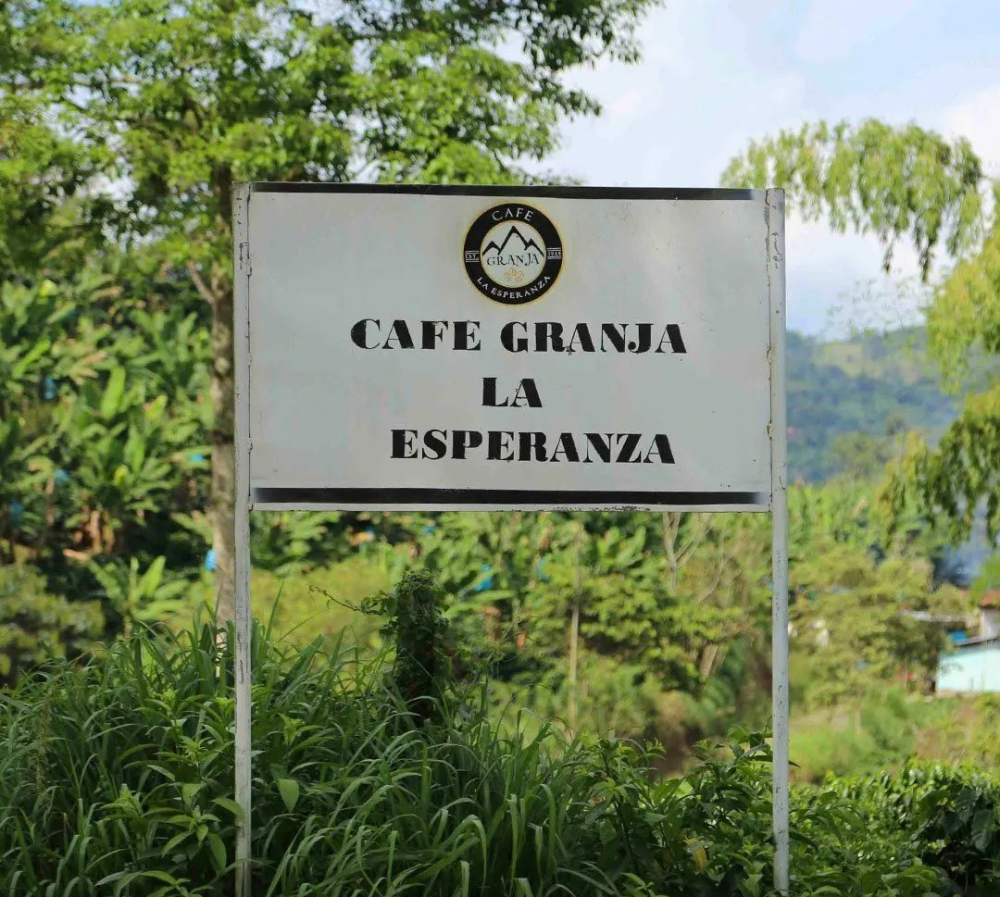
The history of Granja La Esperanza dates back to the 1940s, when it was founded by Blanca Ligia Correa and Juan Antonio Herrera. Initially, the couple worked as laborers on the Potosí farm in the region and developed an interest in growing specialty coffee. They later purchased the farm and began experimenting with improving coffee quality. At the time, the estate mainly grew traditional Typica varieties, but the Herreras wanted to diversify, so in 1945 they acquired nearby land to establish Granja La Esperanza, introducing mainstream high-quality Arabica varieties of the time, including Yellow Bourbon, Bourbon, and Caturra.
The estate’s planting altitude ranges from 1,400 to 1,860 meters. Regulated by valley breezes, the area maintains a consistent temperature between 17°C and 22°C year-round, with an average annual rainfall of about 1,340 millimeters — perfect conditions for specialty coffee growth. Over time, the couple had fourteen children, among whom Rigoberto and Luis showed a particular passion for coffee cultivation and gradually took over operations. In 2007, Rigoberto rented land in Boquete, Panama, to plant Geisha, and in 2008, he won the BOP championship; in 2009, he took second place, propelling Granja La Esperanza onto the international specialty coffee stage.
Subsequently, Rigoberto introduced the Geisha variety to Granja La Esperanza in Colombia, particularly planting it in the Las Margaritas plot. Today, the estate’s five sub-farms cover a total area of 150 hectares, with planting altitudes all between 1,400 and 2,000 meters. In addition to traditional varieties, they also grow a diverse range of cultivars, including Geisha, Sidra, SL28 (pointed Bourbon), Pacamara, showcasing the estate’s commitment to varietal experimentation and flavor innovation.
The Valle del Cauca province is not only home to Granja La Esperanza, but also an early coffee hub in Colombia. With its unique dual dry and dual wet seasons, it was once one of the main coffee-producing regions. As the specialty coffee trend emerged, the focus shifted southward, but the Valle del Cauca still retains many top-tier estates dedicated to varietal research and processing methods — with Granja La Esperanza being a prime example.
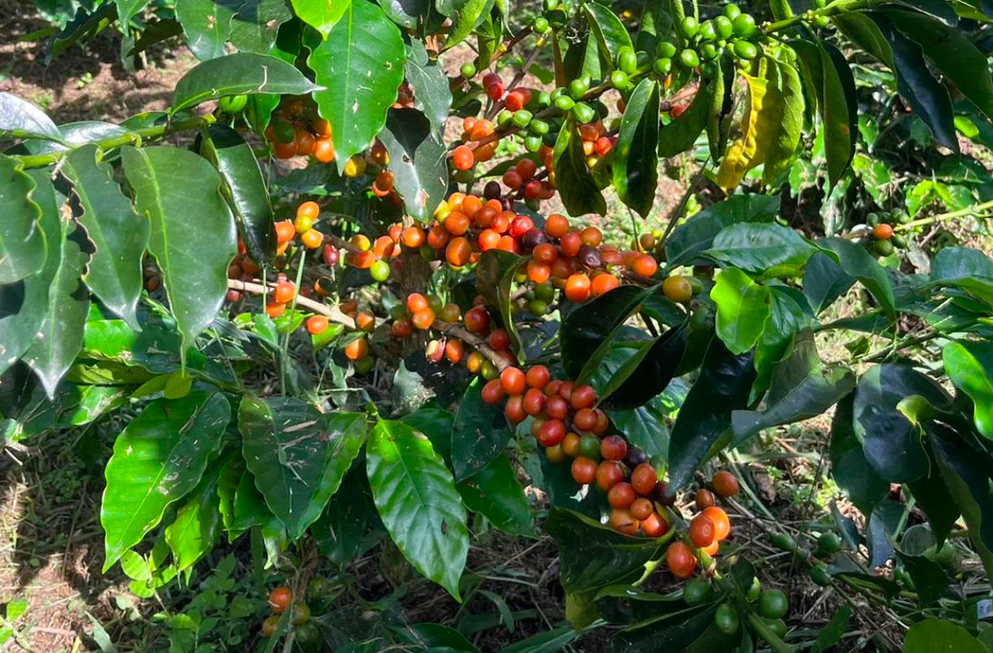
With over 76 years of operation, Granja La Esperanza’s team includes PhD-level botanists, three professional cuppers, and hundreds of farm workers. The overall operation blends scientific precision with artisan craftsmanship. The estate houses a climate monitoring station led by Chief Botanist Hernando Tapasco, which regularly collects weather data and cross-analyzes it with harvest and cupping results to precisely determine the optimal harvest timing. In the processing phase, pickers undergo rigorous training and only harvest fully ripe coffee cherries. They are paid a daily wage rather than by weight, ensuring consistent quality. It is understood that half of the pickers have over six years of experience, effectively reducing the risk of premature harvesting. The harvested Geisha cherries are immediately transported to the central processing facility, sorted by batch, and undergo three days of pre-drying in the sun before being moved to small drying towers for further processing — all to preserve maximum flavor potential.
In terms of varietal development, Granja La Esperanza has always been bold in experimentation, continuously introducing and cultivating emerging varieties. In addition to the widely planted Caturra, the estate also grows rare or special selections such as Geisha, organic Geisha, Mocha, various Bourbons (including Red Bourbon, Yellow Bourbon, and Tekisik), SL28 (pointed Bourbon), Pacamara, San Bernardo, and Pache — demonstrating the estate’s unwavering pursuit of coffee quality and flavor exploration.
The above content is compiled by CoffeeHunters, a coffee news website.


