







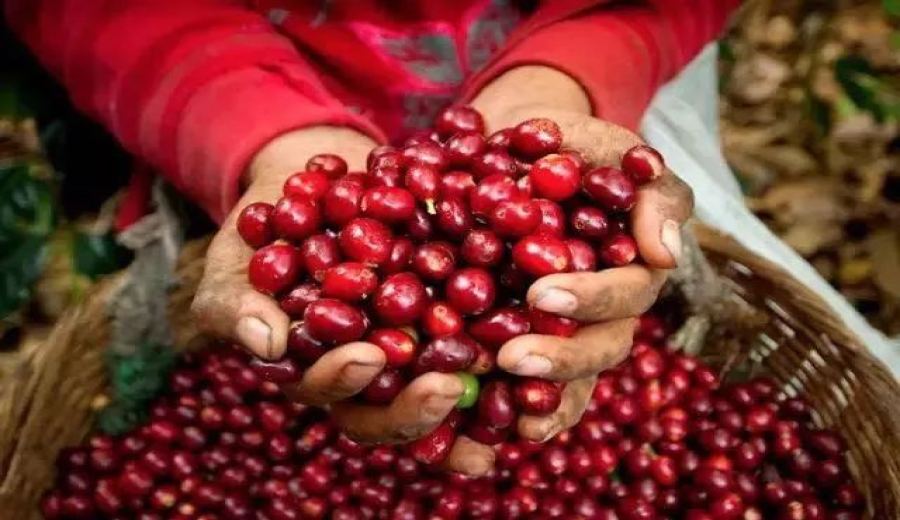
Introduction:Located in the Pacific Ocean, the Galápagos Islands, though grown at an altitude of only about 500 meters, produce hard bean coffee comparable to high-altitude beans thanks to unique ocean current interactions. This article takes an in-depth look at an organic Bourbon variety coffee farm on San Cristóbal Island, analyzing how its distinctive microclimate creates a flavor profile that is sweet and acidic with rich floral and fruity notes. We also provide practical pour over recommendations to help you fully experience this premium coffee from an oceanic island.
The Galápagos Islands float in the Pacific Ocean, approximately 1,000 kilometers from the South American mainland, and are oceanic islands formed by volcanic lava deposits from the seabed. As early as around 1870, coffee was introduced to this isolated land, where the original Bourbon variety has been preserved without any hybrid modification to this day. These coffee trees are primarily planted on hillsides at an altitude of about 500 meters. Compared to the typical 1,700 to 2,100-meter elevation required for high-quality coffee, this may seem less advantageous, but the Galápagos' unique geographical location rewrites this conventional wisdom.
The archipelago lies at the convergence of the cold Peru Current and the warm equatorial current. The interaction of these two ocean currents creates a special microclimate, enabling the 500-meter-high planting environment to enjoy cool conditions similar to those found inland at 900 to 1,800 meters. This unique climate not only slows the ripening process of coffee cherries but also promotes the accumulation of flavor compounds, ultimately producing hard bean coffee (SHB) with high acidity and a solid body. Such coffee beans are extremely rare in the market and, despite their modest altitude, can exhibit quality comparable to that of high-altitude regions.
The Galápagos Islands consist of multiple volcanic islands, covering a total area of about 8,000 square kilometers (some sources record it as 7,800 square kilometers), including more than 60 islands and rocky outcrops of varying sizes, such as the largest Isabela Island and the well-known San Cristóbal Island, Santa Fe Island, and others. The archipelago spans approximately 300 kilometers from east to west and about 200 to 300 kilometers from north to south, and is about a 1-hour-and-30-minute flight from Quito, the capital of Ecuador. 96.6% of the archipelago's area is designated as a national park, surrounded by a vast marine reserve spanning 79.9 square kilometers, ensuring highly effective ecological conservation.
The history of coffee cultivation on the islands dates back over 150 years, with the earliest records from the late 19th century. These original Bourbon variety coffee trees have maintained their pure lineage, untouched by modern breeding techniques, and retain the most traditional flavor characteristics. Due to its remote location, the Galápagos has long been sparsely populated; it was not discovered until 1535—allegedly when a ship from Panama was blown off course by strong ocean currents, and Bishop Berlanga aboard accidentally discovered the islands, naming them "Las Encantadas," meaning "the Enchanted Ones." Other accounts suggest that Spanish navigators, seeing numerous giant land tortoises, called the place "Galápagos," meaning "land of the turtles."
To protect the precious natural ecosystem, the Ecuadorian government has enacted strict laws limiting the use of chemicals in agricultural activities, completely banning synthetic fertilizers, pesticides, and herbicides. Thanks to this regulation, coffee produced in the Galápagos Islands is considered 100% organic, cultivated without any chemical additives throughout the process, ensuring purity from soil to cup. This also gives the coffee a soft yet layered taste, with bright acidity that is not sharp, accompanied by delicate floral and fruity notes, along with a gentle caramel sweetness, delivering an overall profile that is both refreshing and balanced.
However, due to the small scale of the production region and its remote geographical location, Galápagos coffee has long been mainly supplied to markets in Northern Europe, such as the Scandinavian Peninsula, and is less circulated in Asia. Coupled with the global coffee industry’s trend toward large-scale and high-yield production, this smallholder meticulous farming model once faced challenges. Fortunately, since the early 1990s, some farms have gradually expanded their planting areas, aiming to make more effective use of the region’s unique natural conditions while improving economic returns, allowing this uniquely flavored coffee to continue and reach the palates of more coffee enthusiasts.
If you wish to personally experience this rare coffee from an oceanic island, it is recommended to use a brewing method suitable for high-acidity beans. Generally speaking, freshness is one of the key factors affecting flavor performance, so it is advisable to choose coffee beans roasted within five days and let them rest for 4 to 7 days upon arrival to allow the beans to enter their optimal flavor window. If you prefer to grind the beans just before brewing, please note that ground coffee is prone to rapid oxidation when exposed to air, so it is best to grind and brew immediately for the fullest aroma and complexity. Although pre-ground coffee does not require additional resting time, its flavors fade more quickly, so drinking it as soon as possible is the best way to appreciate its true character.
The above content is compiled by CoffeeHunters, a coffee news website.


