







Introduction:Yirgacheffe is Ethiopia’s most representative high-altitude specialty coffee region, renowned for its bright floral-fruity notes and delicate acidity. This article delves into its journey of becoming an independent region separate from Sidamo, explores how key washed processing techniques shape its flavor profile, and analyzes the flavor differences between classic processing methods such as Gedeo and Red Cherry. It also provides V60 pour over parameters suitable for medium-light roasts, helping you master the brewing essence of this classic African bean.
As a flagship specialty coffee region of Ethiopia, Yirgacheffe has carved out a niche in the global coffee market with its distinctive floral and fruity acidity. Located on a plateau at nearly 2,000 meters above sea level, the region enjoys a cool, humid climate supplemented by abundant moisture from surrounding lakes, fostering coffee beans with richly layered flavors. Originally part of the Sidamo region, Yirgacheffe officially became an independent origin in the 2010s. Its beans stand out with a fresh, delicate white jasmine aroma and a bright, refined taste.
Regional Evolution and Geographic Features
The coffee-growing areas of Yirgacheffe are primarily located in the Gedeo Zone of the Southern Nations, Nationalities, and Peoples' Region, as well as the West Guji Zone of the Oromia Region. The five coffee woredas (districts) under Gedeo Zone—Yirgacheffe, Dila Sullia, Wenago, Kochere, and Ginbo—form the core of the region. Notably, Gedeb, situated in the southernmost part of Gedeo Zone, though not officially classified by the ECX, is widely recognized by the industry as part of Yirgacheffe’s terroir.
The Misty Valley rift zone in the region is shrouded in clouds year-round, with a spring-like climate all seasons and a gentle breeze that provides ideal growing conditions for coffee trees. Thousands of coffee trees thrive here, contributing to the endlessly varied and unique flavor profile of Yirgacheffe.
Innovation in Washed Processing Techniques
In the 1970s, Yirgacheffe introduced advanced washed processing techniques from Central and South America, significantly improving the quality of green coffee beans. The washed method processes the coffee fruit down to just the parchment-covered beans for drying, eliminating interference from excess sugars and esters, thereby showcasing the true terroir of the coffee. This technique not only elevated the overall quality of the coffee but also brought more substantial profits to growers.
Yirgacheffe’s washed beans are celebrated for their fresh, delicate floral notes and refined, bright taste, characteristics that set them apart from the many other coffees of Sidamo. Many Sidamo growers even take pride in labeling their beans as Yirgacheffe, a testament to its esteemed reputation.
Flavor Characteristics and Processing Method Differences
Yirgacheffe coffee beans exhibit extremely complex aromas and exceptional taste profiles. Washed Gedeo offers citrus, apricot, and green tea notes, while Kochere excels in citrus, honey, and black tea flavors. Natural-processed Red Cherry leans toward berry, strawberry, and fermented wine notes, whereas Konga showcases lemony acidity, creamy aftertaste, and intense honey sweetness.
In the fourth wave of specialty coffee, regions like Amaro Gayo and Dorothy have begun adopting innovative processing methods. Amaro Gayo employs anaerobic slow natural processing, with a fermentation time of up to 120 hours and uniform drying for about 5 weeks, deepening the berry flavors. This bean won the TOH Ethiopia regional championship in 2021.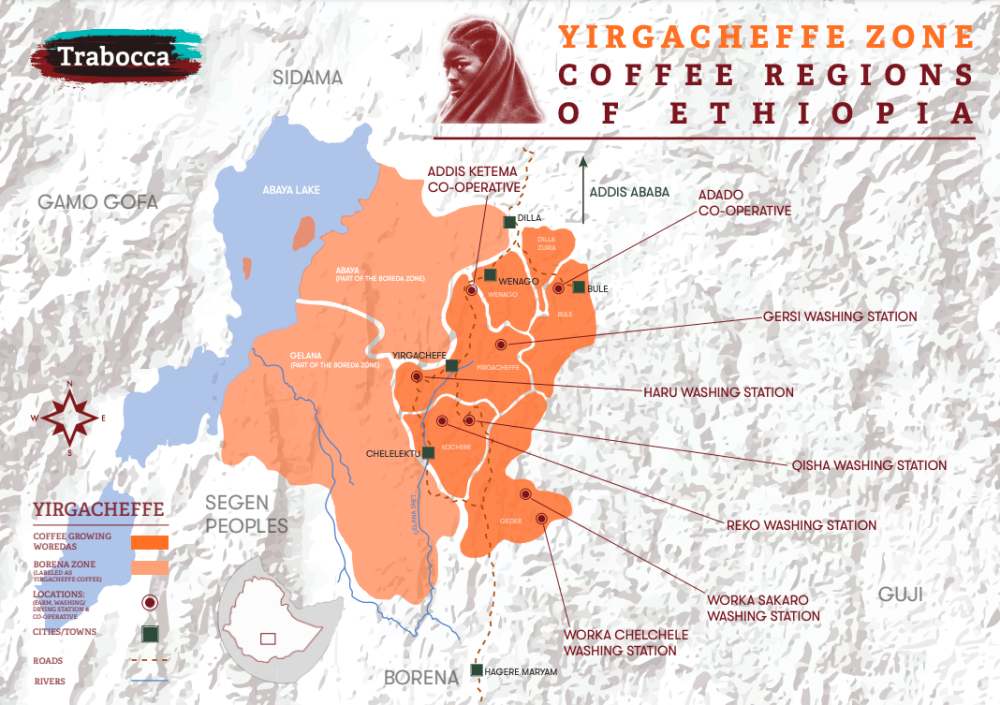 Dorothy utilizes enzyme-washed processing, imparting a rich peach oolong tea flavor to the final product.
Roasting and Pour Over Recommendations
To preserve Yirgacheffe’s distinctive floral notes and fruity acidity, a medium-light roast is generally recommended. For pour over, you can use a Hario V60 filter, with water temperature controlled at 90°C, 15 grams of coffee, a 1:15 coffee-to-water ratio, and a grind size of approximately 80% through a Chinese standard No. 20 sieve. Since freshly roasted beans still contain ample gases, it’s advised to start with a 30-second bloom (pouring 30 grams of hot water), followed by pouring in a thin stream from the center up to 125 grams, then spiraling outward to reach 225 grams. The total extraction time should be around 2 minutes.
The above content is compiled by CoffeeHunters, a coffee news website.


