







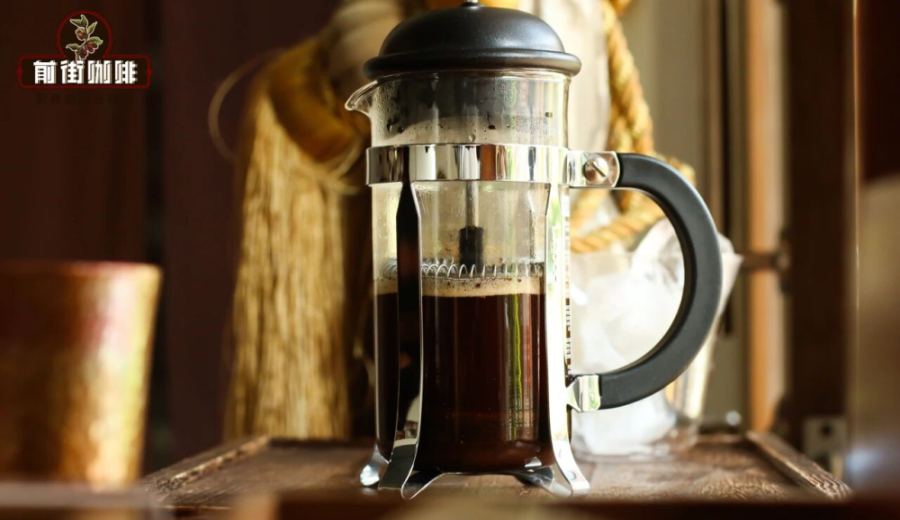
Introduction:The French press is one of the most common brewing tools found in the homes of many coffee enthusiasts. Not only is it easy to use, but it also fully highlights the original flavors and rich body of the coffee. This article will take an in-depth look at the historical background and characteristics of the French press, and guide you step-by-step through making a summer-friendly iced coffee. From bean selection and grind size to water temperature and steeping time, we provide complete parameters and practical tips to help you easily brew a fruity, refreshing iced coffee.
The French press is a widely loved and intuitive home coffee brewing tool that can showcase the richness and layered flavors of coffee beans without complicated steps. Compared to pour over or other brewing methods, the French press preserves more of the coffee's oils and aromas, making it especially suitable for those who prefer a bold flavor. In addition to introducing the origins and evolution of the French press, this article will also detail how to use it to create a vibrant iced coffee — from bean selection to the final pour — with clear guidance at every step.
The prototype of the French press can be traced back to France in 1850, where it originally consisted of a heat-resistant glass bottle paired with a metal filter screen. Its initial purpose was actually for brewing tea, hence it was also referred to as a "tea infuser." It wasn’t until 1852 that a French craftsman and businessman jointly applied for a patent for what they called a “piston-filter coffee device.” This design featured a metal piston with a built-in filter screen, which filtered coffee grounds by manual pressing. The patent document noted that when the plunger was pressed to the bottom, the filtered clear coffee remained on top, achieving the filtering effect.
Although France is the birthplace of the French press, it was Italy that truly refined its design. In 1935, a Milan-based company introduced an improved version of the French press, featuring a spring-loaded mechanism at the bottom of the piston to ensure the filter screen remained tightly sealed against the container’s base — effectively filtering out coffee grounds. This design laid the foundation for the modern French press. However, the French press didn’t gain popularity in the United States until the 1980s, where many users, following British convention, referred to it as a "cafetiere," while others called it a "French piston coffee maker."
The standout feature of the French press lies in its simple immersion brewing principle. It doesn’t require precise control of water flow or technique, making it extremely user-friendly for beginners. By simply mastering the coffee-to-water ratio, grind size, and steeping time, you can consistently brew coffee with uniform quality. This brewing method retains more coffee oils and delicate flavors, making it ideal for those who enjoy a full-bodied cup.
If you’re looking to enjoy a refreshing iced coffee with a balanced acidity and sweetness during the summer, the French press is up to the task. It’s recommended to choose medium to light roasted beans with prominent fermentation profiles — such as those processed via sun-drying, honey processing, or anaerobic fermentation. These beans typically offer rich fruitiness, bringing an explosive juiciness to your iced coffee. The following section will use a coffee bean with notes of grape, passion fruit, and apricot as an example to illustrate the complete iced coffee brewing process and key parameters.
Recommended Iced Coffee Brewing Parameters:
• Coffee dose:30 grams
• Coffee-to-water ratio:1:10(i.e., using 300 ml of water)
• Grind size: approximately equivalent to setting 9 on the Ek43 grinder, or a 20-mesh sieve retention rate,85%with a texture similar to fine sugar
• Water temperature:100°C
• Steeping time:9 minutes
Step 1:Add30 grams of coffee groundsinto the French press, then pour freshly boiled hot water directly into the container, adjusting the amount of water according to the ratio. Use a stirring stick or spoon to gently stir about10 timesto ensure the coffee grounds are evenly wetted. Then start the timer and let it steep for4 minutes.
Step 2:After 4 minutes, observe that most of the coffee grounds are floating on the surface. At this point, use a tool (such as chopsticks or a stirring spoon) to gently press the floating grounds down into the water to allow for full immersion. Then let it steep for another5 minutes, for a total steeping time of9 minutes.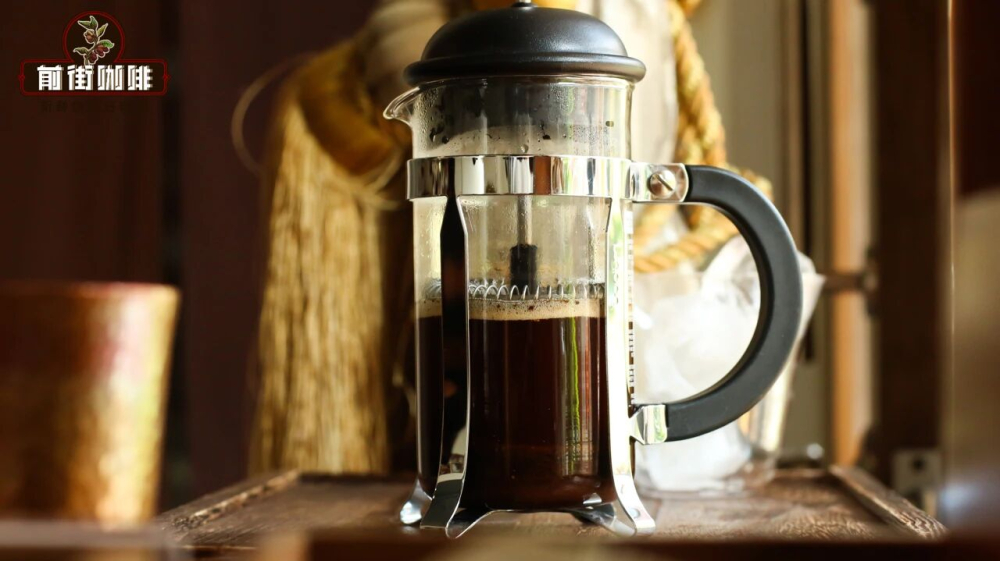
Step 3:Once the steeping time is complete, slowly press the French press filter down to near the surface of the coffee, but do not press all the way to the bottom to avoid over-extraction due to excessive pressure. Then you can place the lid on.
Step 4:Prepare a cup with about120 grams of ice cubes, then slowly and steadily pour the coffee from the French press over the ice. This helps lower the coffee’s temperature while reducing the amount of fine particles entering the cup, resulting in a smoother mouthfeel. After pouring, give it a gentle stir to even out the flavors, and enjoy this sweet, tangy, and fruity iced coffee.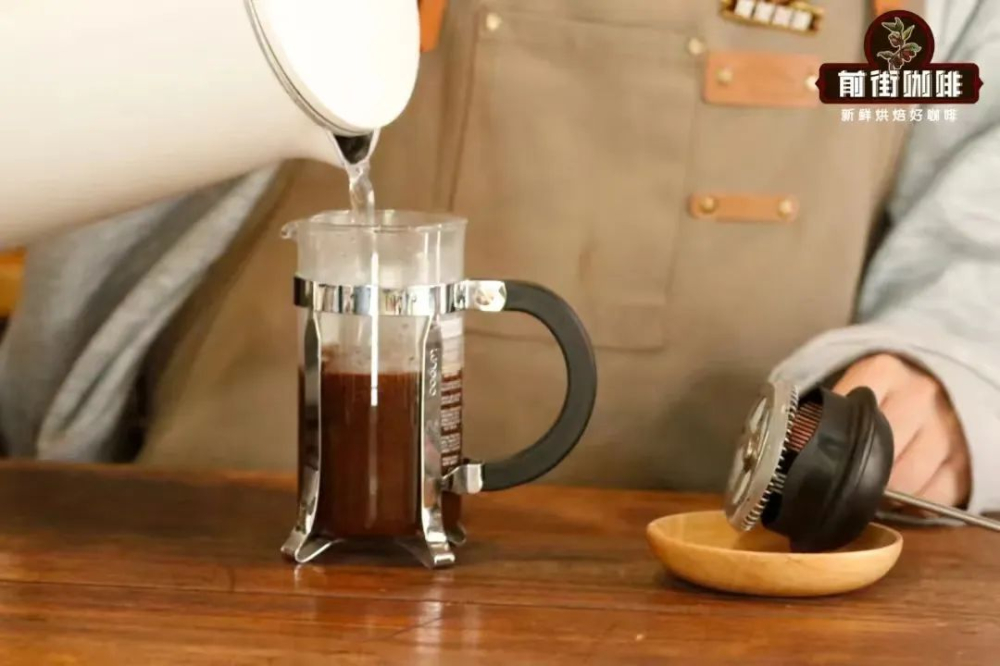
In summary, the French press is not only suitable for everyday quick brewing, but can also produce coffees with varying flavor profiles through parameter adjustments. Especially in summer, an iced coffee made with medium to light roasted beans can deliver a refreshing and layered taste experience. As long as you get the coffee-to-water ratio, grind size, and steeping time right, you too can easily replicate this vibrant iced coffee at home.
The above content is compiled by CoffeeHunters, a coffee news website.


