








Introduction:Dive deep into Indonesian Sumatra’s Mandheling coffee, exploring everything from its name origin and variety characteristics to regional differences. Gain a comprehensive understanding of the unique flavors and wet-hulling process impact of Lintong and Gayo Highlands PWN Golden Mandheling. This article provides practical brewing parameters and recommendations to help you better appreciate this bold, low-acid bean with distinct herbal and spicy notes, and discover your ideal brewing method.
When it comes to Sumatran coffee in Indonesia, many people first think of "Mandheling." However, Mandheling is not a single coffee variety nor a region name, but rather a term derived from the local indigenous Mandailing ethnic group. The origin of this name can be traced back to World War II, when a Japanese soldier reportedly mistook the ethnic group name "Mandailing," given by a coffee shop owner, for the name of the coffee. After the war, Japan continued using this term when importing coffee from the region, and it eventually became synonymous with Sumatran Arabica coffee.

Located in western Indonesia and bordering the Indian Ocean, Sumatra has an equatorial rainy tropical climate with high temperatures and humidity year-round, which can easily lead to microbial and mold growth during the coffee fermentation process. As a result, the wet-hulling process is widely adopted locally—by quickly removing the parchment layer, it reduces the risks during the beans’ semi-dry stage. This method also directly contributes to Mandheling coffee’s distinctive herbal, spicy, and woody profiles, one of its most prominent flavor characteristics.
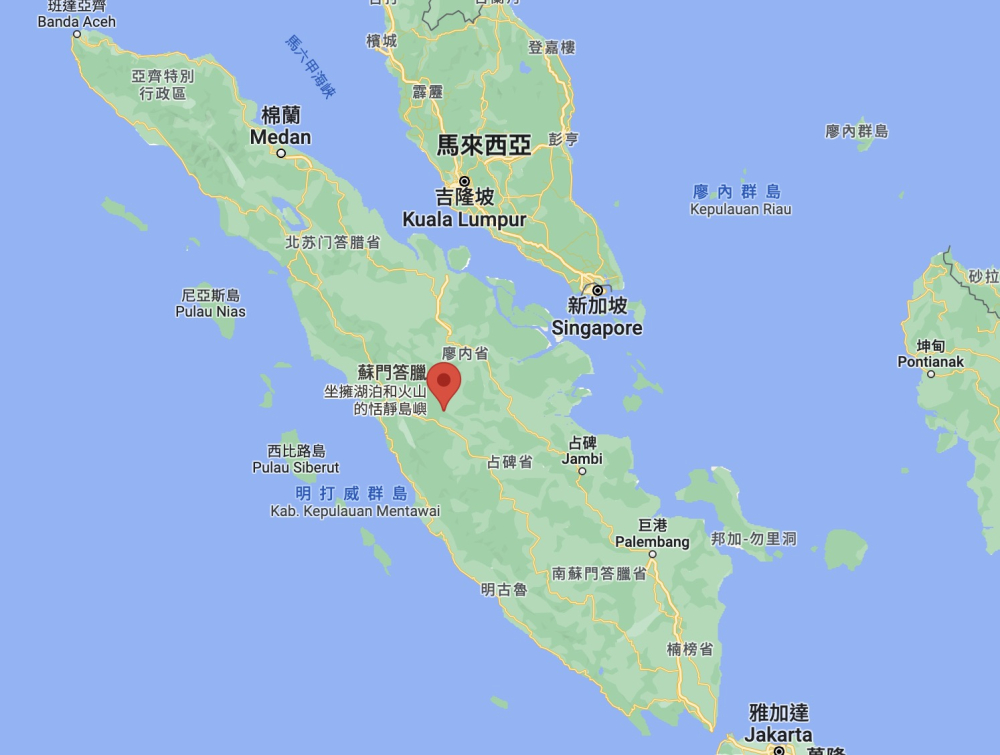
Currently, Robusta accounts for up to 90% of coffee grown in Indonesia, with only 10% being Arabica. Mandheling is the most representative Arabica variety in the Sumatra region. Its main growing areas are concentrated in Lintong, North Sumatra Province, and the Gayo Highlands in Aceh Province at the northernmost tip, particularly the mountainous slopes around Lake Toba and Lake Takengon.
In terms of varieties, Sumatran Mandheling is primarily planted with two main types: Timtim and Ateng. Timtim is a natural cross between Arabica and Robusta, commonly known as Timor or Bor Bor, with 44 chromosomes and still classified as Arabica. This variety was first discovered in East Timor in the 1940s, boasting good disease resistance and cold tolerance. Although its flavor is less refined, it often carries deep agarwood, pine, and herbal notes, with low acidity—making it suitable for coffee lovers who prefer a bold taste.
The other mainstream variety, Ateng, is part of the Catimor series, resulting from a cross between Caturra and Timtim. It inherits some of Caturra’s brightness and sweetness, offering a more balanced profile overall than Timtim. Cupping often reveals more pronounced fruit sweetness and aftertaste, with a smoother and cleaner mouthfeel—making it a key foundational variety for many specialty-grade Mandhelings.
In terms of regional differences, Mandheling from the Lintong region mostly uses the Timtim variety, considered a classic everyday bean by many coffee connoisseurs. Coffee from this area often exudes intense herbal, spicy, dark chocolate, and caramel aromas, with low but layered acidity and a long finish featuring sweet and woody notes—perfect for those who enjoy a bold style.
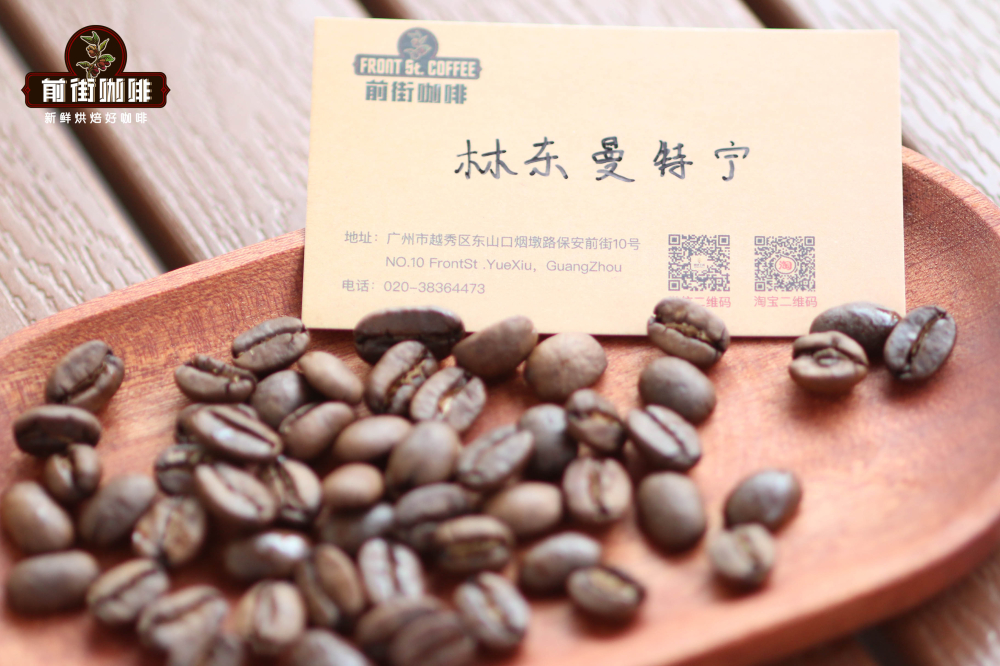
Meanwhile, the Gayo Highlands in Aceh are famed for the Golden Mandheling produced by PWN. This bean variety is mainly Ateng, rigorously selected to G1 grade, with each green bean undergoing both machine pre-selection and three rounds of manual hand-picking to ensure uniform size and extremely low defect rates. PWN focuses on the wet-hulling process and employs multiple hand-selection steps to effectively enhance the final flavor’s purity and sweetness—resulting in a coffee that remains bold yet remarkably refined.
Speaking of processing methods, Sumatra’s wet-hulling technique is a standout feature. Compared to traditional washed or natural processes, this method involves briefly fermenting the coffee cherries for a few hours, followed by pulping and initial sun drying. When the moisture content drops to 30–50%, specially designed machinery is used to remove the still partially wet parchment layer, which is then further dried to the target moisture level. Because the beans remain in a high-humidity environment for extended periods during processing, and the parchment is removed early, the final coffee more readily absorbs environmental impurities and aromatic molecules—contributing to its unique herbal and spicy character.
So, how can you brew to highlight Mandheling’s flavor profile? It is recommended to use medium-coarse grind (similar to sea salt fineness, about 70% passing through a #20 sieve), with water temperature controlled at 87–88°C. Both immersion or drip extraction methods work well—for example, using a French press or pour over. Taking the classic three-pour pour over as an example, it is suggested to use a Kono filter, 15g coffee, 1:15 coffee-to-water ratio. The first pour is 30g water for a 30-second bloom; then circle pour up to 125g, wait for the water level to drop, and continue pouring to 225g. Total brew time is approximately 2 minutes and 10 seconds.
Mandheling from the Lintong region’s Timtim variety often presents rich herbal and spicy aromas upon brewing, accompanied by the sweetness of dark chocolate and caramel, with a pronounced aftertaste and a lingering woody, mellow finish. In contrast, Aceh’s PWN Golden Mandheling showcases a higher level of balance—from bold nuts and caramel to layers of chocolate notes that unfold progressively. The finish is clean and long-lasting, with an overall profile that is more refined and smooth. It is highly suitable for coffee lovers looking to experience the high-quality flavors of Sumatran Arabica.
The above content is compiled by CoffeeHunters, a coffee news website.


