








Introduction:Golden Mandheling is renowned for its rich, full-bodied flavor, low acidity, and sweet aftertaste, making it a classic choice for dark roast coffee enthusiasts. This article delves into this wet-hulled bean variety from the Lintong region of Sumatra, exploring everything from roast profiles and caramelization stages to grind size and three-stage pour over brewing methods. Learn how to roast a balanced, layered dark roast Mandheling, and decipher its unique spicy and caramel aroma profile.
Golden Mandheling is considered a dark roast masterpiece by many coffee aficionados, beloved for its intense, low-acid profile and sweet lingering finish. Sourced from the Lintong region of Sumatra, Indonesia, these beans are typically processed using the wet-hulling method, with deep roasting bringing out rich caramel aromas and spicy notes. This article will break down the roasting logic, dehydration control, and caramelization reactions—detailing how precise charge temperature, first crack management, and pour over parameters can highlight Golden Mandheling’s bold yet nuanced flavors.

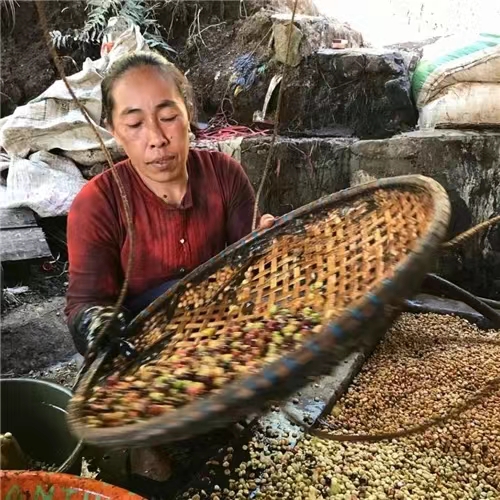
If you enjoy coffee that is bold, low in acidity, and naturally sweet, Golden Mandheling is definitely worth a try. The charm of this bean lies in its heavy body and captivating caramel sweetness, which is why it is often dark roasted to enhance these qualities. One coffee roaster develops an initial roasting strategy for this bean based on its origin information—Lintong sits at an altitude of 1100 to 1600 meters with a humid climate. To accelerate drying, wet-hulling is commonly used locally. This method involves hand-picking ripe red cherries, followed by initial sorting and tank fermentation for around 12 to 36 hours to allow full conversion of pulp and sugars. The beans are then sun-dried for 1 to 2 days until moisture drops to 35–40%, after which the husk is removed, and sun drying continues until the moisture level reaches about 12%–15%.
Since these green beans have a relatively high moisture content, distinct from common sun-dried beans, special attention must be paid during the dehydration stage of roasting. It is recommended to close the air damper immediately after loading the beans, allowing a 30-second bloom, then setting the damper to 3. Once the bean surface turns light green or grayish-white, gradually adjust the damper to 4, and after first crack, it is advised to open it fully (to 5). The key is to ensure even heating from the inside out so the beans are thoroughly “ripened,” while also using appropriate roasting techniques to bring out their unique flavors.
Caramelization is one of the critical steps affecting coffee flavor. When roasting reaches about six to seven minutes, the beans absorb significant heat energy, initiating pyrolysis reactions. Accompanied by the first crack, some sugars convert into carbon dioxide, moisture continues to evaporate, and new aromatic compounds are produced. These combine with hundreds of other compounds—including nicotinic acid, citric acid, quinic acid, malic acid, acetic acid, and caffeine—to form the complex flavor profile we associate with coffee.
However, extending the roast into deeper caramelization can also lead to carbonization of certain substances, resulting in undesirable astringency and bitterness, or even off-flavors resembling burnt charcoal or rubber. Therefore, roasters must precisely control the heat, maximizing the benefits of caramelization while minimizing the risk of carbonization.
During actual roasting, it is recommended to set the drum temperature to 200°C when loading the beans, starting with the air damper at 3. After about 1 minute, reduce the heat to 160°C while keeping the damper unchanged. When the roasting time reaches 4 minutes and 40 seconds and the temperature is about 148°C, the bean surface turns yellow and the grassy notes largely disappear—indicating dehydration is complete. At this point, increase the heat to 140°C and adjust the damper to 4. By the 9-minute and 40-second mark, when the bean surface shows obvious wrinkles and dark spots and the aroma shifts from bread-like to coffee-like, you’ve reached the pre-first crack stage. Carefully listen for the start of first crack. Typically, at first crack onset (around 9 minutes and 54 seconds), reduce the heat to 60°C and fully open the damper (but avoid eliminating all cracking sounds). Finally, complete the roast and drop the beans at 204.5°C.
Dark-roasted Golden Mandheling has a distinctive flavor profile, featuring strong herbal notes and intense caramel sweetness. The fruit acidity is soft yet layered, the sweetness is rich, and subtle spice undertones are present. Generally, Mandheling from the Lintong region is recommended to be roasted through or just past second crack to help reduce unwanted flavors, but Golden Mandheling can still exhibit good clarity and sweetness even when dropped just before second crack, offering roasters more interpretive flexibility.
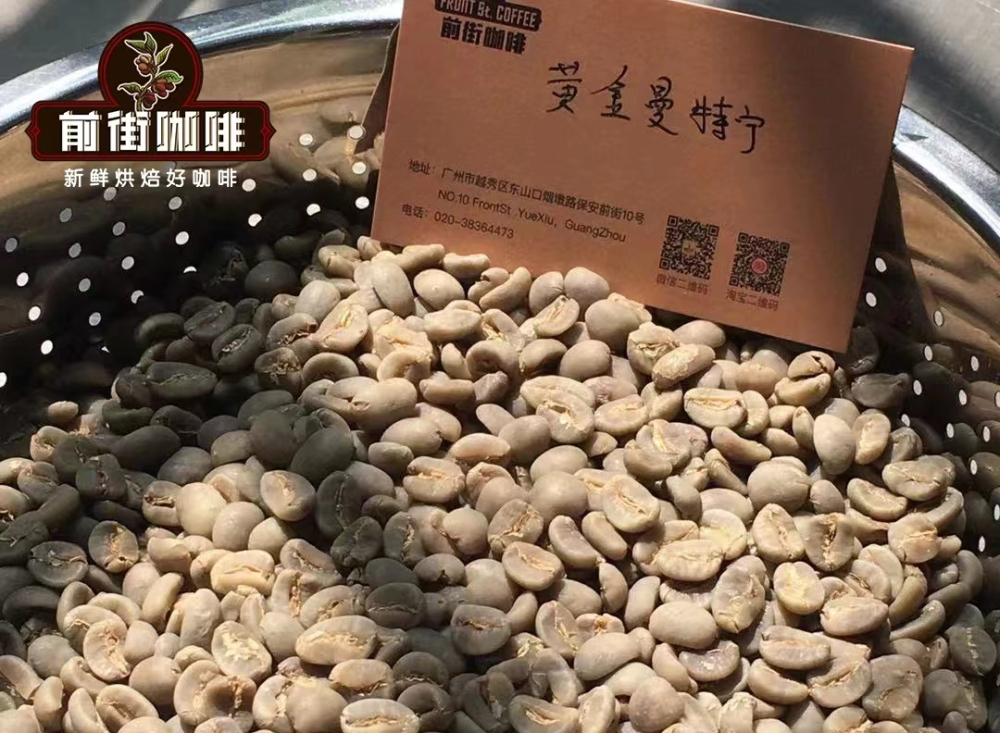
Regarding brewing, the Golden Mandheling offered by one coffee roaster is freshly roasted, usually shipped within five days of roasting. A resting period of 4 to 7 days is recommended for optimal flavor. Because dark roasting makes the internal structure of the beans looser, the grounds absorb water more quickly after grinding. To avoid extracting excessive bitter compounds, it is advisable to use a coarser grind and relatively cooler water for pour over. For the coffee-to-water ratio, the standard 1:15 is a good choice, though you can adjust to 1:13 if you prefer a stronger taste, fine-tuning according to personal preference.
To highlight the rich and balanced flavor of Golden Mandheling, it is recommended to use a KONO filter cone, which is designed for immersion-style extraction. The ribs of this cone are mainly located on the lower half, while the upper part fits tightly with the filter paper, slowing down water flow and ensuring more thorough extraction. This results in higher coffee concentration, a fuller body, and a more stable taste. The suggested water temperature is 88°C, with a coffee-to-water ratio of 1:15. Use 15 grams of coffee grounds, ground to approximately 70% passing through a #20 sieve, and employ a three-stage pouring method: the first stage involves pouring 30 milliliters of water for a 30-second bloom; the second stage pours 100 milliliters in a circular motion from the center outward; the third stage similarly pours 95 milliliters in the same manner. This approach fully brings out the flavors of spices, herbs, rich nuts, and brown sugar, with a long-lasting and layered aftertaste.
The above content is compiled by CoffeeHunters, a coffee news website.


