







Introduction:Want to understand Rwanda’s coffee bean grading standards and cultivation characteristics? This article provides an in-depth analysis of Rwandan coffee—from regional environments, altitude conditions, and main varieties, to washed processing and a rigorous grading system—helping you grasp the real meaning behind grades such as AA, SC, and TT. It also reveals how this “Land of a Thousand Hills” showcases balanced fruitiness and black tea-like aftertastes through washed processing. It’s an essential beginner’s guide for selecting or gaining deeper insight into Rwandan coffee.
Among many African coffee-producing countries, Kenya is known for its intense fruity acidity, while Rwanda presents a distinctly different flavor profile—with a more balanced taste, accompanied by fruity sweetness, delicate floral notes, and a black tea-like finish. A well-known coffee brand has conducted multiple roasting and cupping sessions with Rwandan beans, finding that their overall flavor performance lies between that of Kenya and Central America. The flavors are clear and clean, making it highly suitable for coffee enthusiasts who enjoy layered profiles.
Rwanda is honored as the “Land of a Thousand Hills,” with mountainous terrain covering most of the country. The vast majority of coffee is grown at elevations between 1,700 and 2,000 meters, which imparts bright acidity and rich aromas to the beans. Coffee production in the country is dominated by smallholder farmers, with each household owning only about 0.1 to 0.2 hectares of planting area—a stark contrast to the large farms of several hectares commonly found in Brazil. Precisely because of the small scale, greater emphasis is placed on meticulous farming. Coupled with unique volcanic soils and ample sunlight, this has created the distinctive flavor profile of Rwandan coffee.
Rwanda’s specialty coffee mainly comes from the southern and western regions. The southern Huye Mountains and Nyamagabe, due to their higher altitudes, often produce coffee with distinct floral notes and citrus tones. In the west, Nyamasheke, close to Lake Kivu, benefits from a humid microclimate that gives its coffee a rich mouthfeel, intense aroma, and juicy body. Although the differences between regions are not as pronounced as in other countries, careful tasting can still reveal the unique flavor personalities of each area.
Looking back at the development history of Rwanda’s coffee industry, it dates back to the German and Belgian colonial periods in the early 20th century. At that time, missionaries introduced coffee cultivation. While production increased rapidly, exploitation of labor, low purchase prices, and high export taxes long limited coffee quality. Even in the 1980s, when Rwanda’s annual coffee output peaked, the industry stagnated in the early 1990s due to political turmoil (including the genocide). It wasn’t until after 1995, with active government rebuilding efforts and assistance from international organizations, that the coffee industry gradually recovered. However, in recent years, it has faced challenges from the global market impact of the pandemic.
Currently, over 90% of coffee planted in Rwanda is of the Bourbon variety and its derivatives, with Red Bourbon being the most common. The Bourbon variety originated on Réunion Island and was introduced to Brazil in the 1860s, quickly spreading across Latin America. Compared to many Bourbon varieties in Latin America, Rwanda’s Bourbon still retains good disease resistance and flavor potential. As the red fruits of Red Bourbon mature, their color changes from green to yellow, then orange, and finally deep red—hence the name. Red Bourbon grown at high altitudes typically has richer aromas, brighter acidity, and sometimes even a wine-like complexity.
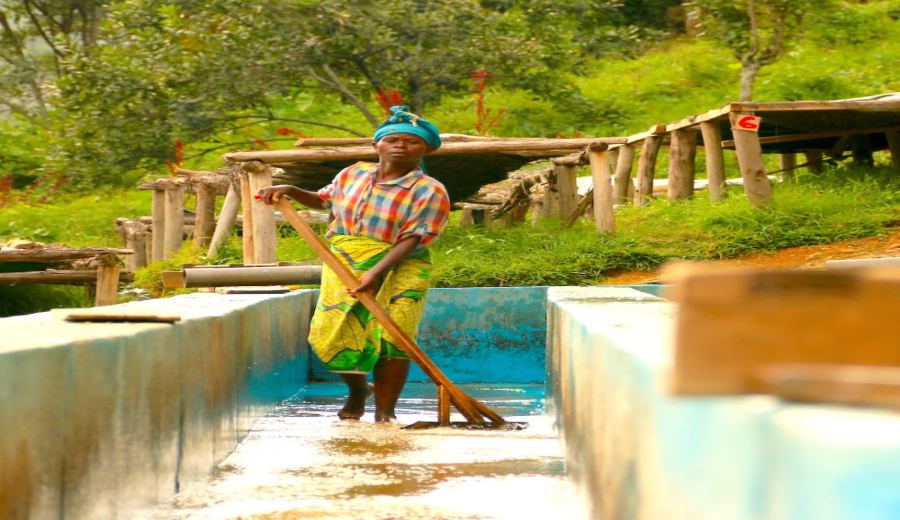
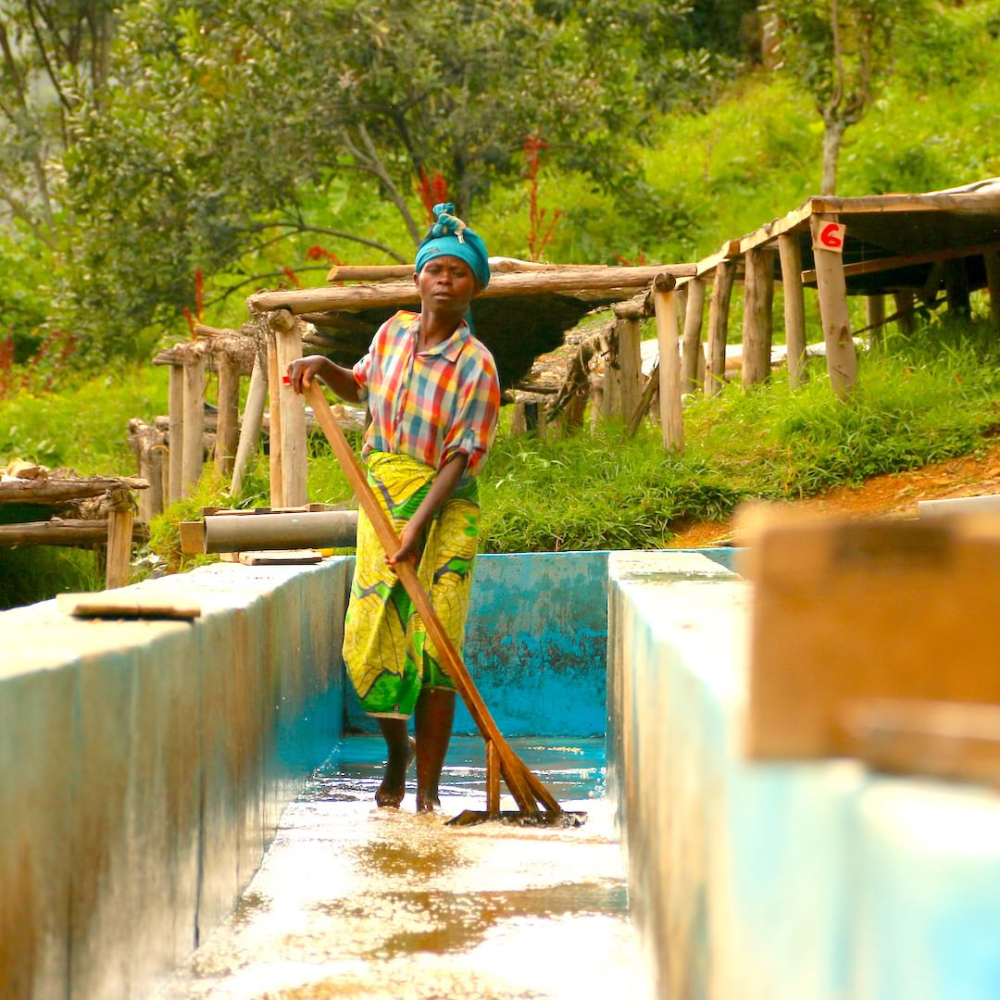
In the past, Rwandan coffee faced numerous challenges in post-harvest processing. Due to inadequate infrastructure, coffee cherries were often not delivered to processing facilities in time, leading to pile fermentation, mold, and rot, which severely affected the final flavor. Additionally, since most coffee came from smallholder farmers, individual supply volumes were extremely small, resulting in difficulties in product traceability and low consistency in quality. These were all key factors that previously hindered Rwandan coffee from reaching specialty-grade status.
Starting in 2000, with support from the PEARL and SPREAD programs sponsored by USAID, Rwanda began rebuilding its coffee industry. During this period, 46 washed processing facilities were established across the country, not only improving processing efficiency but also laying the foundation for export earnings. Today, Rwandan coffee primarily uses the washed processing method, which includes: hand-selecting ripe cherries, removing the pulp and skin, fermenting for 12 to 18 hours to remove the mucilage, and finally evenly spreading the beans to dry until the moisture content drops below 14%. This process fully highlights the intrinsic flavors of the coffee and is the preferred processing method recommended by a well-known coffee brand for understanding regional characteristics.
Rwanda’s coffee grading system is mainly based on bean size and defect rate, dividing them into several grades:
• AA Grade: Beans are 18 mesh and above, representing the largest and highest-quality grade, usually with the highest price.
• SC Grade: Mesh size is 15 and above, with a defect rate controlled below 5%, requiring strict manual sorting to ensure quality.
• TT Grade: Mesh size is between 13 and 14, and some beans above 14 mesh but with a higher defect rate are also classified here.
• T Grade: Beans with a mesh size below 12, generally not considered specialty grade.
• STL Grade(stock lot): Mainly consists of broken beans or parchment beans produced during processing.
It’s worth noting that only SC Grade (15 mesh and above) and AA Grade beans are more suitable for special processing methods such as honey processing or natural drying, which can further enhance flavor complexity. However, regardless of the processing method used, to be rated as specialty coffee, it must still pass SCAA cupping standards with a score of 85 or above. Additionally, if processing stations wish to profit from SC Grade beans, they typically need to ensure a milling yield of 70% or more, which is also an important indicator affecting final product pricing and quality control.
The above content is compiled by CoffeeHunters, a coffee news website.


