







Introduction:Delve into the unique flavors and historical background of Sumatra Mandheling coffee, and explore the allure of Golden Mandheling as a premium product. This article details the growing environments of Indonesia’s two core regions, the processing characteristics of the wet hulling method, and offers practical pour over brewing recommendations—including filter choice, water temperature control, grind size, and three-stage pouring techniques—to help you easily brew a Golden Mandheling with clear layers and a clean taste.
When it comes to Sumatra in Indonesia, many coffee enthusiasts immediately think of Mandheling coffee, known for its bold flavors and distinctive herbal and spicy notes. This dark roast favorite from Asia has won global acclaim for its rich, full-bodied taste and complex aromatic profile. Among the various Mandheling offerings, “Golden Mandheling” is regarded as the top-tier representative of the region, standing out with a more rigorous selection process and a more balanced flavor profile.
The origin of the name “Mandheling” actually has nothing to do with Indonesia itself, but stems from a small misunderstanding during World War II. At that time, a Japanese soldier drank an unforgettable cup of coffee in Sumatra and asked the shopkeeper about it, mistakenly hearing the ethnic name “mandheling” as the name of the coffee. After the war, Japanese traders introduced this coffee to their home country, where it became extremely popular, and since then, “Mandheling” has become synonymous with high-quality Arabica coffee from Sumatra. This historical anecdote also reminds us that Mandheling is not a region, but rather the market’s collective term for high-quality Arabica from Sumatra.
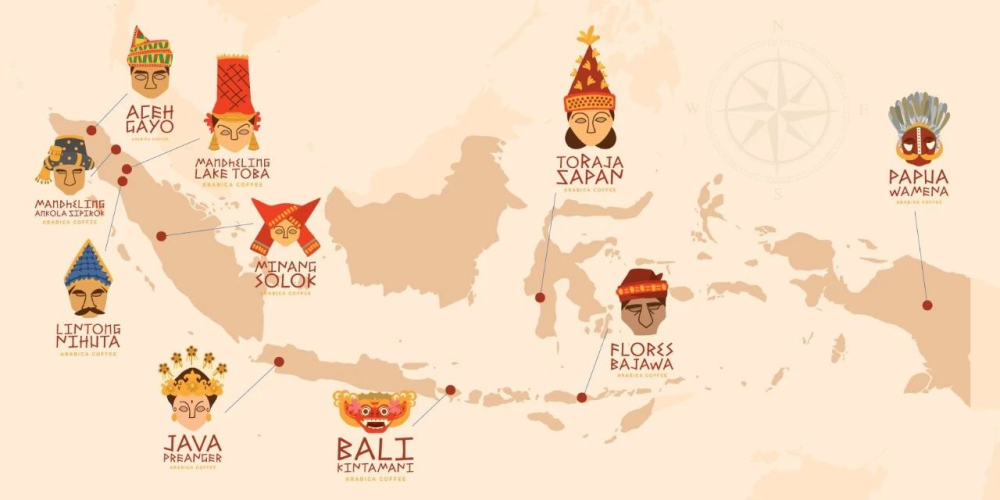
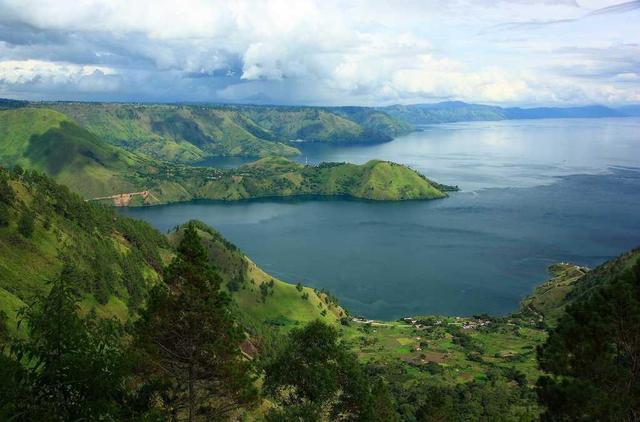
Coffee cultivation in Sumatra is mainly concentrated in two areas: Aceh Province and the Lake Toba region of North Sumatra Province. Due to differences in geographical environment and microclimate, these two regions are collectively referred to in the industry as the “Two Lakes, Two Mandhelings,” meaning the two major coffee belts developed around Lake Toba and Lake Tawar. The Lake Tawar region in Aceh Province has a long history and is an important source of traditional Mandheling, while the Lake Toba area in Aceh has gradually risen since 2005, with coffee grown by the local Gayo people also showing great potential.
These regions boast fertile volcanic soil, along with a humid environment with annual rainfall exceeding 2000 mm, creating particularly suitable conditions for coffee cultivation. Coffee is primarily harvested between September and April of the following year, with planting and harvesting carried out by local ethnic groups such as the Mandailing, Batak, and Gayo peoples. However, due to the long-term threat of leaf rust, Indonesia gradually shifted from the original Typica variety after the 1870s to more disease-resistant varieties such as Catimor, Timor hybrid (also known as Tim Tim), and Ateng. Although these varieties have relatively simple flavors, they are highly stable and feature unique notes of cedar and herbs.
When discussing the most representative flavor characteristics of Mandheling, one cannot overlook its unique “wet hulling” (Wet Hulling) processing method. This technique was not born out of a pursuit of ultimate flavor, but rather as a practical innovation under Indonesia’s high humidity, frequent rain, and high temperatures. Conventional washed or natural processing methods require longer drying times, but the weather conditions in Sumatra often do not allow for such operations.
In the wet hulling method, after the coffee cherries are depulped, they undergo only a short fermentation and washing process. The parchment-covered beans, still with some mucilage, are then dried to a moisture content of about 30% to 40%, which is significantly lower than the drying level seen in typical washed processing. Next, farmers quickly send these semi-dry parchment beans to processing facilities for hulling. Because the beans are still in a high-humidity state when hulled, the mechanical force can easily cause the parchment layer to crack, releasing internal juices, leading to bean expansion and deformation, a color shift to gray-green, and the formation of so-called “elephant foot”-shaped pressure marks at the tips.
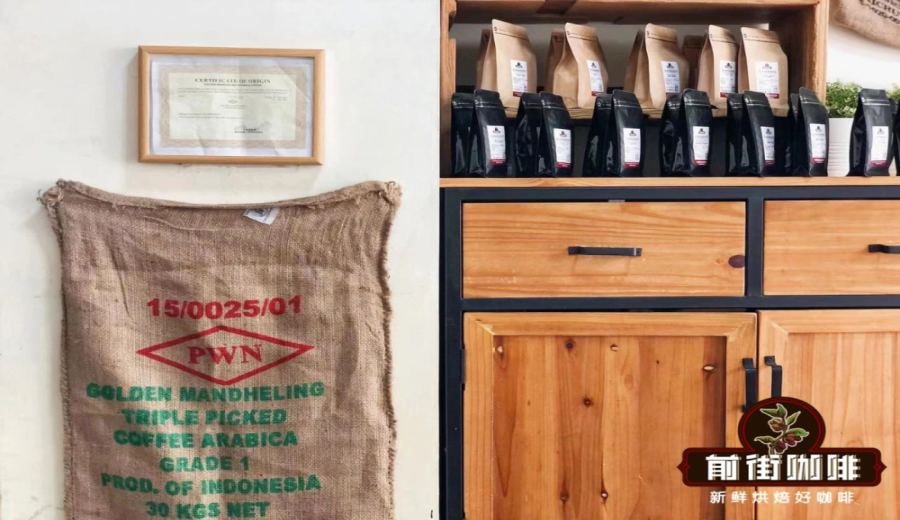
After hulling, the green coffee beans rapidly decrease in moisture content, requiring only further drying to 12% to 13% before packaging and export. However, this rapid processing also leads to a higher defect rate, so multiple rounds of manual sorting are required before export to remove defective beans. Common market grades such as DP (double picked) and TP (triple picked) represent stricter sorting procedures. For example, PWN Golden Mandheling purchased from a certain supplier undergoes machine sorting plus three rounds of manual selection, choosing only whole beans larger than 18 mesh to ensure a pure and consistent flavor.
To brew a Golden Mandheling with balanced flavor and clear layers at home, pour over parameters are crucial. It is recommended to use a KONO filter, whose unique rib design extends the contact time between water and coffee grounds, effectively enhancing body and mouthfeel richness. At the same time, since Mandheling is typically medium to dark roasted and the beans are relatively dense, it is recommended to usea water temperature of 87~88°C,a medium-coarse grind (similar to 70% extraction through a Chinese No. 20 sieve), a coffee dosage of about15 grams, with a1:15 coffee-to-water ratio.
For the specific pour over process, it is recommended to use a three-stage pouring method: first, perform a 30-second bloom with30 grams of water, then pour in a small circular motion from the center up to125 grams, wait for the water level to drop, and then continue pouring up to225 grams, with the total extraction time controlled at around2 minutes. Such parameter design helps reduce the risk of over-extraction, avoids releasing excessive bitter substances, and brings out the characteristic black chocolate, nutty, caramel, and subtle cedar and herbal aromas of Mandheling.
The brewed Golden Mandheling is rich and full-bodied yet clean on the palate, with noticeable sweetness and layers that gradually unfold as the temperature drops. Whether you’re a coffee novice or a seasoned enthusiast, as long as you master the right origin knowledge and pour over parameters, you can easily recreate the unique charm of this classic Sumatran coffee.
The above content is compiled by CoffeeHunters, a coffee news website.


