








Introduction:Have you ever confused Green Mountain Coffee with Jamaican Blue Mountain Coffee? This article delves into the fundamental differences between the two, from the wildly popular K-Cup system in the U.S. to the rare and premium status of Jamaica Blue Mountain No. 1. We explore their brand origins, market positioning, and flavor profiles in detail. Professional pour over parameters and tasting tips are also provided to help you truly understand these two well-known yet distinctly different coffees.
Many viewers became curious about whether Green Mountain Coffee is a substitute for Blue Mountain after seeing it discussed in the TV drama Ode to Joy, with some even suspecting that Green Mountain is merely an imitation of Blue Mountain. In fact, Green Mountain Coffee (Keurig Green Mountain) is a well-known brand from Vermont, USA, founded in 1981. It is not a place of origin and has no connection whatsoever to Jamaican Blue Mountain Coffee.
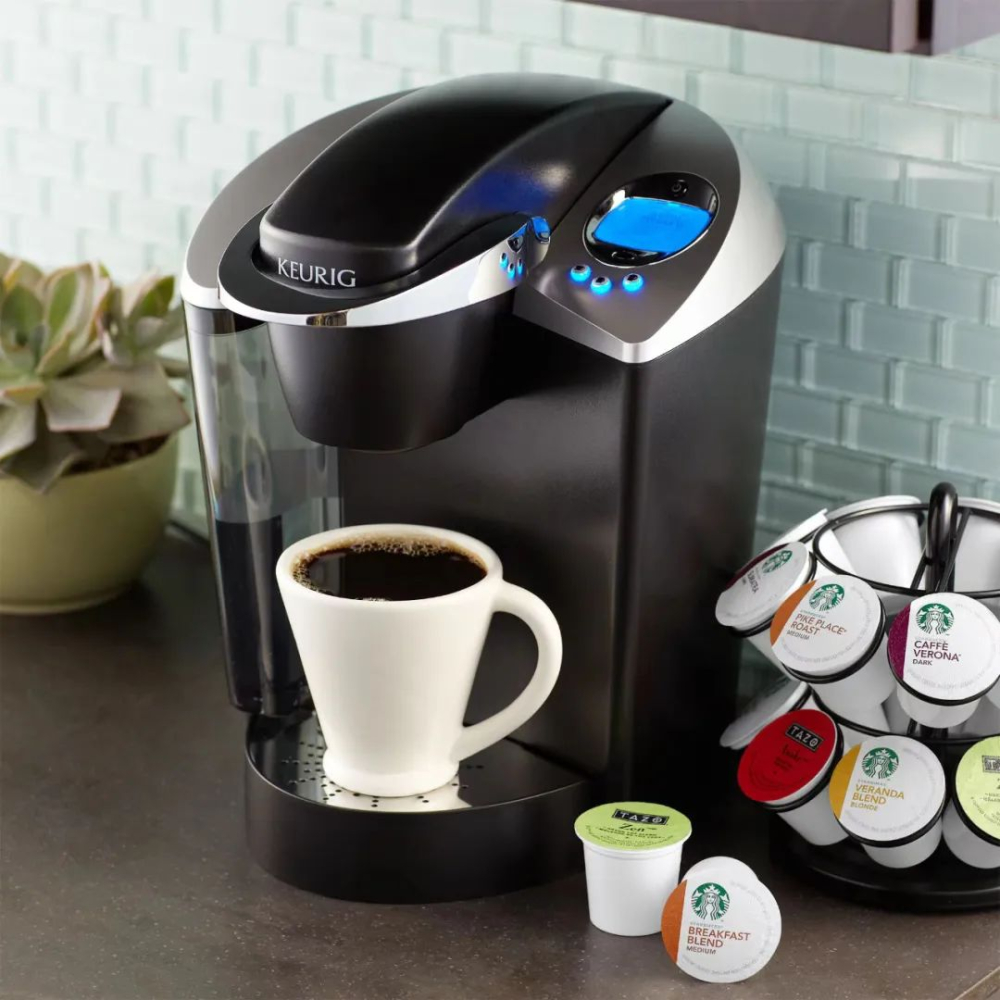
The success of Green Mountain Coffee is largely attributed to its revolutionary Keurig single-serve coffee system and the widely used K-Cup pods. This design allows consumers to easily enjoy a freshly brewed cup of black coffee at home or in the office without the hassle of grinding, weighing, or cleaning complicated equipment. Each K-Cup brews coffee with a rich aroma, and the operation is simple — just insert the K-Cup into the machine and press a button. Compared to traditional coffee makers, it not only saves time but also significantly reduces grounds and cleanup hassles.

Green Mountain Coffee targets the mass market, offering affordably priced Arabica coffee bean options. The brand strategy focuses on high sales volume with low profit margins. Its coffee machines are priced at just over one hundred dollars, close to cost, with profits mainly generated through the sale of K-Cups. A box of 24 K-Cups typically retails for around $12, which equates to roughly $0.50 per cup. According to statistics, over 3 million K-Cups are consumed daily in North America, with the office market accounting for nearly one-third of the brand’s revenue. Additionally, Green Mountain licenses the K-Cup system to other beverage brands — by paying a licensing fee of 6 cents per cup, they can produce compatible pods, creating a diverse beverage platform.
In contrast, the high price of Blue Mountain Coffee is inseparable from its limited production regions and historical background. As early as 1969, Jamaica was hit by a severe hurricane that devastated its coffee industry. At that time, Japan’s UCC company provided funding and technical support, introducing modern eco-friendly cultivation management. In gratitude, the Jamaican government signed a 30-year agreement with Japan, allocating 90% of its high-quality Blue Mountain Coffee production to the Japanese market, with the remaining 10% distributed to Europe and the United States. After the agreement expired, due to Japan’s economic downturn and Jamaican coffee farmers seeking independence, the price of Blue Mountain beans rose significantly. Currently, Japan’s purchasing proportion has dropped to below 60%. Today, consumers can directly access legally imported Jamaican Blue Mountain Coffee through proper channels, free from the former quota restrictions.
So, what does Blue Mountain No. 1 represent? The answer is: it is the top-grade variety among Jamaican Blue Mountain Coffees, considered a national treasure-level coffee, with a rigorous production process and outstanding quality. According to the scientific grading standards set by the Jamaica Coffee Industry Board (CIB), Blue Mountain Coffee is divided into four grades based on bean size, appearance uniformity, defect rate, moisture content, and cupping performance: Blue Mountain No. 1, Blue Mountain No. 2, Blue Mountain No. 3, and Blue Mountain Peaberry. Among them, Blue Mountain No. 1 is the highest grade, requiring a bean size of 17 mesh or above, a defect rate below 3%, a moisture content of around 13%, and demonstrating low acidity, full body, rich aroma, and a long-lasting aftertaste in cupping evaluations.
It is worth mentioning that, to ensure the green beans are not affected by moisture during transportation, Jamaica still insists on using traditional handmade wooden barrels to store Blue Mountain green beans — this has also become one of the distinctive hallmarks of Blue Mountain Coffee.
When roasting Blue Mountain No. 1, a certain shop adheres to the concept of showcasing its classic flavors, opting for a medium-dark roast to fully bring out the unique chocolate and nutty aromas of Blue Mountain Coffee, while retaining moderate gentle acidity and natural sweetness, resulting in a more balanced and layered overall taste. This roasting method faithfully reflects the unique character of Blue Mountain Coffee without overemphasizing any single flavor aspect.
To truly experience the authentic flavors of Blue Mountain No. 1, it is recommended to brew it using the pour over method, which can more fully highlight its subtlety and complexity. Blue Mountain No. 1 uses the ancient Typica variety, with relatively low caffeine content, mild and pure flavors, making it easily approachable even for coffee novices.
Recommended pour over parameters from a certain shop are as follows: use a KONO filter, water temperature controlled at 88°C, a coffee-to-water ratio of 1:15, 15 grams of coffee grounds, grind size set to EK43s - scale 10.5 (approximately 75% passing rate through a #20 sieve). This combination can fully bring out the richness and aroma of Blue Mountain Coffee while avoiding over-extraction that could lead to bitterness.
For specific brewing steps, first wet the filter with hot water to ensure it adheres tightly to the walls of the filter cone, preventing paper taste interference. Add 15 grams of coffee grounds, then pour 30 grams of water for a 30-second bloom to awaken the grounds. Next, slowly pour water in a circular motion from the center. When the total water volume reaches 125 grams, perform the first pour. Once the coffee bed descends to the middle of the filter, continue pouring to 225 grams using the same technique. Finally, allow the dripping to finish before removing the filter.
The final flavors presented by this coffee include intense dark chocolate richness, mellow caramel sweetness, and soft, delicate acidity. All elements harmonize seamlessly, resulting in a smooth, rich mouthfeel — the most representative expression of Blue Mountain flavor.
The above content is compiled by CoffeeHunters, a coffee news website.


