







Introduction:Want to dive deeper into the star variety of specialty coffee — Geisha? Panama's Hacienda Esmeralda is not only a shaper of Geisha’s flavors but also a key driver in establishing its premium status. This article offers an in-depth look at the history of Hacienda Esmeralda’s Geisha, the differences between Red Label and Green Label grades, mainstream processing methods, along with professional pour over recommendations and flavor descriptions to help you systematically understand the unique charm of this classic coffee bean.
In the world of specialty pour over coffee, Geisha is undoubtedly the most eye-catching variety, and Panama’s Hacienda Esmeralda is the key force that made this coffee bean shine. If you’ve tried various Geisha products but always felt the flavors varied greatly, starting with an understanding of Hacienda Esmeralda’s Geisha system will help you grasp the core elements of the classic “Geisha taste,” including terroir, grade classification, and processing techniques.
Hacienda Esmeralda was established in 1964 when American banker Rudolph A. Peterson purchased the estate after retiring and moving to Panama. It is located in the country’s renowned western coffee-growing region — Boquete. Influenced by the convergence of Pacific and Atlantic air currents, the area enjoys a mild tropical maritime climate. Coupled with high altitudes often accompanied by morning fog, it provides natural shade for coffee trees. The region’s mineral-rich volcanic soil, ample annual rainfall, significant day-night temperature variations, and the microclimates created by its hilly terrain form the foundation for the rich and clean flavor profile of Geisha coffee.
The Geisha variety was not originally cultivated for Panama but was introduced as part of varietal improvement efforts. However, due to its low yield and unremarkable flavors at low altitudes, it was long overlooked. It wasn’t until the 1970s, when Rudolph’s son took over the estate and gradually shifted toward coffee cultivation, that multiple new varieties — including Geisha — were introduced. Yet it wasn’t until the 1990s, when some coffee trees were infected with leaf rust, that Daniel Peterson accidentally discovered Geisha’s relative resistance to disease and its outstanding performance at high altitudes. He then began planting it separately and increasing cultivation elevations, eventually uncovering its unique potential.
The turning point came in 2003 when the estate conducted its first cupping of Geisha, revealing astonishing results with intense notes of white flowers, citrus, berries, and bergamot, plus a clean and refreshing mouthfeel. The following year, this coffee participated in the Best of Panama (BOP) competition and won first place, a feat it repeated for several consecutive years, thereby establishing Geisha’s top-tier status in the specialty coffee world. In 2005, it further claimed global recognition by defeating numerous strong competitors at the SCAA international competition in the United States, sparking a worldwide chase for Geisha.
Hacienda Esmeralda’s grading and management of Geisha can be considered an industry benchmark. Based on altitude, growing blocks, and cupping results, they divide Geisha into different grades and batches, ensuring each lot is traceable. The main growing areas are divided into three blocks: Cañas Verdes, Jaramillo, and El Velo. Among them, Jaramillo is regarded as the core origin of Geisha, with an average altitude exceeding 1650 meters. Due to its cool climate and abundant fog, it produces Geisha coffee with exceptionally concentrated and layered flavors. This area is further subdivided into smaller plots such as Mario, Noria, Reina, Bosque, and Buenos Aires, with Mario and Bosque particularly standing out in regional competitions.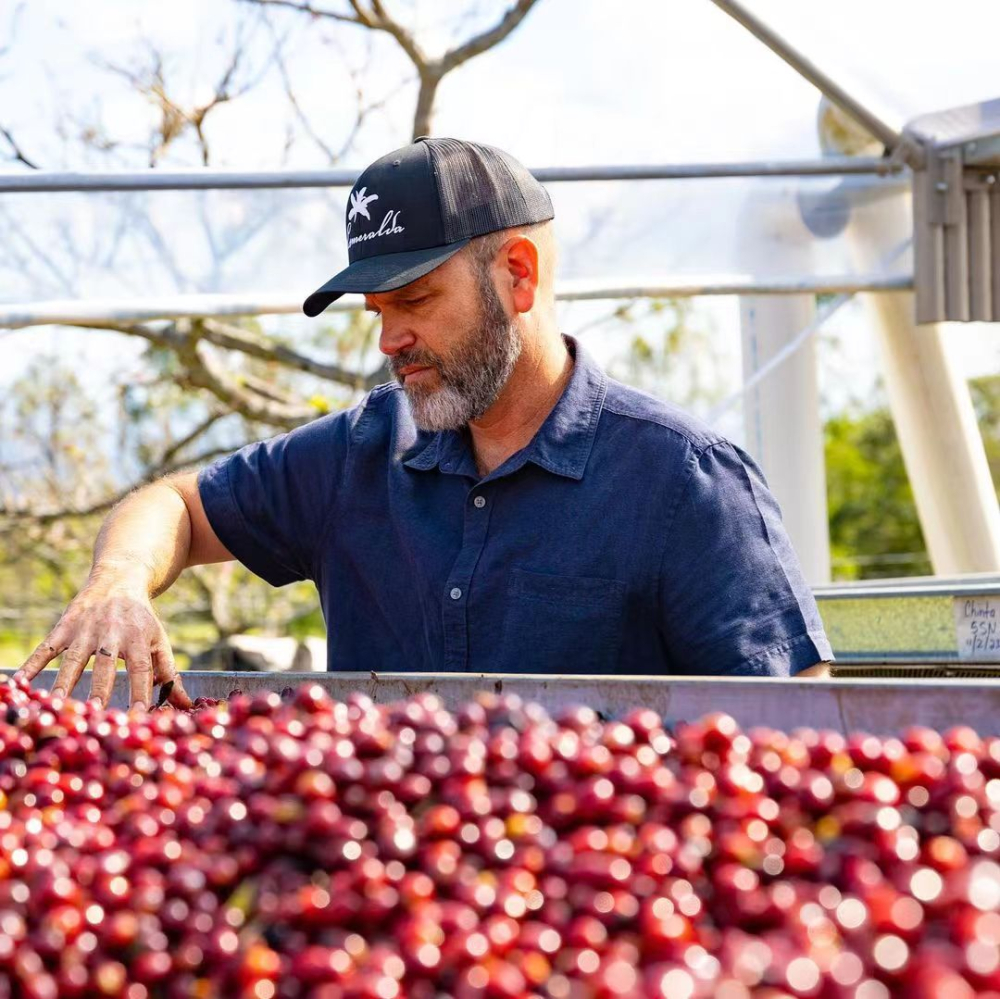
Hacienda Esmeralda’s green coffee processing facility is located in Cañas Verdes, near the foothills of the Barú Volcano, about a twenty-minute drive from the town of Boquete. During harvest, only fully ripe and uniformly colored coffee cherries are selected, with a strict commitment to handpicking and meticulous sorting to ensure high-quality raw materials. The harvested coffee cherries are immediately sent to the processing facility, where they are processed according to different methods to fully showcase the unique flavors of each batch.
When it comes to the grades of Hacienda Esmeralda’s Geisha, the most common are the “Red Label” and “Green Label.” The Red Label (Esmeralda Special), also known as the Hacienda Esmeralda Special Grade, is the highest tier, typically offered through auctions. It includes Geisha from the Jaramillo and Cañas Verdes regions, grown at altitudes of around 1600–1800 meters, often scoring over 90 points in cupping. Red Label lots feature intense floral and fruity aromas with extremely high cleanliness, and each auctioned batch has an independent number corresponding to a specific plot, such as the renowned Mario plot. Most Red Label Geishas are sun-dried, offering rich flavors often featuring tropical fruits, berries, and floral notes.
Sun-drying is a key method behind Geisha’s fame. The process involves spreading whole coffee cherries on drying beds and slowly drying them in the sun for typically 3 to 5 days (depending on weather), turning them daily to ensure evenness, followed by transferring them to a dryer to complete the final drying stage. This method retains more sugars and aromatic compounds from the fruit pulp, giving the coffee a richer fruity sweetness. It’s noted that sun-dried Geisha often exhibits tropical fruit and juice-like acidity and sweetness, with intense and varied flavors.
In contrast, the Green Label (PRIVATE COLLECTION) belongs to the private collection series. Though also sourced from high-altitude Jaramillo and Cañas Verdes regions, it does not disclose specific plot information and does not participate in auctions. This grade is mostly washed-processed, with a flavor profile that is clearer and brighter, often featuring lemon, grapefruit, berries, and a soft tea-like finish, with the lingering aroma reminiscent of Tieguanyin tea being particularly memorable. The washed processing steps include: removing the skin and pulp, fermenting to remove the mucilage, washing for cleaning, and finally drying to about 12% moisture content before removing the parchment. This technique results in a cleaner and more consistent coffee taste, suitable for those who prefer a fresh flavor profile.
Regarding pour over recommendations, industry experts suggest adjusting parameters based on different processing methods and flavor characteristics. Generally speaking, Geisha is well-suited to medium-light roasts to preserve its delicate floral notes and fruity acidity. It is recommended to use water at 92–93°C to fully activate aromatic molecules. For pour over, a staged extraction method can be used: start with pouring 30 grams of hot water for a 30-second bloom, then slowly add 95 grams of water, and once the flow rate stabilizes, add the final 100 grams, keeping the total extraction time around 2 minutes.
In terms of actual tasting, the Red Label sun-dried Geisha often exudes intense rose and citrus aromas, with a sweet entry reminiscent of mango and tropical fruits. The mouthfeel is rich yet layered, like sipping a refined floral and fruity tea. Meanwhile, the Green Label washed batches offer a refreshing profile, with bright acidity from lemon and berries, a distinct tea-like sensation, and a subtle Tieguanyin-like aftertaste, making it ideal for coffee lovers who prefer a clean and refreshing style.
The above content is compiled by CoffeeHunters, a coffee news website.


