








Introduction:Want to explore the unique charm of Guatemalan coffee in depth? This article will take you through the terrain and climate background of this Central American coffee-growing region, analyze the distinctive characteristics of its eight major producing areas, and provide detailed insights into the terroir conditions of Antigua, Huehuetenango, and Nuevo Oriente. It also offers practical pour over recommendations and a comprehensive flavor profile to help you better understand the diverse flavors and tasting highlights of Guatemalan coffee.
Although Guatemala is slightly less well-known on the international market compared to Brazil and Colombia, its coffee stands out in the specialty coffee scene with its rich, smooth mouthfeel and unique smoky, charred notes. Many coffee enthusiasts, upon their first taste, can immediately appreciate the wonderful blend of chocolatey sweetness and subtle smokiness — so much so that coffee from the Antigua region has even been dubbed "cigar coffee."
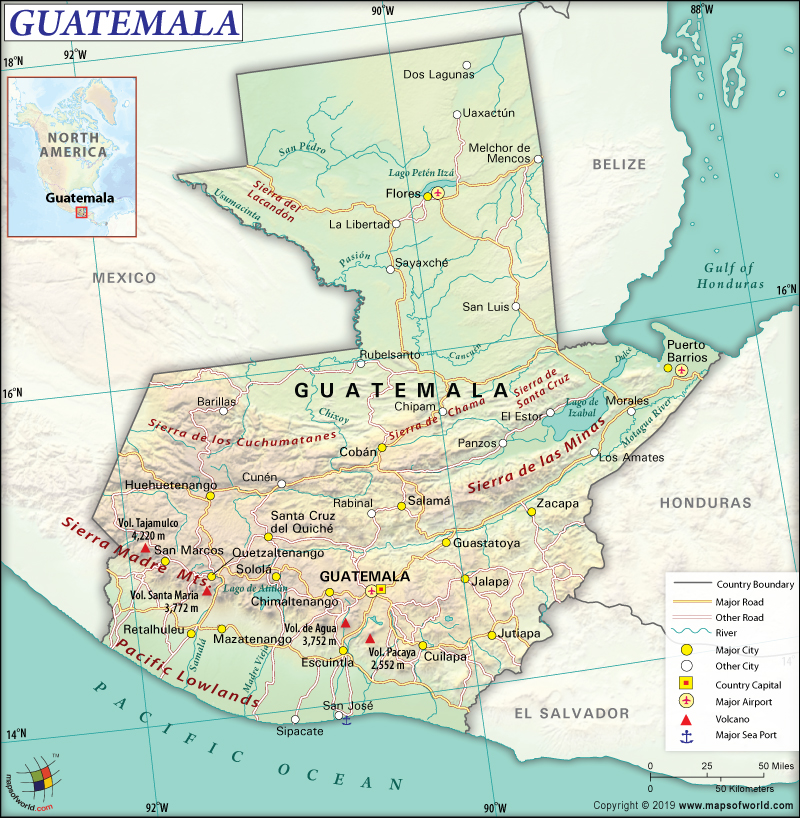
This Central American country boasts exceptionally favorable geography, with mountainous terrain covering over two-thirds of its land area, including more than thirty volcanoes located in the west and south. These volcanoes not only shape the stunning landscape but also enrich the surrounding coffee-growing regions with fertile soil and abundant mineral elements.Among them, the Antigua region benefits from the occasional eruptions of the active Fuego volcano, which continuously nourishes the local soil and cultivates beans with intense flavors.
Guatemala’s overall climate is tropical, but due to differences in elevation and geographic location, the northern and southern climates are markedly distinct. The north and east experience a tropical rainforest climate, which is humid and rainy, while the central highlands and southern mountainous areas lean toward a subtropical climate with distinct wet and dry seasons. The rainy season runs from May to October, followed by the dry season from November to April of the following year. This climatic rhythm provides clear growth and harvesting cycles for coffee.Most of Guatemala’s coffee plantations are concentrated at elevations above 1,500 meters, falling within the Strictly Hard Bean (SHB) classification. Such coffees typically exhibit a more solid body and complex flavor profiles.
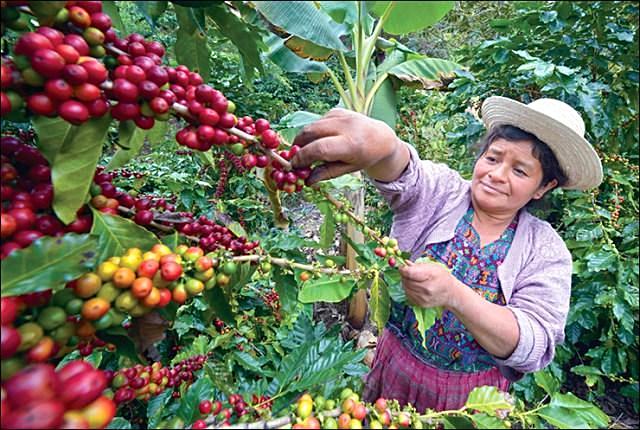
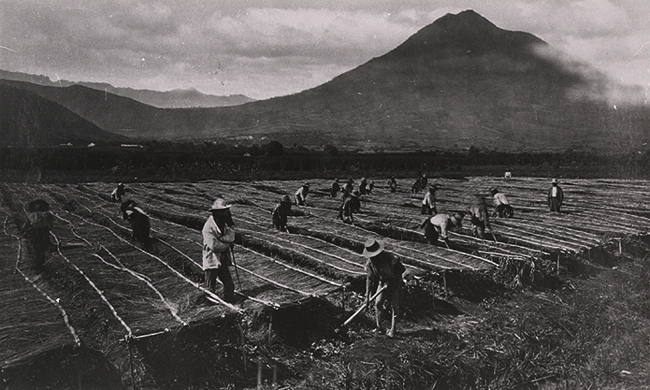
Looking back at the history of coffee cultivation in Guatemala, it dates as early as 1747, but it wasn’t until 1750 that Jesuit priests formally introduced coffee plants. Over time, coffee gradually rose to become a vital economic crop for the country. By 1880, coffee exports accounted for ninety percent of total exports. However, there was a historical period when the government, aiming to expand planting areas, forced indigenous people to leave fertile lands and relocate to barren regions. To this day, around sixty thousand family-run farms continue to cultivate this nationally symbolic crop using a blend of traditional and modern methods.
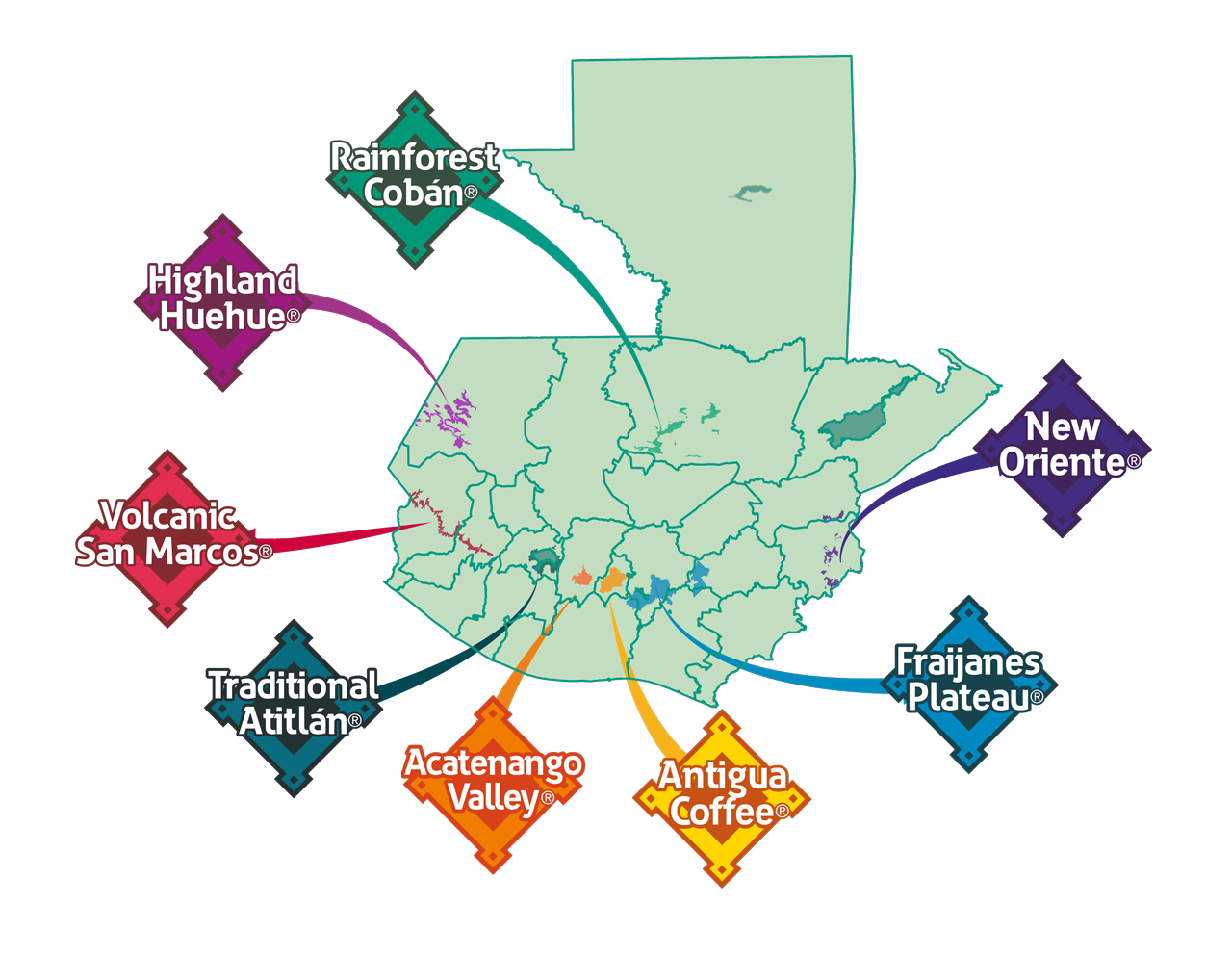
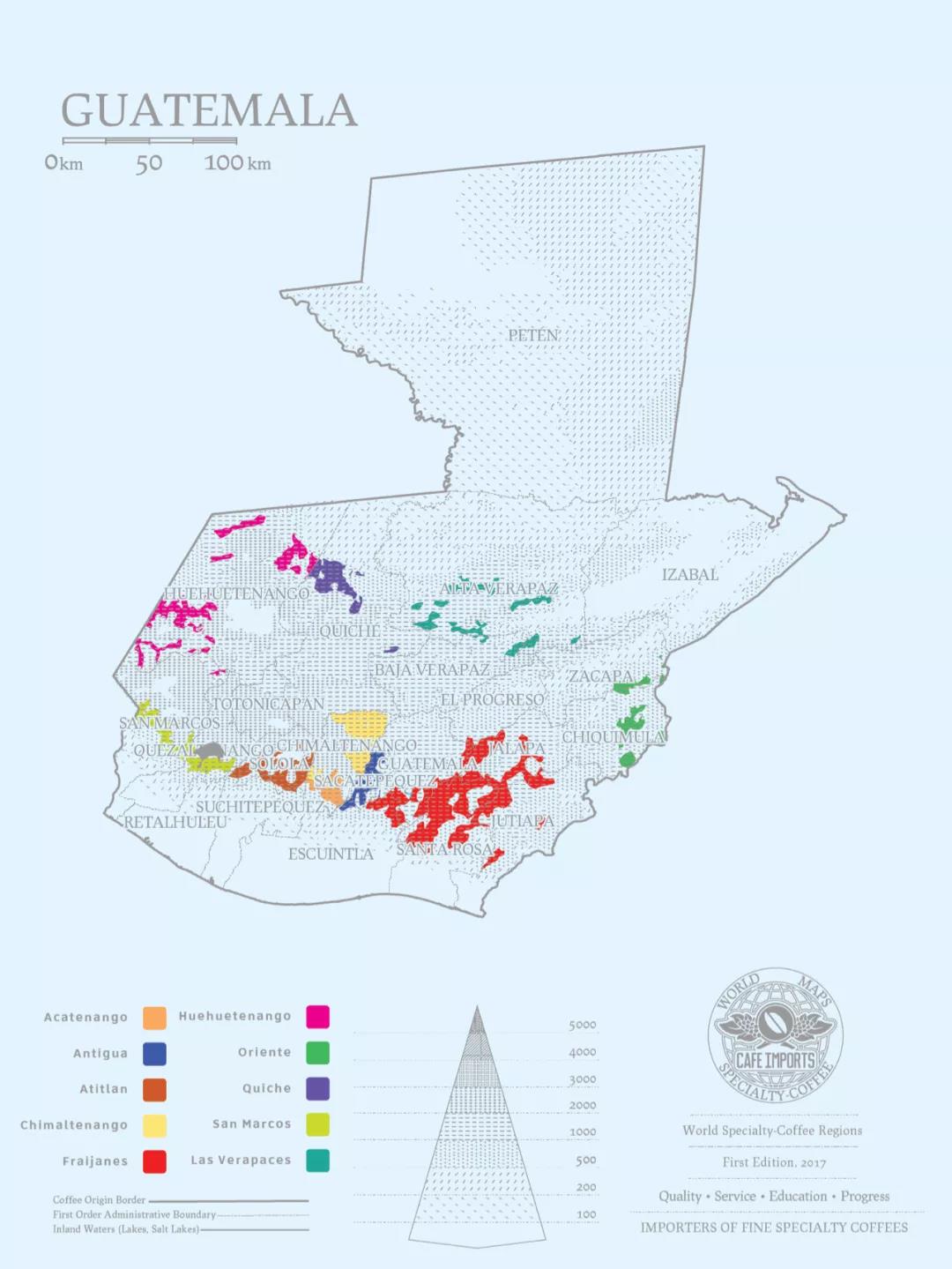
To effectively promote the unique features of coffee from each region, the Guatemalan Coffee Association launched the “A Rainbow of Choices” initiative. This program divides the country’s coffee-growing regions into eight distinct zones based on terroir conditions. Each zone has its own unique microclimate, altitude, and processing traditions, resulting in coffee beans with rich and layered flavor profiles.
Below are detailed introductions to three of the most renowned producing regions:
[Antigua Region]
Surrounded by three active volcanoes — Agua, Fuego, and Acatenango — Antigua features a unique volcanic valley terrain. The Fuego volcano erupts periodically, continually replenishing the surrounding soil with mineral nutrients. The area is covered with vast tracts of virgin forest and boasts deep, fertile volcanic soils, along withelevations generally exceeding 1,500 meters, a mild and stable climate, moderate humidity, and extremely rare extreme weather events— creating an environment that is highly suitable for growing specialty coffee. Coffees from this region have repeatedly earned recognition in international competitions, making it one of Guatemala’s most representative coffee-producing areas.
Take La Minita Estate as an example. Located in this region, its coffee fields employ a strict soil testing system, applying fertilizer only about three times per year, and avoiding chemical pesticides altogether. Instead, they rely on microclimate conditions and scientific management to reduce pest risks. The famous “Flor de Cana” coffee beans introduced by a well-known coffee brand come from this estate. They are processed using the washed method, with varieties including Caturra and Bourbon, grown at an altitude of approximately 1,200 meters, showcasing exceptional balance and refined flavors.
[Huehuetenango Region]
Situated in the northwest of Guatemala, this region sits at elevations ranging from 1,500 to 2,000 meters, featuring a dry climate and significant day-night temperature variations. Dry, hot winds from the Tehuantepec Isthmus in Mexico effectively reduce the risk of frost, while warm, moist Caribbean air drawn in by the central mountains contributes to a dynamic and misty microclimate. The fertile volcanic soils provide ideal growing conditions for coffee trees, and the resulting coffees often exhibit bright acidity and rich layers of aroma.
[Nuevo Oriente Region]
The Nuevo Oriente area was once a zone of significant volcanic activity, with soils composed of mineral-rich metamorphic rocks. Although it was once one of the country’s poorest regions, since the 1950s, local farmers have leveraged this naturally fertile land to develop coffee cultivation, gradually creating a coffee-growing region with great potential. Coffees from this area typically offer a full-bodied, balanced profile with a soft chocolatey note, making them well-suited for drinkers who prefer bold flavors.
In terms of brewing, taking the Antigua Flor de Cana as an example, it is recommended to use a pulsed pour over technique: begin with a 30-second bloom using 30 grams of hot water, then pour in a small circular motion until reaching 125 grams for the first pulse. After the water level drops, continue pouring up to 225 grams, and finish the extraction just before the coffee bed is about to become exposed. The total brew time should be controlled at around2 minutesto fully highlight its layered aromas and flavors.
In terms of flavor, such coffees often feature pronounced citrus acidity, delivering a juice-like freshness accompanied by abundant floral notes and moderate sweetness. The mid-palate is rich and smooth, while the finish reveals gentle caramel sweetness and a hint of smoky aroma. Overall, the cup is clean, balanced, and multi-dimensional, making it a classic flavor profile that both entry-level and experienced coffee enthusiasts shouldn’t miss.
The above content is compiled by CoffeeHunters, a coffee news website.


