








Introduction:The key to making an at-home iced latte that rivals café-quality isn't in the simplicity of the steps, but in selecting the right ingredients, mastering the proportions, and paying attention to the details of the process. This article delves into how to create an iced latte with clear layers and a rich flavor using a suitable Italian blend, whole milk, and scientific ratios, along with correct brewing and pouring techniques—even beginners can easily master it.
Wanting to recreate a rich, well-layered iced latte at home isn’t as simple as just pouring ice, milk, and espresso into a cup in order. Many coffee enthusiasts who try it at home often find their homemade iced lattes end up either too milky or overly diluted, losing the balance they should have. A high-quality iced latte actually relies on three core elements: the choice of coffee beans and milk, the precise ratio of espresso to milk, and handling various details during the process.
First,Material selection is the key to determining the foundational flavor of an iced latte. The differences in the flavors of many commercial iced lattes mostly stem from variations in the blends and types of milk used. It’s recommended to choose a classic Italian blend, usually a mix of beans from regions like Brazil, Indonesia, and Vietnam, roasted dark. These beans bring out intense notes of nuts and chocolate and form stable crema, whether you're making Americano or a milk-based latte, they can all deliver consistent and rich performance.
As for the milk, although there are many types of fresh whole milk available on the market, each varies slightly in terms of milk aroma, richness, and wateriness.When choosing milk, your primary criterion should be harmony with the coffee's flavor, rather than blindly pursuing richness. Overly heavy milk flavors can mask the characteristics of the coffee itself, while watery milk can make the whole drink seem thin and weak.
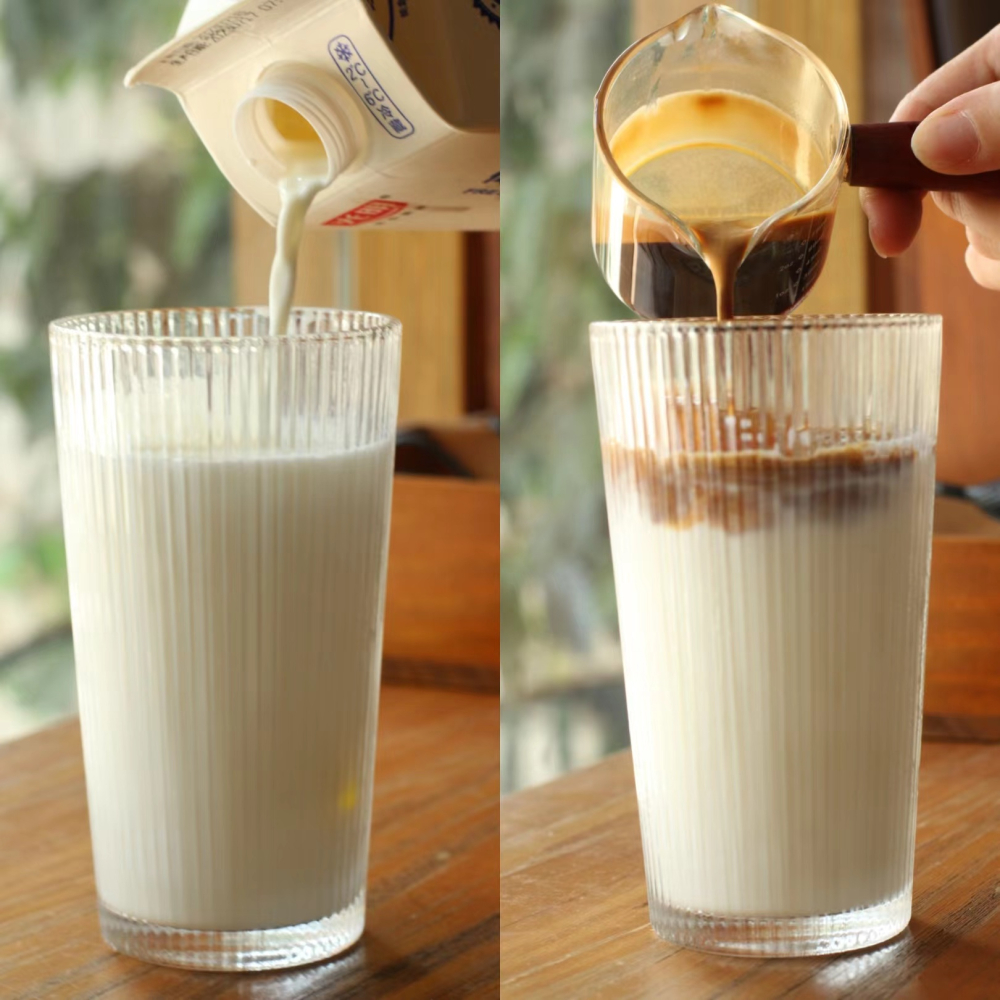 Next isthe balance of milk to coffee ratio, which is the core factor affecting overall mouthfeel. Based on actual brewing experience, the recommended ratio of espresso to iced milk is 1:6—that is, 40 grams of extracted espresso paired with 240 grams of iced milk and about 75 grams of ice, poured into a transparent glass with a capacity of around 300 milliliters. This ratio is derived from multiple tests and tastings, adjusted according to the characteristics of specific beans and milk, and can serve as a reference benchmark for home brewing. However, readers may also adjust slightly based on personal taste—for example, those who prefer a stronger coffee flavor can slightly increase the coffee proportion, or those who like a creamier mouthfeel can moderately raise the milk content. But note: too much milk can suppress the coffee flavor, and too much ice can dilute the overall taste.
Finally,Operational details determine the final outcome of the iced latte. Although the steps may seem simple—add ice, pour milk, add coffee—each step actually holds its own trick. First, the quality of the espresso extraction is crucial, including whether channeling occurs, whether the extraction time is appropriate, etc., all of which directly impact the final flavor. In addition, the entire process values efficiency—it’s recommended to pour the espresso into the cup containing ice and milk immediately after extraction. This achieves a beautiful layered effect while preventing excessive melting of the ice, which would dilute the drink.
A special reminder:The freshly extracted espresso is covered with a rich layer of coffee crema. This layer not only affects visual layering but is also an important carrier of flavor. However, this crema will gradually dissipate after about 30 seconds of sitting still. If you delay pouring, not only will the layering be reduced, but the overall smoothness and fullness of the mouthfeel will also be affected. Therefore, it’s advised to move as swiftly and smoothly as possible from extraction to pouring to present the iced latte at its best.
The above content is compiled by CoffeeHunters, a coffee news website.


