








Introduction:Jamaican Blue Mountain coffee is renowned for its rich aroma and well-balanced, mellow flavor, making it one of the world’s premier specialty coffees. This article delves into the growing environment, grading system, and washed processing methods of Blue Mountain No. 1, helping you understand the key factors behind its unique flavor profile. It also provides detailed pour-over and drip bag brewing recommendations, including grind size, water temperature, coffee-to-water ratio, and a three-stage pouring technique, to help you consistently brew this classic flavor at home—featuring notes of dark chocolate, nuts, and caramel sweetness.
Jamaican Blue Mountain coffee has long been hailed as one of the world’s finest coffees, celebrated for its smooth, rounded mouthfeel and rich, captivating aroma. These Arabica beans from the Caribbean island not only benefit from an exceptionally favorable growing environment but also undergo rigorous grading and refined processing, resulting in their distinctive flavor characteristics. Next, we’ll begin with the growing environment of Blue Mountain coffee, then explore its classification, processing methods, and share practical pour-over and drip bag brewing tips to help you master the golden parameters and enjoy a perfectly balanced cup of Blue Mountain flavor.
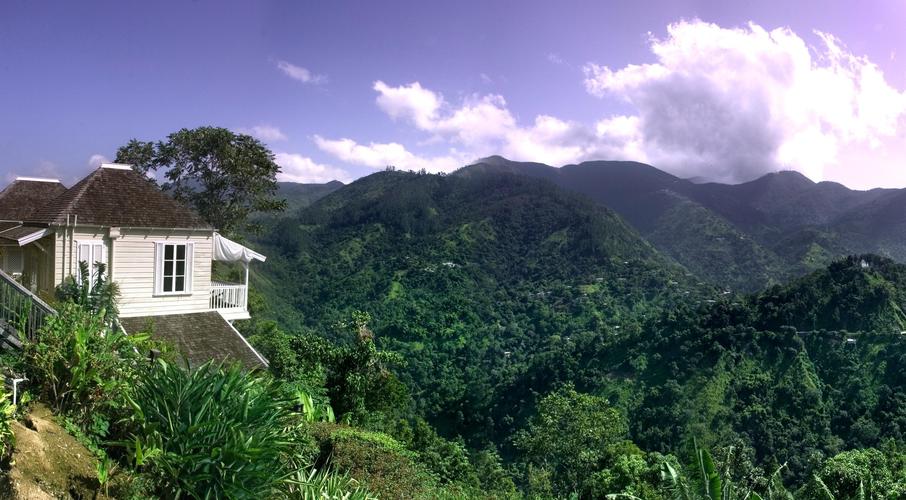
As the name suggests, “Blue Mountain coffee” comes from the Blue Mountains of Jamaica. Located in the Caribbean, Jamaica’s Blue Mountain range sits in the eastern part of the island and is the highest peak in the Caribbean, reaching an elevation of 2,256 meters. The mountains are often shrouded in mist, and when sunlight penetrates the peaks, it casts a pale blue hue, hence the name “Blue Mountain.” The region enjoys a cool climate, fresh air, and mineral-rich volcanic soil, offering ideal conditions for coffee trees to thrive. Additionally, the significant day-night temperature variation at high altitudes allows coffee cherries to ripen slowly, accumulating more complex flavor compounds and sugars—an important reason why Blue Mountain coffee boasts such delicate and layered flavors.
True Blue Mountain coffee is grown only in areas of the Blue Mountain range above 910 meters in elevation, with regions above 1,700 meters designated as nature reserves where no crops are allowed to be planted. According to the strict grading system of the Jamaica Coffee Industry Board (CIB), only Arabica coffee grown above 910 meters qualifies as “Jamaican Blue Mountain coffee.” In contrast, coffee grown at lower elevations is classified as “Jamaican High Mountain Coffee” or “Jamaican Prime Coffee.” As the highest grade, Blue Mountain No. 1 is produced in limited quantities and commands a relatively high price, making it a dream product for many coffee enthusiasts.
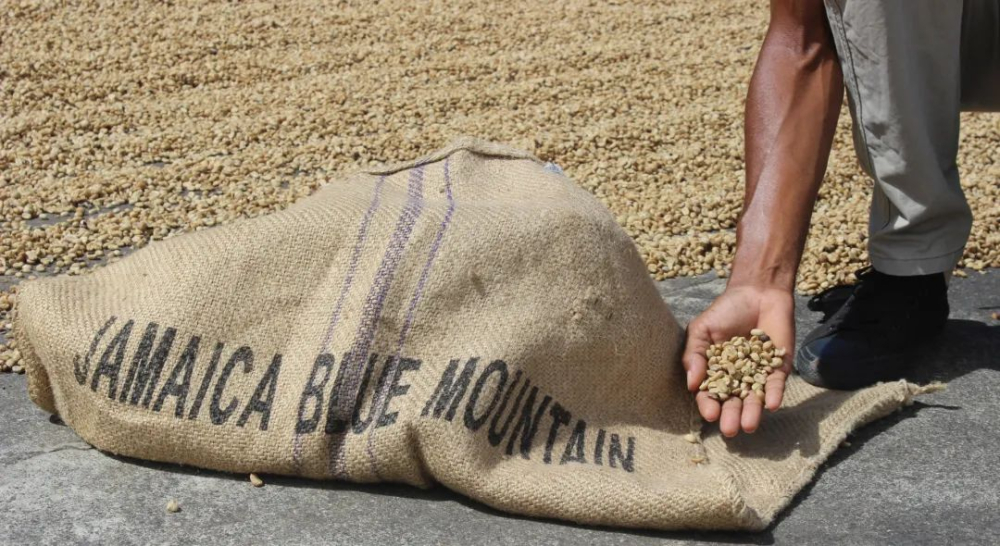
The processing of Blue Mountain coffee is equally meticulous. After harvesting, the coffee cherries are typically processed using the washed method: first, the outer fruit pulp is mechanically removed, then the mucilage-covered seeds are placed in water tanks for a 24-hour fermentation period to break down residual pectin. After fermentation, the seeds are repeatedly rinsed with clean water, using the friction between the water flow and the beans to remove the mucilage. Finally, the parchment-covered beans are evenly spread out and sun-dried for two to three weeks until the moisture content is reduced to 12–14%. This refined processing method effectively minimizes impurities and overly sharp acidity caused by over-fermentation, resulting in a purer, more balanced aroma in Blue Mountain coffee.
The processed green beans also undergo multiple quality control checks, including defect rate, bean size, and cupping score. The standards for Blue Mountain No. 1 are extremely stringent: the beans must be sized between 17 and 18 screens, defects must not exceed 2%, and the cup profile must demonstrate an excellent balance of acidity, sweetness, bitterness, body, and aroma. These strict criteria result in the delicate, clean, and layered flavor profile of Blue Mountain No. 1—the very essence of its premium value.
For brewing, it is recommended to use a Kono filter cone to highlight the rich, rounded mouthfeel of Blue Mountain No. 1. The rib design of the Kono cone covers only the lower half of the cone, allowing the filter paper to adhere more closely to the walls after wetting. This effectively reduces airflow, extends the coffee grounds’ absorption time, and improves extraction uniformity and overall body. Since Blue Mountain No. 1 is medium roasted with a relatively loose bean structure and high water absorption efficiency, it is advised to use a medium-fine grind with about 75% passing rate through a 20-mesh Chinese standard sieve, with water temperature controlled around 88°C, and a three-stage pouring technique to reduce the risk of over-extraction.
A recommended dosage is 15 grams, with a coffee-to-water ratio of 1:15. Begin with a 30-second bloom using 30 grams of water to activate the coffee’s aroma; then, pour in a slow circular motion up to 125 grams, pause briefly as the liquid level drops, and continue with the second pour up to 225 grams. The total extraction time should be around 2 minutes. These parameters effectively bring out the dark chocolate, nutty, and caramel aromas of Blue Mountain coffee, yielding a silky-smooth mouthfeel and a refreshing, sweet, and layered finish.
If you find your pour-over tasting overly bitter, it may be due to one or more common factors: first, grinding too fine can lead to over-extraction, releasing excessive bitter compounds—in this case, try a slightly coarser grind, and you can calibrate using a 20-mesh sieve; second, water that is too hot can cause scorching bitterness—it’s best to keep the temperature between 86–93°C, with an ideal range of 87–89°C for medium-dark roasts like Blue Mountain No. 1; finally, pouring too quickly or stirring excessively can also lead to over-extraction—maintaining a steady pour and even rhythm helps improve extraction efficiency while avoiding unwanted off-flavors.
Aside from pour-over, Blue Mountain drip bags are another excellent way to enjoy the flavor of Blue Mountain No. 1. Drip bags are convenient—just add hot water and a cup, and you can enjoy a near-pour-over-quality cup of Black Blue Mountain coffee anytime, anywhere. When brewing, it’s recommended to use hot water around 90°C, first wetting the filter pouch, then pouring in the water and letting it steep for about 2 to 3 minutes to fully release the coffee’s flavors. This method saves time while still consistently presenting the rich body and aromatic traits of Blue Mountain coffee, making it perfect for busy daily life or office settings.
The above content is compiled by CoffeeHunters, a coffee news website.


