







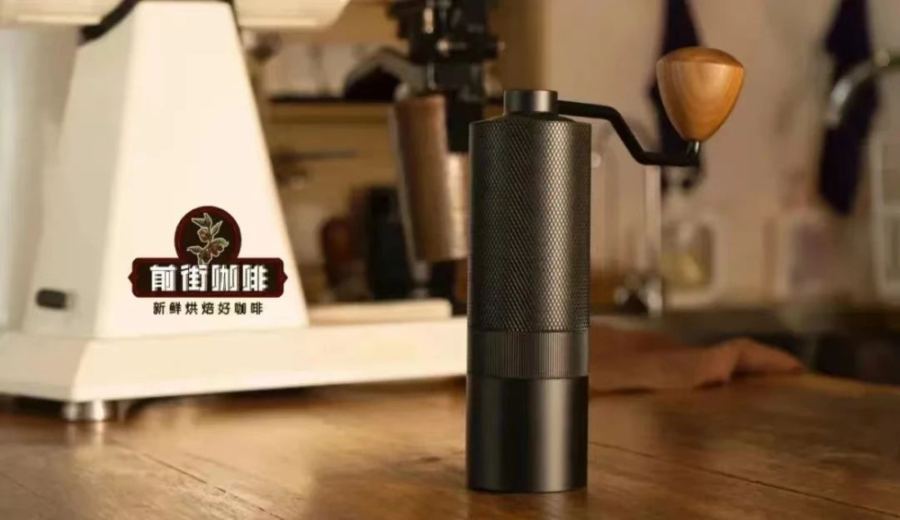
Introduction:Hand grinders are practical tools for pour over enthusiasts, suitable not only for home use but also ideal for creating portable brewing solutions on the go. This article delves into the design principles of burr mechanisms, grind adjustment techniques, and handle operation essentials, explaining how to choose the appropriate grind size for different brewing methods. It also provides cleaning and maintenance tips to help you consistently extract coffee with balanced flavors.
Hand grinders are highly favored by pour over aficionados. Their price and performance vary significantly by model, making them not only suitable for everyday home use but also perfect—when paired with a French press, AeroPress, or moka pot—for assembling a portable coffee setup ideal for outdoor use. This article takes you through the burr structure, the principle of the grind adjustment dial, the mechanism of the handle operation, and the functions of the bean hopper and grounds chamber, helping you master the correct grinding process and adjust grind coarseness according to different brewing methods to further enhance your coffee’s flavor profile.
Burr: The Key Component Affecting Grind Quality
The core of a grinder lies in its burr set, which consists of two interlocking grinding discs featuring various surface patterns such as serrated edges, grooves, or conical protrusions. These patterns are responsible for cutting and compressing coffee beans, gradually breaking them down from whole beans into powder. The finer the patterns, the better they handle fine particles, resulting in a more uniform grind.
Currently, most hand grinders on the market adopta conical burr design, where the upper burr is cone-shaped and the lower one is an annular groove. This design increases the contact area between the burrs, which helps improve grinding efficiency and stability. Compared to flat burr grinders, it usually delivers a more consistent particle distribution.
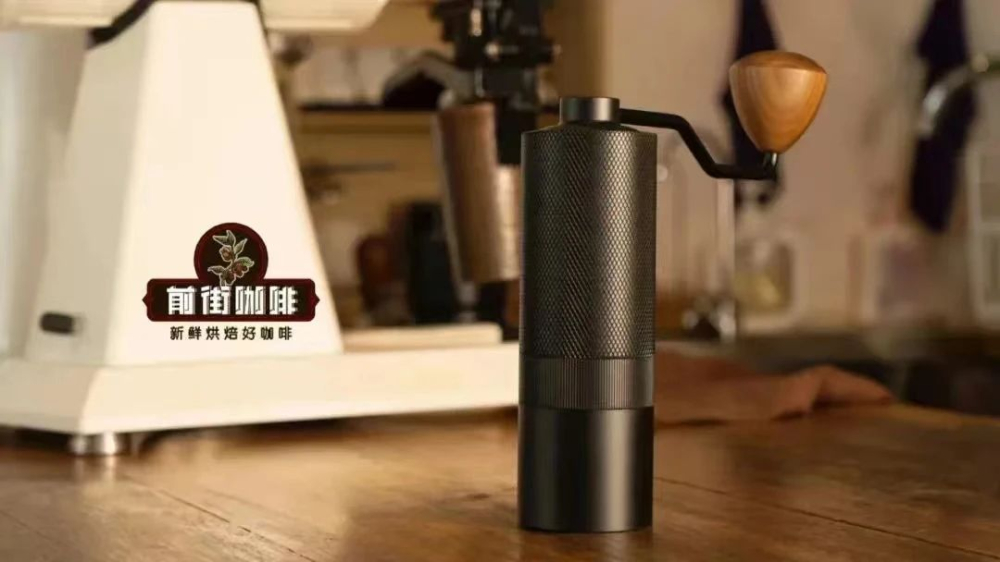
Grind Adjustment Dial: Precise Control Over Grind Coarseness
The distance between the burrs determines the coarseness of the coffee grounds.The smaller the gap, the finer the grind; the larger the gap, the coarser the grind. Users can adjust the relative position of the upper and lower burrs by turning the grind adjustment dial, knob, or screw. Some high-end models feature a locking mechanism to prevent the gap from shifting due to vibration during use, ensuring consistency in every grind.
Handle: The Hub of Power Transmission
During operation, turning the handle generates power, which is typically transferred to the upper burr via a connecting rod, converting manual force into burr rotation. It is recommended to rotate witha consistent and moderate amount of force. Applying excessive force can lead to uneven grinding and may even damage the burrs. If you encounter resistance or jamming, it may be due to the grind being set too fine or the presence of foreign objects in the coffee beans—in such cases, stop immediately and inspect.
Bean Hopper and Grounds Chamber: Storage and Collection Design
The bean hopper is usually located above the burr set and is used to hold the coffee beans to be ground. After grinding, the coffee grounds pass through the central channel of the burr set into the grounds chamber below. This channel often features a smooth inner wall design to help minimize coffee grounds buildup, thereby avoiding any impact on flavor in subsequent uses.
The grounds chamber is mostly detachable and commonly comes in rotary, clip-on, or magnetic forms, allowing for quick cleaning and easy pouring out of coffee grounds, maintaining hygiene and convenience.
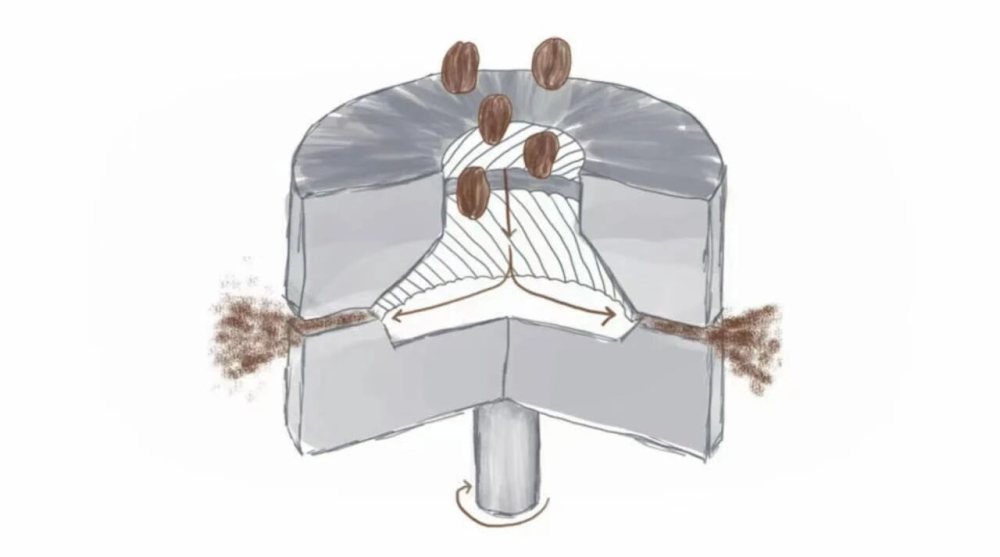
Grinding Recommendations Matched with Brewing Methods
Different brewing methods have varying requirements for coffee grind coarseness. It is recommended that beginners start by grinding a small amount of coffee beans to test, observing whether the particles are uniform. If clumping, overly coarse, or overly fine particles occur, slightly adjust the grind setting and try again. Generally speaking,the higher the grind setting number, the coarser the grind; the lower the number, the finer the grind. For example, if your target is a grind similar to granulated sugar but the particles appear too large, you should adjust the setting toward a lower number.
Daily Cleaning and Maintenance Tips
After each use, it is recommended to clean the grounds chamber and burr set of residual coffee grounds using a brush to prevent oxidation of leftover grounds that could affect flavor in the next use. Pay special attention tonever rinsing the metal burrs directly with water, as this may cause rusting or damage. If your grinder is designed to be disassembled, it is advisable to remove the burr set every 1 to 2 months and wipe it with a dry cloth to remove internal residual oils, preventing oil buildup from altering the original flavor of your coffee.
The above content is compiled by CoffeeHunters, a coffee news website.


