







Introduction:Want to understand the unique charm of Sumatra Golden Mandheling? This article delves into the PWN certification standards and wet-hulling processing techniques, guiding you from regional classifications, processing procedures to roasting strategies to master the key to this classic Indonesian bean’s rich, low-acid profile. Whether you’re a pour over beginner or a seasoned coffee connoisseur, you’ll find practical inspiration for bean selection and brewing.
As an important origin for specialty coffee in Indonesia, Sumatra offers a diverse range of beans with distinct flavor profiles, broadly categorized into Mandheling, Golden Mandheling, Lake Tawar Coffee, Aged Mandheling, and Old Java Brown among others. Among them, Mandheling is known for its herbal and woody aromas, Golden Mandheling is favored for its bright body and prominent sweetness, while Aged Mandheling showcases a thick texture and long-lasting aftertaste. Particularly, the G1 Mandheling from the Lintong region and the high-quality PWN Golden Mandheling are two star products that attract significant market attention.
When it comes to Golden Mandheling, one must know the key player: PWN. PWN is actually an abbreviation for Pwani Coffee Company, which holds a pivotal position in Indonesia’s coffee industry. It specializes in sourcing high-quality coffee beans, especially Mandheling varieties, covering nearly the finest producing regions in Indonesia. As a result, the coffee beans produced by PWN are mostly refined and uniquely flavorful specialty-grade offerings.
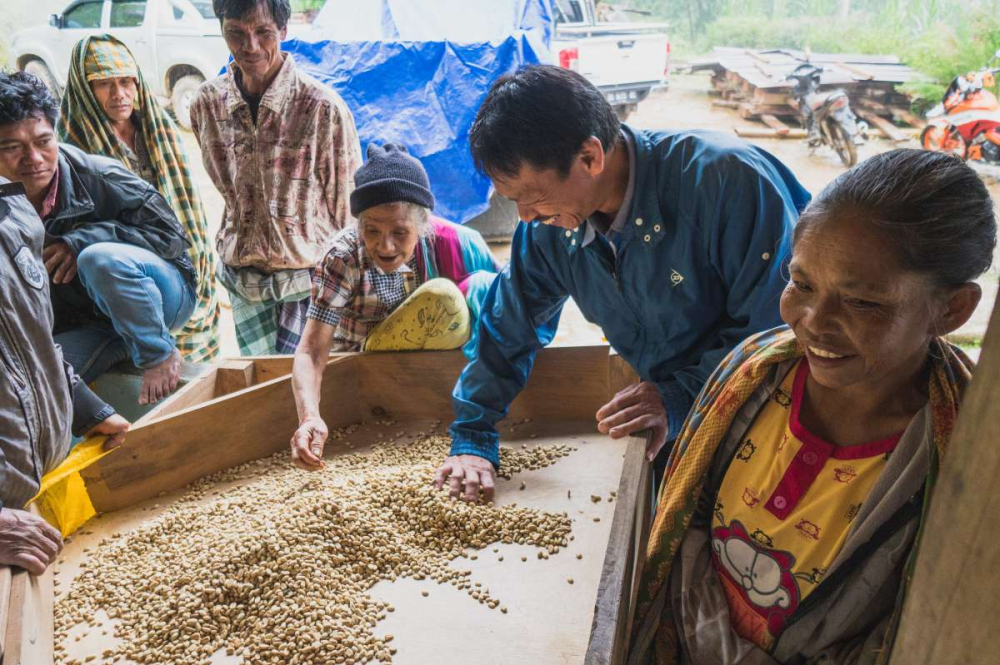
The Golden Mandheling sold here is a product of the PWN company. These green beans undergo an initial machine screening followed by at least three rounds of manual hand-picking, with only plump, flawless beans qualifying as Golden Mandheling grade. This multi-layered selection process acts like a strict audition system, ensuring every bean meets high standards.
The primary goal of machine screening is to ensure the beans reach a size of 18 mesh or above, while subsequent multiple rounds of manual screening focus on removing irregularly shaped or defective beans. Through such rigorous screening, the defect rate is significantly reduced, thereby enhancing the overall purity and consistency of the coffee’s flavor.
It is worth noting that PWN has registered “Golden Mandheling” as its exclusive trademark. This means that in the future, only Golden Mandheling produced by PWN can be considered authentic, while other similarly named products on the market are actually closer to the definition of “specialty Mandheling” rather than true Golden Mandheling. The Golden Mandheling beans sold here all come with official PWN certification documents and feature green beans sacks printed with the PWN logo, ensuring genuine origin.
Next, let’s focus on the core processing technique of Golden Mandheling—wet-hulling. Also known as wet stripping (Wet Hulling) or locally referred to as Giling Basah, this traditional method, although similar in name to the washed process, delivers vastly different flavor profiles. Coffee processed via wet-hulling typically exhibits a bold and intense character, with a distinctive and easily recognizable flavor spectrum.
To personally experience the unique charm of wet-hulling, try Lintong Mandheling. Based on the wet-hulling method and medium-to-dark roasted, this bean showcases a rich palette of caramel, spices, herbs, dark chocolate, and nuts. Suitable for various brewing methods such as pour over, French press, moka pot, and home coffee machines, it’s an excellent choice for exploring Sumatran flavors.
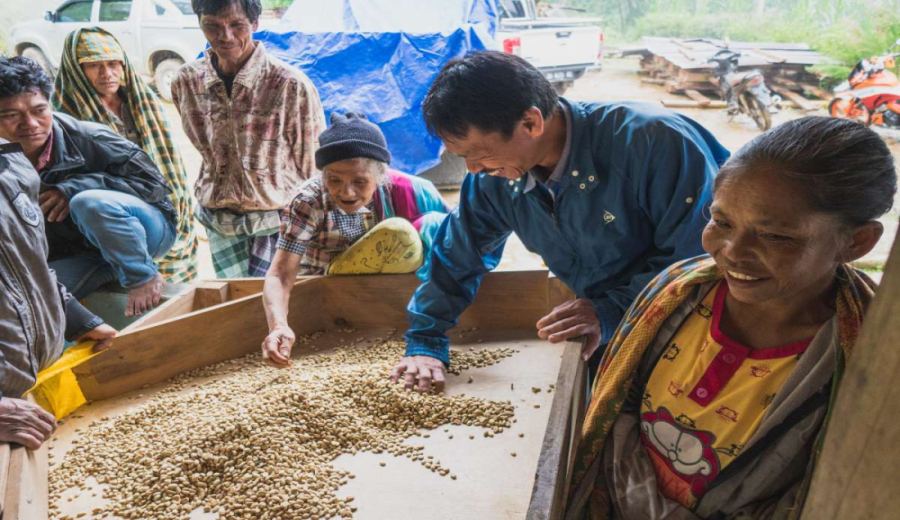
The wet-hulling process steps are broken down as follows: first, the skin and pulp are removed, leaving the parchment and mucilage; then it undergoes water tank fermentation; followed by mucilage washing; next, the parchment-covered beans are sun-dried for 2–3 days until moisture content drops to 20–24%; afterwards the parchment is removed; the green beans continue drying until moisture reaches 12–13%; and finally, they are prepared for export. This series of traditional processes gives wet-hulled coffee its unique mouthfeel and aroma.
To recreate the flavor characteristics of classic Mandheling from the last century, the roast is intentionally dropped just before the second crack, successfully retaining a hint of soft acidity. This strategy enables PWN Golden Mandheling to deliver a taste profile with high sweetness and rich body, featuring flavors such as toasted bread, pine, caramel, cocoa, with a slight earthy grassiness. The overall flavor profile is rich and well-balanced.
Regarding detailed parameters of PWN Golden Mandheling, its origin is Gayo Mountain, Aceh Province, Sumatra, Indonesia, produced by Pwani Coffee Company. The beans are grown at altitudes between 1100–1600 meters, graded as G1 and have undergone three rounds of manual selection. The processing method uses traditional wet-hulling. These details not only guarantee quality but also serve as important references for adjusting brewing parameters, helping to extract the optimal flavor expression.
The above content is compiled by CoffeeHunters, a coffee news website.


