







Introduction:Jamaica Blue Mountain No. 1 coffee beans are hailed as the "King of Coffee." With their balanced flavor profile and harmonious interplay of acidity, sweetness, and bitterness, they are a dream addition to the collections of many coffee enthusiasts. This article delves into this premium Typica variety from the top-producing region of the Jamaica Blue Mountains, covering its regional characteristics, precise pour over parameters, three-stage pouring technique, and the unique processing and grading system — helping you fully grasp the charm and essence of Blue Mountain coffee.
Blue Mountain coffee has long been celebrated as the “King of Coffee,” earning high acclaim from coffee lovers worldwide for its delicate balance and refreshing, bright flavor. Using Jamaica Blue Mountain No. 1 coffee beans as an example, this article explores all aspects of this top-tier coffee — from regional environment and bean variety, to processing techniques, professional pour over recommendations, and flavor profile. Not only will you learn about its history, but also how to correctly extract its most captivating flavors.
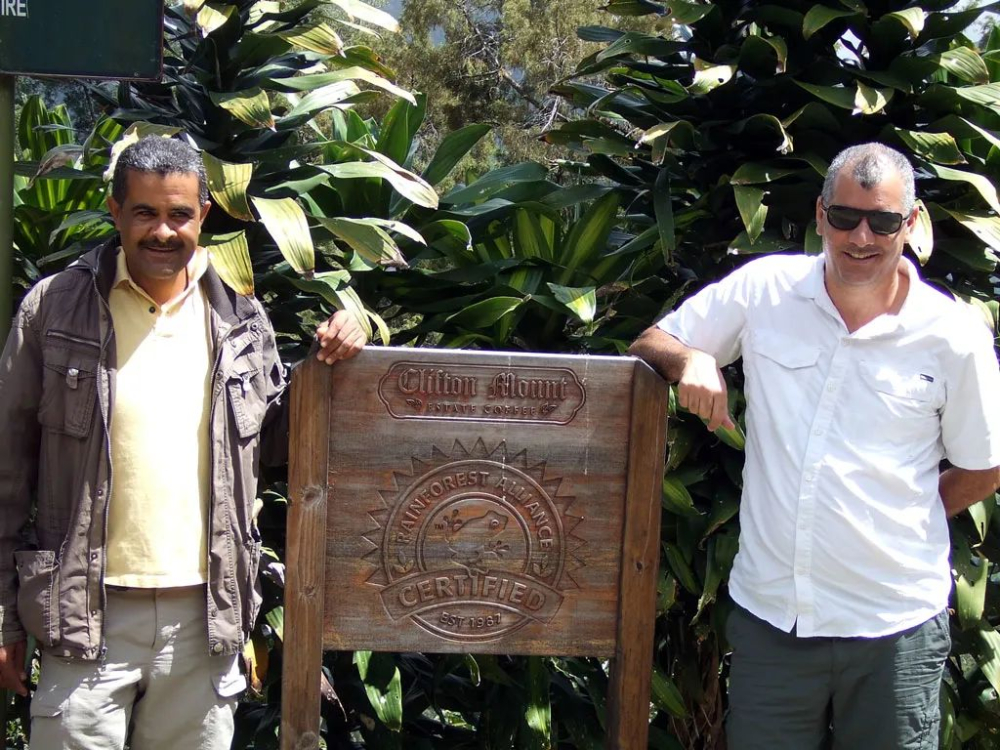
We take the Jamaica No. 1 from Clifton Mount Estate as an example. This farm is not only one of the oldest producing regions in the Blue Mountains, but also the only coffee plantation in all of Jamaica to be awarded “Rainforest Alliance Certification.” At an altitude of approximately 1,310 meters, it lies within the core high-quality production area of the Blue Mountains. Though its cultivation area is not extensive, it serves as the flavor benchmark for Blue Mountain coffee. It’s important to note that the legally defined Blue Mountain region spans only about 6,000 hectares, so many coffees on the market labeled as “Blue Mountain” may not actually come from this area.
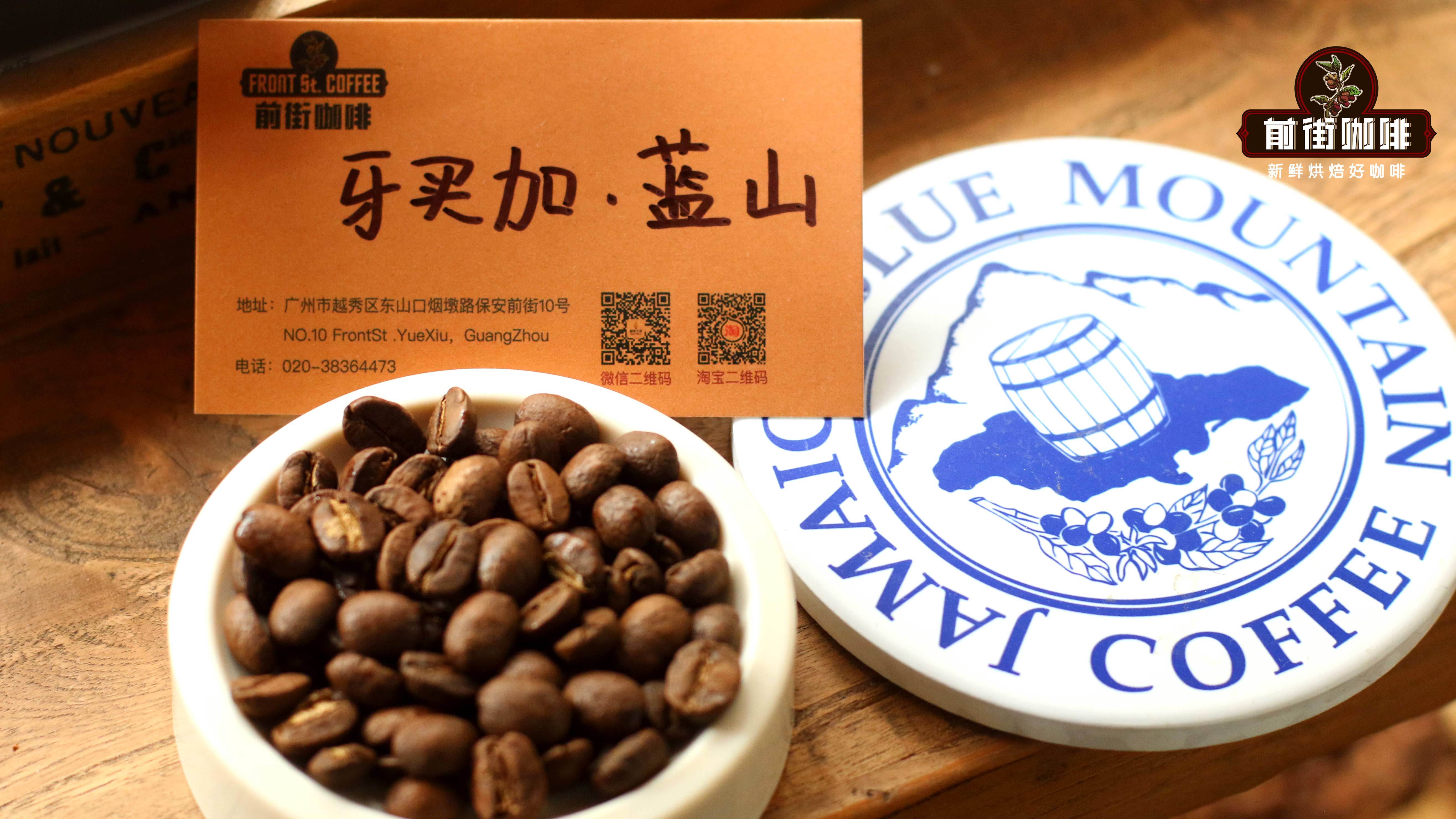
This Jamaica No. 1 is a Typica variety processed via the washed method and roasted to a medium-dark level. Its flavor profile features distinct notes of chocolate, nuts, and cream. The acidity, sweetness, and bitterness are very well-balanced, with a smooth mouthfeel and clear layers. It is recommended to use soft mineral water from brands such as Yibao for extraction, avoiding hard water or unfiltered tap water, in order to fully highlight the delicate aroma and flavor characteristics of Blue Mountain coffee.
For pour over parameters, it is suggested to use 15 grams of coffee grounds with a 1:15 coffee-to-water ratio, and to control the water temperature at 88°C. The grind size should be set to medium-coarse, with an ideal 20-mesh standard sieve passing rate of about 60%. This setup helps showcase the delicate and balanced qualities of Blue Mountain coffee under moderate extraction conditions.
When brewing, you can adopt the classic three-stage pouring technique: First, pour 30 grams of water for the bloom phase for about 30 seconds. During this stage, it is advised to start from the center and gently circle with a small stream of water to avoid excessive agitation. After the bloom, move on to the second stage of pouring. Similarly, use a small stream of water, slowly expanding outward from the center, until the total water volume reaches 125 grams. Once the coffee bed visibly settles, proceed to the third stage of pouring. At this point, you may switch to a slightly larger stream of water, pouring until the total weight reaches 225 grams — that is, 15 grams of coffee to 225 grams of water, maintaining a 1:15 ratio. Finally, once the coffee liquid in the filter has completely dripped through, you can remove the filter and complete the extraction.
Using these parameters, the brewed Jamaica No. 1 typically presents subtle citrus acidity. Upon entering the mouth, it feels full-bodied, with a notable nutty character emerging in the mid-palate, while the finish leaves a gentle echo of dark chocolate. When tasting, start by engaging your sense of smell: the dry fragrance often carries aromas of nuts and caramel. Then experience the balanced acidity, sweetness, and bitterness along with its smooth body, and finally pay attention to the aftertaste and throat sensation.
The uniqueness of Blue Mountain coffee is inseparable from the geographical conditions of its producing region. The Blue Mountains are located in eastern Jamaica, and their name originates from the breathtaking scenery illuminated by the blue light between the mountains and the sea. This area lies within the global “coffee belt,” featuring suitable altitudes, mineral-rich volcanic soil, and a microclimate characterized by year-round fog and high humidity — with average annual rainfall reaching up to 1,980 millimeters. These factors collectively create the irreplaceable flavor foundation of Blue Mountain coffee.
Jamaica’s coffee-growing history dates back to the early 18th century. In 1717, King Louis XV of France ordered the planting of coffee in the region. Later, Sir Nicholas Lawes, the Governor of Jamaica, introduced Arabica seeds from Martinique, particularly promoting them in the Saint Andrew area — which became one of today’s three major Blue Mountain producing regions, alongside Portland and Saint Thomas. By 1950, the Jamaican government established the Coffee Industry Board, instituting strict quality control measures and certification labels to ensure the international reputation and standards of Blue Mountain coffee.
Currently, only coffee that has been strictly certified by the Jamaica Coffee Industry Board (CIB) and produced at altitudes between 910 and 1,700 meters can be rightfully called “Jamaica Blue Mountain Coffee.” Coffee produced at elevations between 460 and 910 meters is classified as “High Mountain Coffee,” while those below 460 meters are generally considered “Premium Coffee.” It’s worth noting that the total cultivation area of Blue Mountain coffee is just 6,000 hectares, so not all coffee beans labeled as “Blue Mountain” actually come from this core region.
Blue Mountain coffee is divided into three main grades: Blue Mountain Coffee, High Mountain Coffee, and Jamaica Coffee. Each category is further subdivided into two grades, from highest to lowest: Blue Mountain No. 1, Blue Mountain No. 2, High Mountain No. 1, High Mountain No. 2, and Jamaica Coffee. Among these, Blue Mountain No. 1 is the highest grade and is widely recognized as the most representative premium Blue Mountain coffee. The sample introduced in this article is precisely this top-tier Blue Mountain No. 1.
The reason Blue Mountain coffee has been able to maintain a consistently high standard over the long term is not only due to its exceptional natural environment, but also its traditional and rigorous processing methods. Most Blue Mountain coffee is processed using the washed method: starting with floatation right after harvesting to remove floaters, followed by mechanical removal of the skin and pulp, then fermentation to remove the mucilage layer. This process helps reduce moisture content and defect rates while imparting a cleaner, brighter taste and richer acidity. Additionally, Blue Mountain insists on using the ancient and elegant Typica variety. Though it yields less and is less resistant to disease, its delicate flavor and aroma are key reasons behind the irreplaceable status of Blue Mountain coffee.
The above content is compiled by CoffeeHunters, a coffee news website.


