







Introduction:Walking into a coffee shop and seeing an array of espresso-based drinks on the menu, do you often get confused by terms like Espresso, Ristretto, and Lungo? Or perhaps you’re unsure about the ratios and characteristics of drinks like Latte, Cappuccino, Flat White, and Piccolo? This article starts with the three fundamental extraction methods of espresso, then clearly explains the formulation logic and flavor differences among black coffee, milk coffee, and flavored specialty drinks, helping you understand coffee better and order more accurately.
In coffee shops, there is a wide variety of espresso drinks, from espresso-based beverages to those with added milk or flavored syrups, each with its own unique brewing method and flavor profile. This article will comprehensively break down all types of espresso coffee, starting with the foundational "three brothers of espresso," moving on to common black and milk coffees, and then exploring creative specialty drinks. We’ll guide you step-by-step through their formulations, ratios, and key flavor characteristics.
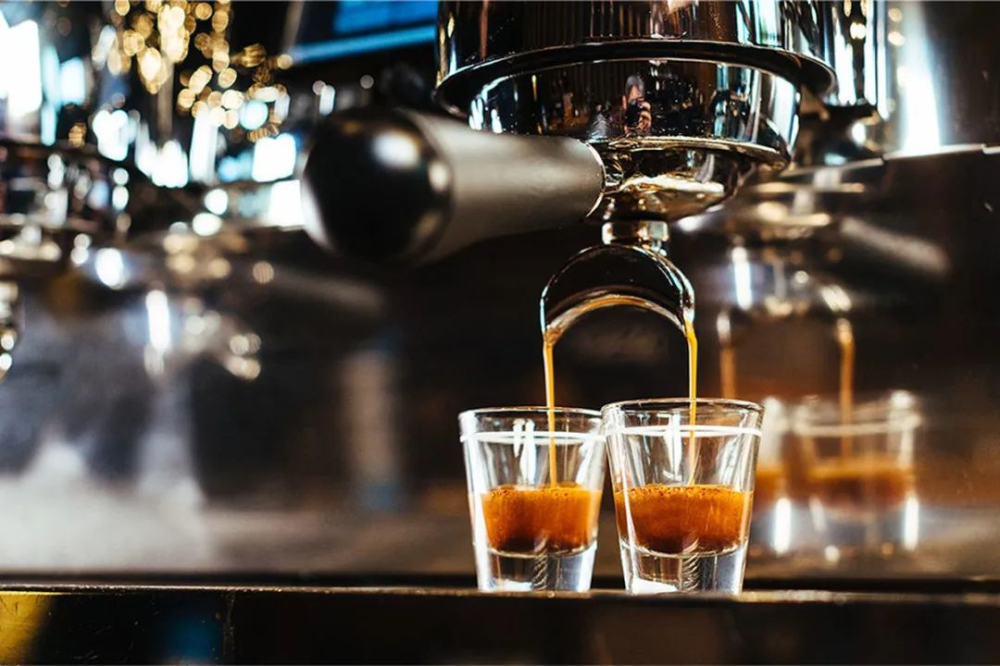
First, let’s get to know the soul of espresso coffee—espresso and its three main variations: Espresso, Ristretto, and Lungo. These three are collectively known as the "Three Brothers of Espresso" and serve as the essential base for all espresso-based drinks. A standard Espresso typically has an extraction ratio between 1:1.5 and 1:2.5—for example, using 20 grams of coffee grounds to extract 40 grams of espresso in 25 to 30 seconds. Ristretto, on the other hand, extracts only the first and most concentrated part of the shot. With the same 20 grams of coffee, the ratio is 1:1 to 1:1.5, yielding about 28 grams of liquid in around 20 seconds, resulting in a more intense and focused flavor with a shorter aftertaste. It’s commonly used in drinks like the Flat White. Lungo takes the opposite approach, extending the extraction time and increasing the output. The ratio can reach 1:4 to 1:5—that is, 20 grams of coffee grounds yield about 100 grams of coffee, with the total brew time close to one minute. The taste is lighter and prone to over-extraction bitterness.
Additionally, in Italy, there’s a drink called Doppio. If you order a “double espresso,” you’ll usually get two standard single shots. But if you order a Doppio, it means a single shot made with double the amount of coffee grounds. As a result, although the volume is similar, the concentration is higher, making it ideal for those who prefer a stronger flavor.
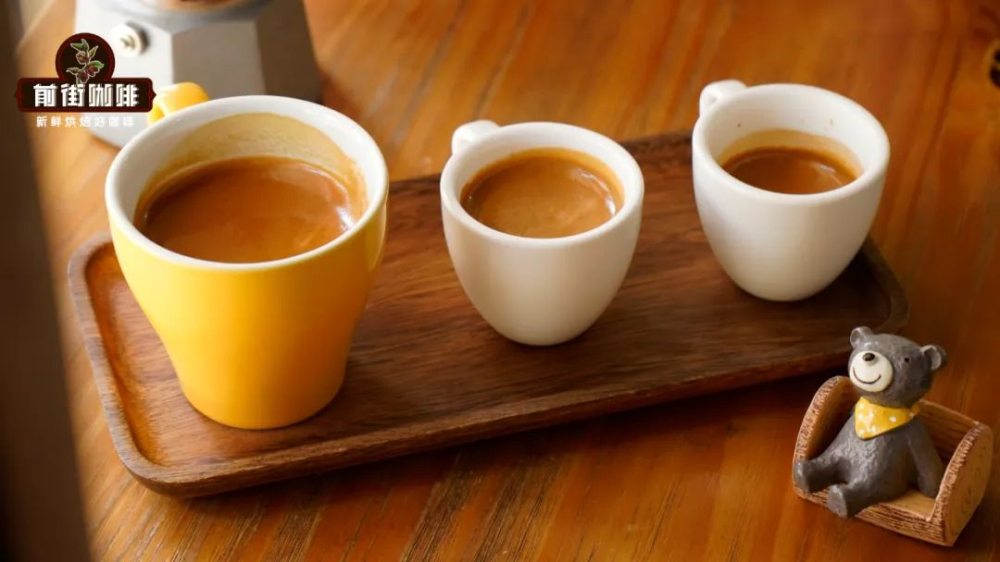
Next, let’s look at the black coffee family. Among them, the most iconic is Americano, which is made by adding hot water to Espresso. It’s a popular choice for many coffee beginners. Thanks to its suitability for both hot and cold servings and great versatility in preparation, Americano has long held a top spot on coffee shop sales charts. Another popular option in Australia, the Long Black, also consists of Espresso and water. However, unlike the Americano, the Long Black is made by pouring hot water first and then adding Espresso, usually in a 1:3 ratio. This results in a more concentrated coffee flavor and is served only hot. Generally, the coffee-to-water ratio for an Americano is about 1:5 to 1:8, yielding a lighter taste.
Turning to milk coffee, the most well-known is undoubtedly the Latte. Although "Latte" in Italian simply means "milk," in the global coffee market, it typically refers to Caffe Latte—the classic combination of Espresso and milk, in a ratio of about 1:5 to 1:8. In Italy, if you want a milk coffee, you need to specifically ask for "Caffe latte"; otherwise, you might just get a cup of hot milk. Before the Latte became popular, the Cappuccino was the mainstream milk coffee. Its ratio is 1:1:1 for coffee, steamed milk, and milk foam, resulting in a thicker layer of foam that often spills over the rim of the cup, allowing you to enjoy both the velvety foam and the rich coffee aroma.
The Macchiato is made by adding a small dollop of steamed milk foam on top of an Espresso, with very little milk. It’s mainly chosen to highlight the pure flavor of the coffee, with a taste that falls between Espresso and Cappuccino. The Flat White, popular in Australia, is an evolution of the Latte, characterized by thinner milk foam and slightly less milk, which makes the coffee flavor more prominent. Similarly originating from Australia, the Piccolo Latte uses a small 3-ounce cup, combining one shot of Espresso with a small amount of milk. It’s a mini version of a strong Latte, served only hot, and is perfect for those who want to savor the finer details of coffee.
As for the Dirty, it’s not a traditional espresso drink but rather an innovative twist on the iced Latte. It’s made by pouring freshly extracted Espresso directly over iced milk, creating a striking layered effect. With one sip, the contrast of hot espresso and cold milk delivers a bold flavor and high visual appeal, making it a popular social media-favorite drink in recent years.
Finally, let’s explore various creative espresso-based specialty drinks. Mocha Cafe is a classic chocolate coffee made by adding chocolate flavoring to a Latte. Another uniquely Italian drink, the caffè marocchino, is served in a small cup and consists of an Espresso shot topped with cocoa powder, followed by a layer of steamed milk or cream, and finished with another dusting of cocoa powder. Its small size and intense cocoa aroma leave a lasting impression.
Additionally, there are many single-origin-inspired espresso-based specialty drinks. Examples include the Con Panna, where Espresso is poured over whipped cream; the simplified Affogato, where a shot of Espresso is topped with a dollop of fresh cream; and the Caffè Corretto, which includes spirits for added flavor. Europe also offers the creative Caffe Shakerato, a cold coffee made by shaking Espresso, syrup, and ice in a cocktail shaker and then pouring it into a martini glass. It has a refreshing taste with a strong coffee aroma, along with a visual and flavor resemblance to dark beer.
The above content is compiled by CoffeeHunters, a coffee news website.


