







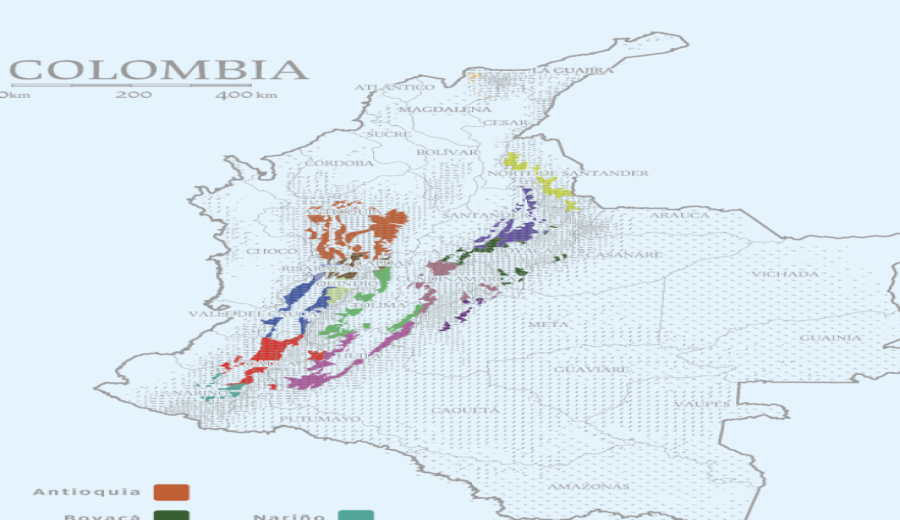
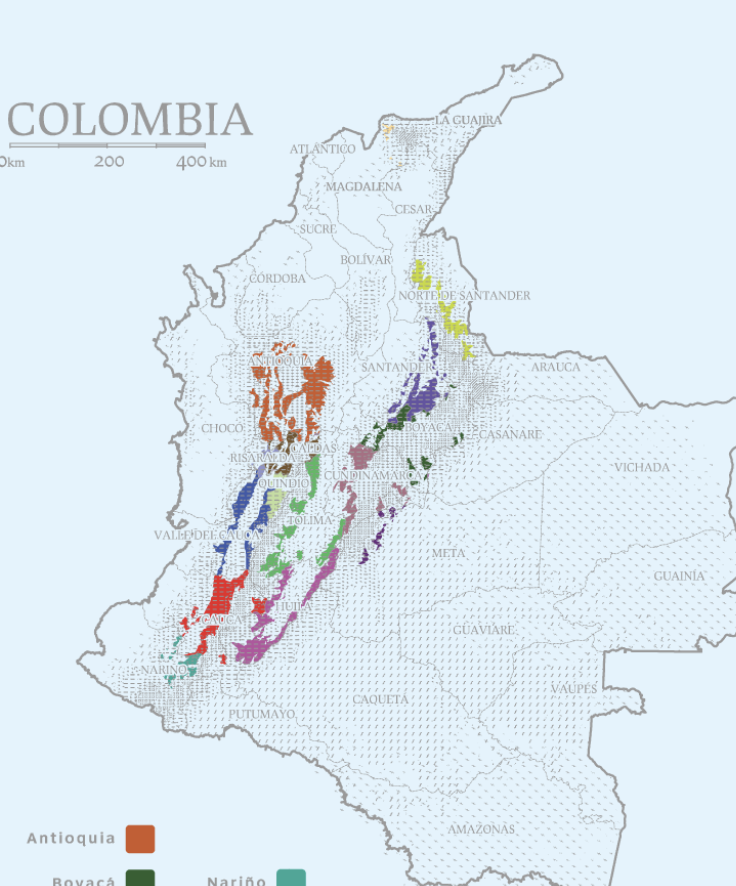
Introduction:As a globally renowned Arabica coffee origin, Colombia’s coffee beans develop unique flavors due to high altitudes and volcanic soil. This article delves into Colombia’s coffee region classification system, explores flavor differences between the southern and central-northern regions, and explains the Supremo, Excelso grades and defect grading standards. It also highlights four specialty coffees from high-altitude southern regions, including washed, anaerobic natural, and double anaerobic washed processes, to help you understand their distinct flavor profiles and suitable brewing methods.
Colombia is located between 3°N and 8°N latitude, with numerous active volcanoes. The long-accumulated volcanic ash forms mineral-rich, fertile soil. Coupled with generally high-altitude cultivation at 1200 to 2050 meters, it provides nearly ideal growing conditions for Arabica coffee trees. However, not all coffee beans produced in Colombia can be classified as specialty coffee—region, altitude, and processing methods all significantly influence the final flavor profile.
Among Colombia’s many coffee regions, the southern areas such as Huila, Cauca, Nariño, and Tolima, with altitudes mostly above 1500 meters, typically produce coffee that exhibits more delicate acidity, bright berry notes, and a sweet, prominent caramel finish. In contrast, the central and northern so-called MAM regions—Medellín, América, and Manizales—though also possessing good terroir, often present more straightforward fruit acidity in cupping, with less complex layers and slightly lower body.
Colombia’s coffee grading system is primarily based on bean size, or the physical dimensions of the coffee beans. One screen size is approximately 1/64th of an inch, equivalent to about 0.48 cm. Among them, Supremo is the largest and highest-quality grade, with plump and uniform beans; Excelso is slightly smaller but still considered high-quality commercial beans. In fact, some merchants mix Supremo and Extra and sell them under the Excelso label to balance cost and appearance; Extra is a relatively entry-level grade.
In addition to bean size, Colombia also further grades coffee based on the ratio of defective beans, which directly impacts quality and price. The evaluation method involves counting the number of defective beans in a 500g sample of green coffee, classifying them into Grade AA, Grade A, and Special Grade. The fewer the defects, the higher the grade, indicating more stable bean quality and purer flavors—this is also a key reference for many specialty coffee buyers when selecting beans.
Currently, many of the specialty coffees available in the market from Colombia come from southern regions and are Supremo grade. Not only are the beans large and uniform, which helps achieve even heat during roasting, but they also yield cleaner, more balanced extraction flavors. Below are four specialty coffees from Colombia’s southern regions, all Supremo grade, each using different processing methods to showcase a rich and varied flavor spectrum.
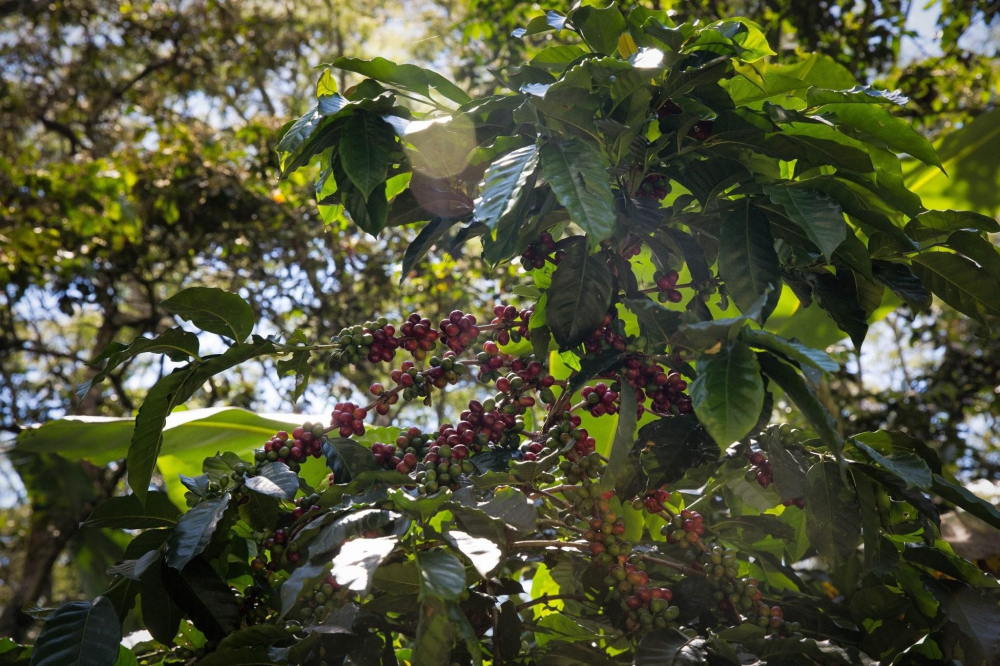
The first is a Caturra variety from the Huila region, grown at altitudes of 1500 to 1800 meters, processed using the washed method.The washed process highlights the purity and bright acidity of the coffee.This coffee showcases the typical soft fruit acidity of the Huila region, with a clear flavor profile, featuring pronounced nuttiness, the richness of dark chocolate, and a smooth caramel finish.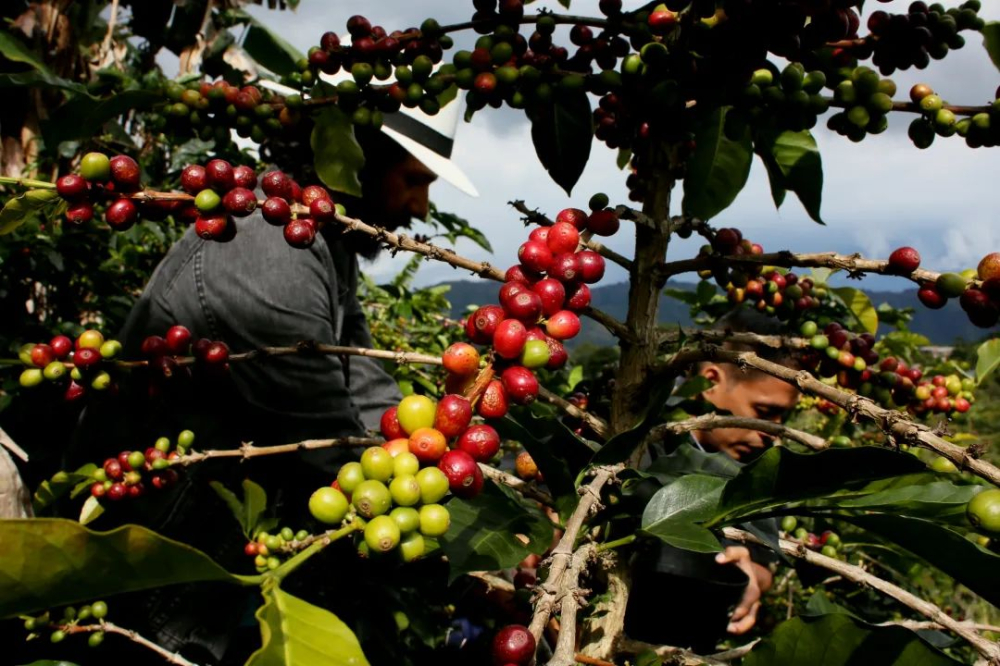
The second is also from the Huila region, produced at the Montblanc Estate, grown at an altitude of 1900 meters. It’s a hybrid of Caturra, Catuai, and Geisha, marketed under the name “Hanami Coffee Beans,” and also uses the washed process. This coffee presents a very unique flavor combination in cupping, including fresh chamomile aroma, a hint of spiciness from pink peppercorn, citrusy acidity and sweetness, honey-like sweetness, and an almond finish. It’s a layered, uniquely flavored specialty coffee.
The third is a Caturra grown at 1800 meters in the Huila region, processed using anaerobic natural (anaerobic sun-dried) method, marketed as “Flower Moon Night Coffee Beans.”Anaerobic fermentation enhances aroma complexity and sweetness expression.This coffee features a strong strawberry wine aroma, a jam-like fermented sweetness, while retaining the coffee’s inherent chocolate base. The finish is long-lasting with a warm caramel tone, making it ideal for coffee lovers who enjoy a balance of fruity aroma and sweetness.
The fourth is from the Paradise Estate in the Cauca region, grown at an altitude of 2050 meters, of the Castillo variety, processed using double anaerobic washed method, marketed as “Cherry Blossom Coffee Beans.” This coffee exhibits rare aroma layers, including mugwort, berries, pronounced fermented aromas, along with spices and rich strawberry jam flavors. It’s a bold, intensely flavored specialty coffee, suitable for advanced enthusiasts to explore deeply.
These four coffees are all Supremo grade, with uniform bean size, which not only aids in heat conduction during roasting but also enhances stability and flavor consistency during extraction. If you enjoy exploring flavor variations brought by different processing methods, these four specialty coffees from Colombia’s southern regions are excellent choices for pour over or drip.
The above content is compiled by CoffeeHunters, a coffee news website.


