








Introduction:On hot summer days, iced coffee becomes the go-to choice for many to perk up. However, these four common types of iced coffee—Americano on ice, pour over on ice, cold brew, and ice drip—each have unique characteristics in terms of brewing methods, time investment, equipment needed, and final flavor profiles. This article will take an in-depth look at their extraction principles, practical brewing parameters, and compare their flavor differences from a professional perspective, helping you choose the most suitable type of iced coffee based on your taste preferences and conditions.
The world of iced coffee is diverse and fascinating. Whether you're after quick and convenient options or are drawn to nuanced flavors, there's something for everyone. Commonly available iced coffees can be roughly divided into four main types: Americano on ice, pour over on ice, cold brew, and ice drip. Although they all fall under the "iced coffee" umbrella, they differ significantly in extraction principles, brewing processes, equipment requirements, and resulting flavor profiles. This article will delve into the technical aspects, giving you a comprehensive understanding of the differences between these four types, along with practical parameter suggestions and brewing details, so you can easily recreate professional-level iced coffee at home.
I. Extraction Methods Differ Greatly: Hot-to-Cold vs. Fully Cold Brew
Both Americano on ice and pour over on ice follow the “brew hot then cool” logic—meaning they first extract flavorful coffee liquid using hot water, then lower the temperature and dilute it by adding ice. In contrast, cold brew and ice drip use cold water throughout the entire extraction process, drastically slowing down the release of caffeine and tannins, resulting in a smoother and less irritating taste.

Take Americano on ice as an example. The standard method is to use an espresso machine to extract a shot of espresso, then mix it with cold water to adjust the concentration and temperature. In practice, you can use 20 grams of medium-roast coffee beans, extracted at a 1:2 coffee-to-water ratio within 25 to 33 seconds to yield about 40 grams of espresso. Then pour it into a glass pre-filled with 90 grams of ice and 180 grams of water, stir well, and you’re done. This method preserves the original aromatic structure of the coffee, offering a refreshing yet full-bodied mouthfeel.
Pour over on ice, on the other hand, increases the coffee concentration during the hot water brewing stage, then uses ice to cool it down to achieve the ideal flavor balance. For example, if using 15 grams of coffee beans, you might pour 150 grams of 92°C hot water, using 75 grams of ice as a cooling medium, and employ a 20-mesh filter with a grind size of around 83% extraction rate. Using a three-stage pouring technique, control the total brewing time between 1 minute 50 seconds and 2 minutes to highlight the coffee’s layers and fruity notes.
II. Time Investment: Quick Enjoyment vs. Patient Waiting
If you value efficiency, Americano on ice and pour over on ice are your best bets, as both can be prepared in just a few minutes from start to finish. In contrast, cold brew and ice drip require much longer steeping times—cold brew typically needs to be refrigerated and soaked for 8 to 12 hours, while ice drip takes 6 to 8 hours of continuous dripping. These methods are perfect for coffee lovers who prefer to plan ahead and enjoy the slow-brewing process.
For cold brew, it’s recommended to use a medium-fine grind (about the size of granulated sugar, roughly 80% passing through a Chinese 20-mesh filter), using a 1:10 coffee-to-water ratio (e.g., 60 grams of coffee beans to 600 grams of water). Place it in a sealed container and refrigerate. Stirring occasionally helps ensure even extraction. After soaking, filter out the coffee grounds with paper filters to get a cold brew that’s well-balanced in flavor and noticeably sweet.
Ice drip, meanwhile, uses slowly dripping ice water for extraction. The dripping speed is ideally controlled at about 7 drops per 10 seconds—too fast may lead to under-extraction, too slow can result in over-extraction. Starting with 60 grams of coffee powder, using a 1:10 coffee-to-water ratio, and covering the coffee bed with filter paper to evenly distribute the drips, this method demands patience but often yields a final product with a unique fermented wine-like aroma and deep complexity.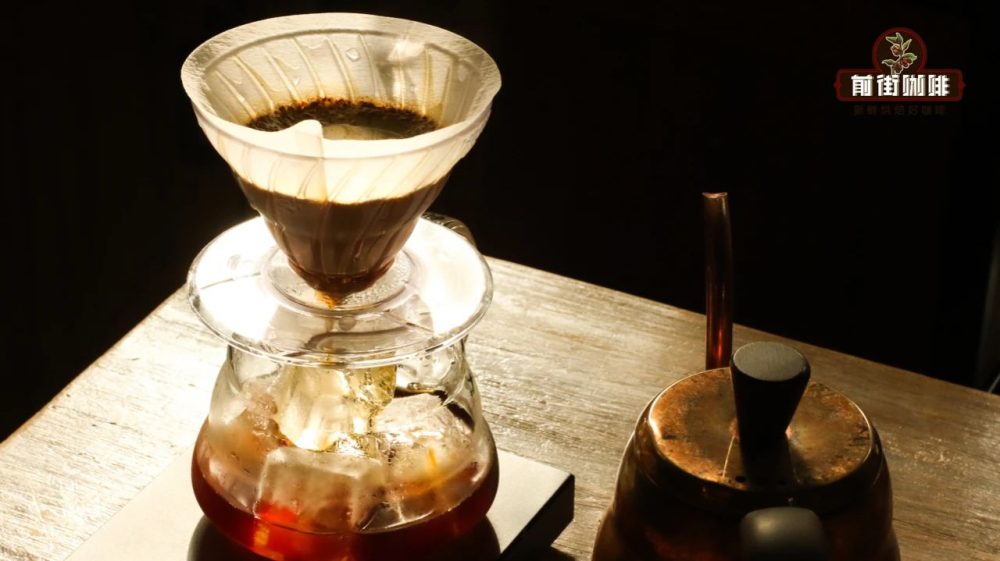
III. Brewing Difficulty and Equipment Needs
For general home users, pour over on ice and cold brew have relatively low barriers to entry—just basic pour over equipment (such as a V60 filter cone, a pour over kettle) or a sealed bottle is enough, and no expensive gear is required. Americano on ice does require an espresso machine, but if you already own one, it’s also easy to handle. Ice drip, however, requires a specialized dripping device, and both the equipment cost and operational complexity are relatively higher, making it better suited for those deeply interested in coffee or eager to try something new.
IV. Flavor Profiles: Refreshing vs. Rich vs. Fermented Notes
Flavor differences are a key factor in choosing the type of iced coffee. Americano on ice, due to being concentrated then diluted, usually has a crisper taste with straightforward flavor expression, though the liquid may appear slightly murkier visually. Pour over on ice stands out with its clear and bright brew color, clearly showcasing the coffee bean’s innate fruitiness and acidity, making it ideal for those who prefer clean-tasting brews.
Cold brew, thanks to its long-duration low-temperature extraction, greatly reduces bitterness and astringency, while enhancing sweetness and body. Its mouthfeel is relatively more rounded and full, and although its clarity may not match that of pour over on ice, it offers excellent overall flavor balance. As for ice drip, the extremely slow extraction process often imparts unique fermented-style flavors—like faint wine notes or nutty undertones—with a relatively noticeable bitterness but rich layers, making it the most complex type of iced coffee in terms of flavor.
In summary, the four types of iced coffee each have their own strengths. Whether you prefer quick convenience, a refreshing taste, or are willing to invest time to savor the details, you’ll find one that suits you best. Understanding their brewing principles and mastering the key parameters will allow you to enjoy a perfect cup of personalized iced coffee in the summer.
The above content is compiled by CoffeeHunters, a coffee news website.


