







Introduction:Delve into the top-tier coffee varieties from Guatemala’s Huehuetenango region—Ruby Red Geisha and Pacamara. From their origin stories and growing conditions to award-winning records, this article provides a comprehensive look at the cultivation practices and auction system of the EI Injerto Estate. It also includes practical pour-over recommendations and V60 three-stage brewing parameters to help you explore the multi-layered flavors of Central American specialty coffees.
Guatemala is a renowned specialty coffee origin in Central America, celebrated for its unique volcanic soils and diverse microclimates that produce richly flavored coffees. Among them, the EI Injerto (EI Injerto) Estate, located in the highlands of Huehuetenango, is not only a pioneer in coffee quality and innovation in the country but also world-famous for its auction lots and award-winning achievements. This article focuses on the estate’s two popular varieties—Ruby Red Geisha (EI02-02 lot) and Pacamara—and takes you on a comprehensive journey through their variety history, growing environment, cupping profiles, and hands-on pour-over advice to fully appreciate these top-tier Guatemalan coffees.
The Ruby Red Geisha EI02-02 lot from EI Injerto Estate is sun-dried and represents the finest beans harvested between January and March 2018. This Geisha batch originates from seeds gifted from Malawi, preserved using a special method where the seeds were buried in soil and ash to extend their viability. The variety features small bean size and matures into an enchanting deep ruby red color, with plants that are slightly shorter than typical Geisha. Grown at an altitude of 1710 meters in the Huehuetenango region, with an average annual temperature of 13°C to 26°C and annual rainfall of about 1500 millimeters, it boasts unique flavor potential.
In cupping performance, this Ruby Red Geisha demonstrates exceptional complexity. The dry and wet aromas carry notes of blueberry, raspberry, cherry, and other berries, blended with delicate floral notes akin to cherry blossoms and subtle spice undertones, along with the signature fermented wine-like aroma from sun-drying, all distinctly layered. On the palate, jasmine and sweet fruity flavors stand out, accompanied by intense fermented sweetness, gradually revealing a chocolatey richness in the mid-palate, and a cool minty finish. As it cools, orange and chocolate notes intertwine, leaving a long-lasting and captivating aftertaste.
Speaking of Geisha, its name originates from the Gesha forest in Ethiopia, where it was first discovered in 1931 but remained overlooked for a long time, even being used as windbreaks. It wasn’t until 2004, when Panama’s Hacienda La Esmeralda won the BOP (Best of Panama) competition with the Geisha variety, that it shot to fame. Geisha coffee is distinguished by its exceptionally bright acidity, rich fruitiness, and juice-like drinking experience, setting it apart from typical specialty coffees and earning it the title “the geisha of coffee.” While Panamanian Geisha is the most renowned, varieties grown in regions including Guatemala, Costa Rica, and Colombia each exhibit unique characteristics, with terroir differences contributing to distinct flavor personalities.
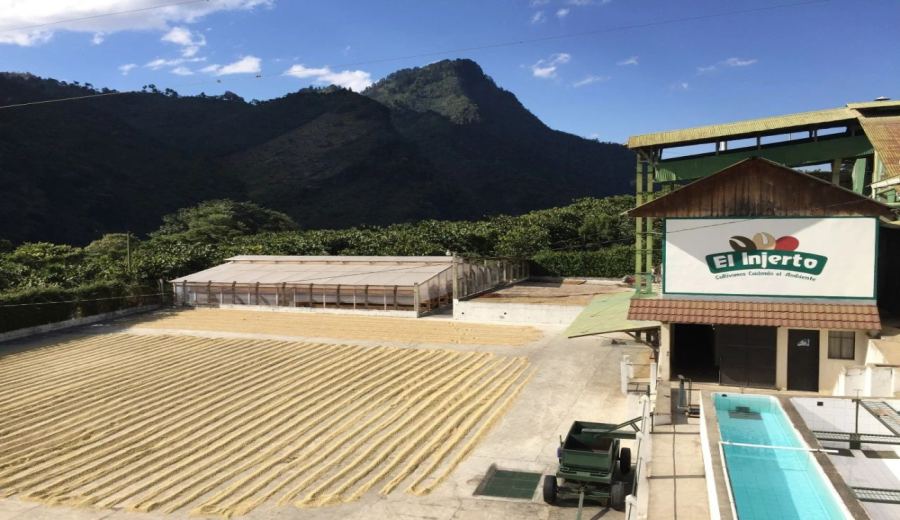
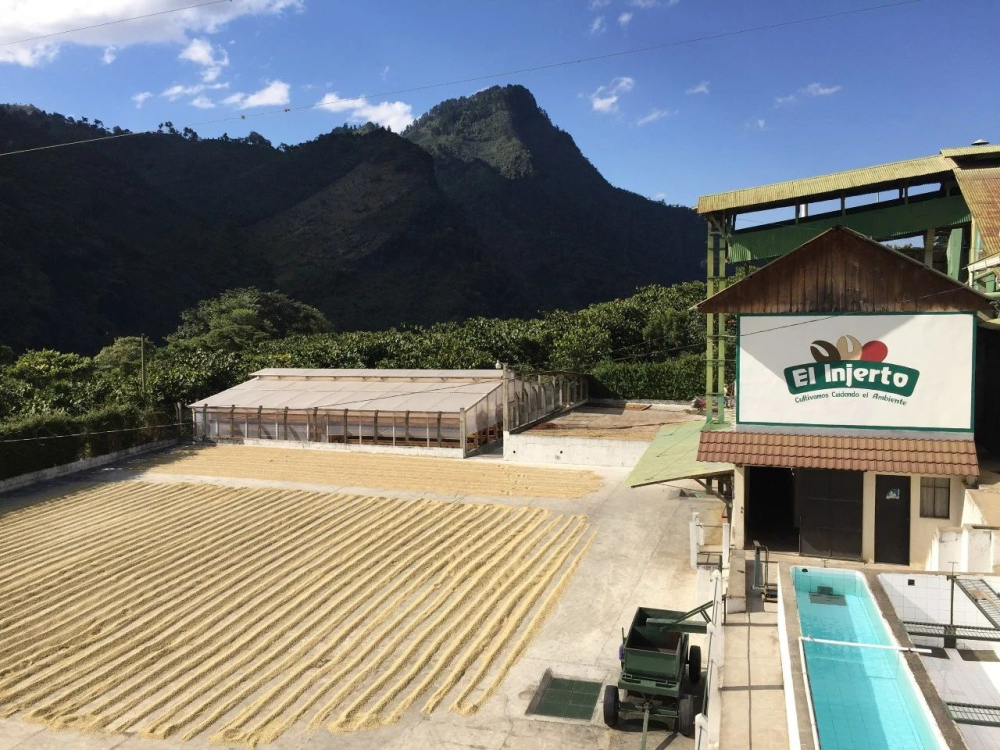
Guatemala has eight major coffee-growing regions, with terrain encompassing volcanoes, plateaus, and tropical rainforests. Among them, Huehuetenango and Antigua are the two most famous. The EI Injerto Estate is situated in the Huehuetenango plateau. Since coffee cultivation began here by the Aguirre family in 1900, it has been one of the highest-altitude and driest regions in the area. The estate spans over 447 hectares, most of which lie between 1500 and 2000 meters above sea level, with the rest preserved as virgin forest to maintain a healthy ecosystem. The estate enjoys an annual rainfall of 1800–2000 millimeters, an average humidity of 75%, clean mountain spring water, and deep, organic-rich volcanic soils, providing ideal conditions for growing high-quality coffee.
In addition to Ruby Red Geisha, the EI Injerto Estate’s Pacamara variety is equally noteworthy. Pacamara is a hybrid of Maragogype (elephant bean) and Pacas, with its name derived from the first four letters of each parent. Developed in El Salvador, this variety is known for its notably large bean size, typically around 21–22 mesh, similar to elephant beans, making it one of the most prominent high-quality varieties in Central and South America. In 2004, Pacamara gained attention at the COE (Cup of Excellence) competition and won accolades multiple times within just two or three years. In 2008, EI Injerto’s Pacamara achieved a record-breaking price of $80.2 per pound of green beans. This variety often exhibits intense tropical fruit flavors, syrupy sweetness, and a full body, making it a dream coffee for many enthusiasts.
The EI Injerto Estate excels not only in cultivation and processing but also established its own auction platform. Since 2011, it has regularly released curated auction lots, ranking alongside Panama’s Hacienda La Esmeralda. Each auction lot undergoes rigorous control in variety selection, cultivation management, harvest timing, and post-harvest processing, making them highly sought-after by global green coffee traders and specialty coffee buyers.
In terms of processing, EI Injerto adheres to high standards with a meticulous hand-sorting process, selecting only fully ripe red coffee cherries. The processing facility is equipped with a dedicated water treatment system. After depulping, the beans are rigorously sorted twice by size, then washed with mountain spring water, followed by 2 days of fermentation and 7 days of sun-drying. They are then rested in the warehouse for at least 45 days to fully develop their flavors before undergoing professional cupping evaluation.
For these two classic Guatemalan coffees, the brand also offers practical pour-over recommendations. For the medium-light roasted Huehuetenango and Huagod lot, it’s suggested to use a V60 filter to preserve more floral, fruity aromas, and bright acidity. Specific parameters are as follows: grind size recommended as medium-fine, similar to the coarseness of fine sugar (approximately 80% passing rate through a Chinese No. 20 sieve), coffee dose around 15 grams, water temperature set at 91°C, and a coffee-to-water ratio of 1:15. Use a three-stage extraction: start with a 30-second bloom using double the coffee dose (about 30 grams) of water to aid degassing, then pour to 125 grams and 225 grams in separate steps, keeping total extraction time around 2 minutes. Enjoy once the dripping from the filter has finished.
Coffees from the Huehuetenango region often feature pronounced citrus and berry acidity, paired with the freshness of lemon peel and nutty mid-palate notes, finishing with a soft tea-like sensation. The Huagod coffee showcases bright acidity from berries and citrus, complemented by mild chocolate tones, delivering a smooth and layered mouthfeel—perfect for coffee lovers who enjoy moderate acidity and fruity profiles.
The above content is compiled by CoffeeHunters, a coffee news website.


