







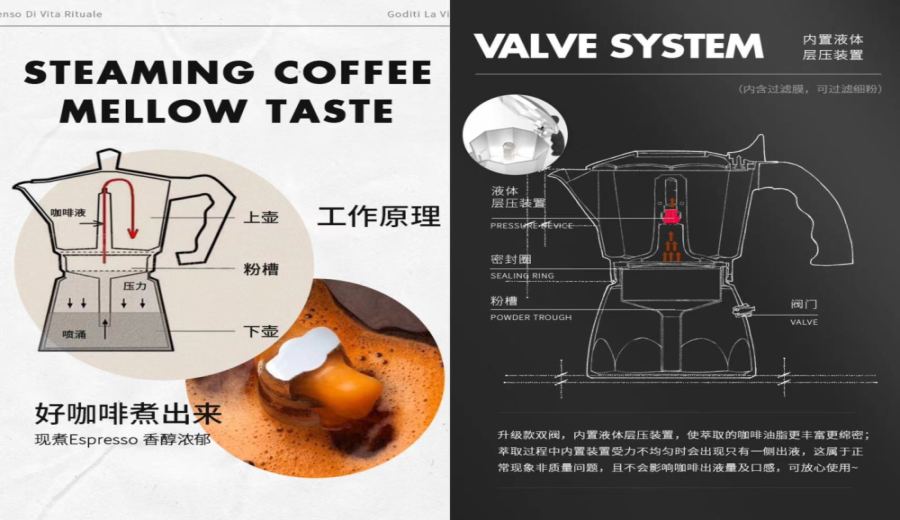
Introduction:The moka pot is the home brewing method of choice for many coffee enthusiasts, but when faced with single-valve and double-valve models, how do you choose? This article takes an in-depth look at the design principles, operation essentials, and suitable scenarios of both types, while also offering practical coffee bean pairing suggestions to help you master everything from beginner to advanced techniques—extracting the ideal flavor of espresso with ease.
Since its inception, the moka pot has become a classic tool for enjoying espresso-style coffee at home, thanks to its simple operation and rich extraction. Early moka pots had no single or double valve distinction. Their greatest contribution was enabling ordinary households to quickly brew coffee with steam pressure that closely resembled café-quality brews, while also breaking social barriers that restricted women from entering coffee shops. As coffee drinking trends evolved and the pursuit of finer extraction details and flavor layers increased, the double-valve moka pot emerged, delivering a richer taste experience for users.
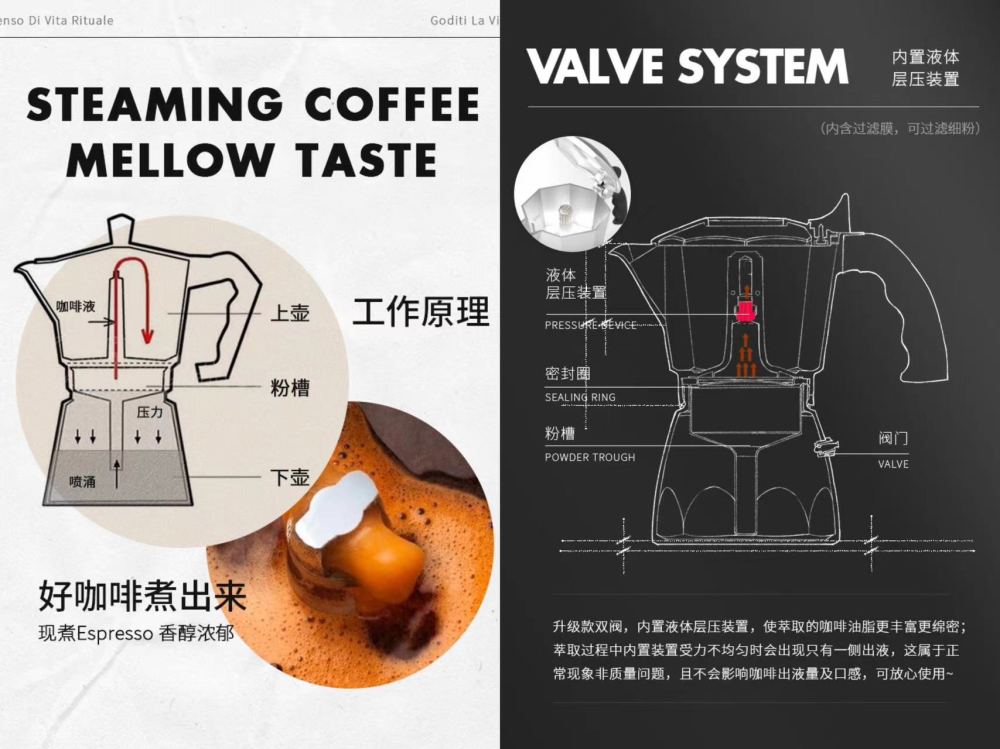
The structural difference between single-valve and double-valve moka pots is mainly reflected in the spout design. The single-valve version allows for smooth outflow without additional resistance, whereas the double-valve model is equipped with a pressure-enhancing valve at the spout, requiring higher pressure to release the coffee, which directly affects the final richness and fullness of the extraction. For beginners new to moka pots, it’s recommended to start with a single-valve model due to its higher margin for error and greater flexibility in parameter adjustments, which helps lower the initial learning curve.
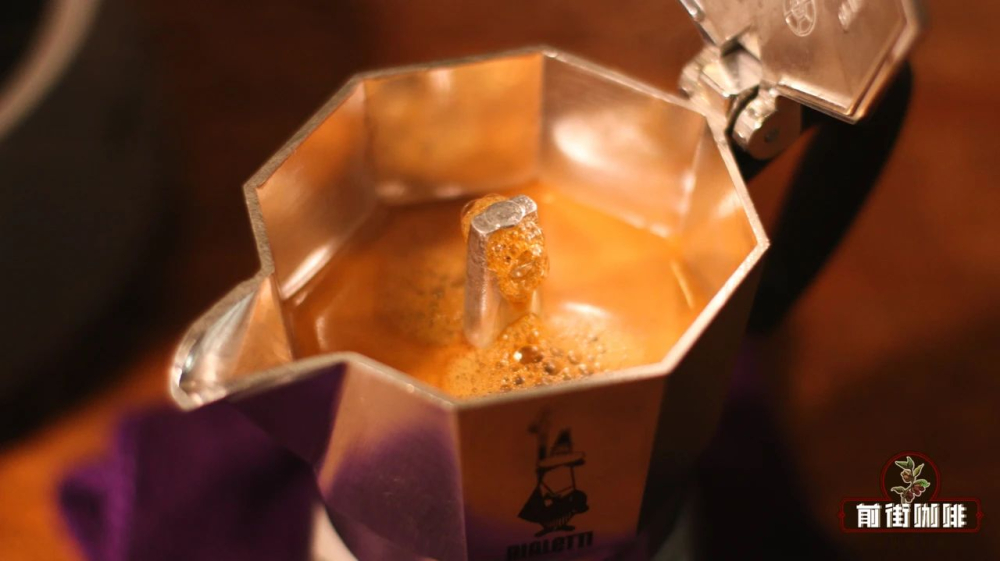
When operating a single-valve moka pot, pay special attention to several key details: the water level in the lower chamber must not exceed the pressure relief valve, usually located at a nut-like structure; the coffee grounds should be ground to an extremely fine consistency, but still fine enough to pass through the holes at the bottom of the coffee chamber; make sure the upper and lower chambers are tightly sealed before heating; once you see coffee beginning to enter the upper chamber, immediately turn off the heat and move the pot to a damp cloth to cool down—this helps reduce the risk of over-extraction while improving extraction efficiency.
In practical operation demonstrations, when using a 3–4 cup single-valve moka pot, you can fill it with about 20 grams of ground coffee and add hot water to the lower chamber without exceeding the pressure relief valve. After assembling the pot, open the top lid and begin heating. Once extraction starts, immediately extinguish the heat and rely on the temperature differential to complete the final stage of extraction. Avoid over-steeping and try to enjoy the coffee as soon as the extraction is complete to maintain the best flavor profile.
Regarding coffee bean selection, the characteristics of the moka pot suit medium to dark roasts and beans designed for espresso extraction. If you prefer coffee with rich crema and a smooth mouthfeel, consider a blend that combines the traits of Indonesian Mandheling and Brazilian beans. This blend offers distinct flavor layers, balancing wild aromas with a smooth taste, and includes added Robusta beans to enhance crema, aiding in latte art presentation. For those who enjoy nutty notes and a full-bodied taste but want the bitterness to remain subdued, single-origin Yellow Bourbon beans from Brazil’s high-altitude regions are an ideal choice—they emit an enticing roasted nut aroma and come with a natural sweetness.
If you’re after a more intense and robust flavor experience, the Golden Mandheling from Sumatra, Indonesia is highly recommended. This bean variety undergoes a rigorous selection process, including multiple manual hand-pickings starting from the fruit stage to ensure uniform bean size and pure flavor. It retains the characteristic herbal, pine, and spice notes of Mandheling, while also showcasing a distinct lingering sweetness—perfect for coffee lovers who appreciate deep and complex flavor profiles. By understanding the design principles behind different valve types and the characteristics of various beans, users can adjust their moka pot brewing methods to best suit their personal taste preferences.
The above content is compiled by CoffeeHunters, a coffee news website.


