








Introduction:Kenya AA coffee is long celebrated by specialty coffee enthusiasts worldwide for its bright acidity, vibrant fruitiness, and rich yet balanced flavor profile. What exactly makes Kenyan coffee so distinctive? This article will delve into Kenya’s geographical environment, the characteristics of its top ten major producing regions, the country’s rigorous official grading system, and how its washed processing method shapes the final cup. We’ll also provide practical pour over parameters to help you better understand this classic coffee variety.
Within Africa’s specialty coffee map, aside from the well-known Ethiopia, Kenya is also one of the most representative origins. Especially for coffee drinkers seeking bright acidity and complex flavors, Kenya AA is often the name most frequently mentioned. These coffees typically boast highly recognizable fruity acidity, paired with a full body and distinct fruit aromas, leaving a lasting impression.
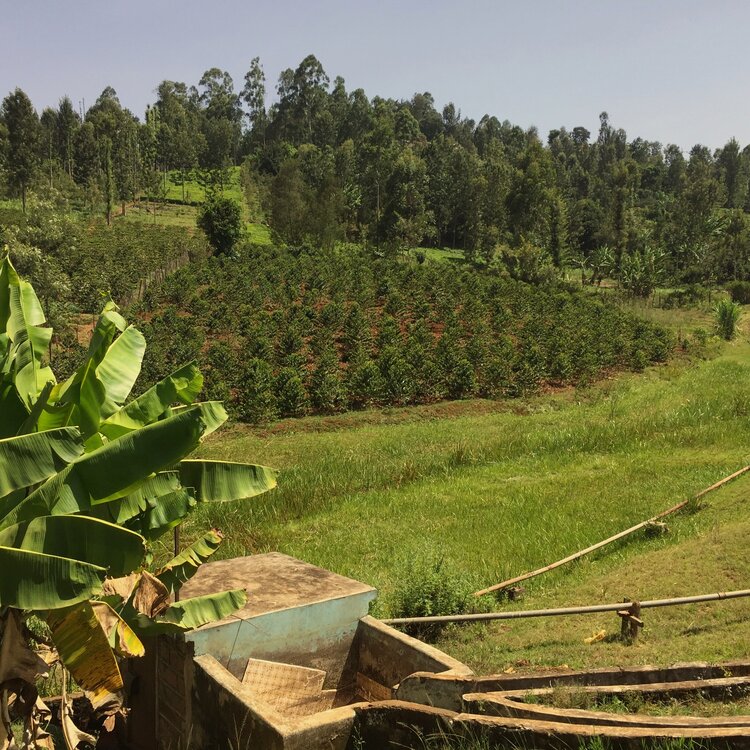
Located in East Africa, Kenya is traversed by the equator, and its terrain is predominantly highland, with an average national elevation of around 1,500 meters. It is also home to Mount Kenya (Mount Kirinyaga), the second highest peak in Africa, standing at 5,199 meters with snow-capped summits year-round. Thanks to its tropical location coupled with cool temperatures due to high altitude, along with fertile volcanic soils, the region offers exceptionally favorable conditions for coffee cultivation.

Kenya has a tropical highland climate with two distinct rainy seasons each year, resulting in main harvest periods from October to December and June to August. Coffee is mostly grown in volcanic soil regions at elevations between 1,600 and 2,100 meters. The high altitude extends the ripening period of coffee cherries, allowing aromatic compounds within the beans to accumulate fully, thus contributing to its unique acidity and solid bean structure.
Although Kenya’s coffee cultivation history is not as long as that of neighboring Ethiopia, its development has been highly systematic. In 1893, missionaries introduced the Bourbon variety from Brazil to Kenya. Then, in 1895, British colonial rule took over the region, also taking control of coffee cultivation and trade. Between 1900 and 1933, Britain established the Coffee Board to manage coffee-related affairs, and in 1935, the first official coffee auction was held, laying the foundation for subsequent market trading.
Kenya has a total of ten main coffee producing regions: Nyeri, Murang’a, Kirinyaga, Embu, Meru, Kiambu, Machakos, Nakuru, Kisii. Each region has its own unique microclimate and soil conditions, which in turn influence the flavor profiles of the coffee produced there.
NyeriLocated in central Kenya, home to Mount Kenya, with fertile volcanic red soils. Coffee production here is mainly organized through cooperatives formed by smallholder farmers, at elevations ranging from 1,200 to 2,300 meters, making it a key source of high-quality Kenya AA coffee.Murang’aAlso blessed with volcanic soils, this area was once a gathering place for early missionaries. Coffee is mostly grown by smallholders at elevations between 1,350 and 1,940 meters.KirinyagaAdjacent to Nyeri, it also mainly consists of smallholder farms. The coffee produced here is generally of excellent quality, grown at elevations ranging from 1,300 to 1,900 meters.
EmbuThis region lies close to Mount Kenya, with about 70% of its residents engaged in small-scale farming. Almost all coffee comes from smallholder farmers. Though yields are not high, quality remains stable, at elevations of 1,300 to 1,900 meters.MeruLocated at the foothills of Mount Kenya and the Nyambene Hills, managed by the Meru community. Since 1923, it has received policy support for coffee cultivation development, at elevations between 1,300 and 1,950 meters.
KiambuKnown for its large estates, though their numbers have gradually declined with urban expansion. Nowadays, production mainly comes from smallholders and sub-regions (such as Thika, Ruiru, and Limuru), at elevations of 1,500 to 2,200 meters.MachakosA medium-sized county where both estates and smallholder farms coexist, at elevations between 1,400 and 1,850 meters.NakuruFeatures some of the highest-altitude coffee-growing areas in central Kenya. Some parts, due to high elevation, are prone to dieback disease, at elevations of 1,850 to 2,200 meters.KisiiLocated in the southwest, near Lake Victoria, production is mostly carried out by small cooperatives, at elevations of 1,450 to 1,800 meters.
Kenya’s coffee grading system is quite rigorous, primarily based on bean size, shape, and density. The most renownedAA gradeconsists of 17–18 screen size beans and is the most sought-after grade in the market;E gradealso known as elephant beans, are 18 screen size or larger, including peaberry (PB), but are quite rare;AB gradeincludes 15–16 screen size beans, a blend of A and B grades, and is one of the main export grades;TT graderefers to the lighter beans sorted from AA and AB through air classification;PB gradeare peaberries, accounting for about 10% of total production. Additionally, there are C, T, and HE grades, representing lower quality or defective beans.
Ungraded green beans are collectively referred to as UG (Ungraded), which is further divided into UG1 (including E, AA, AB, PB) and UG2 (including C, TT, T, HE). Moreover, Kenya also produces naturally processed beans called MBUNI, categorized into MH (heavier beans, yellow, no obvious defects) and ML (lighter beans, yellow-green, may have minor defects).
Exporters or traders often apply additional grading to AA and AB grades, such as TOP, PLUS (+), FAQ, etc. While these are not official standards, they are commonly seen in market transactions.
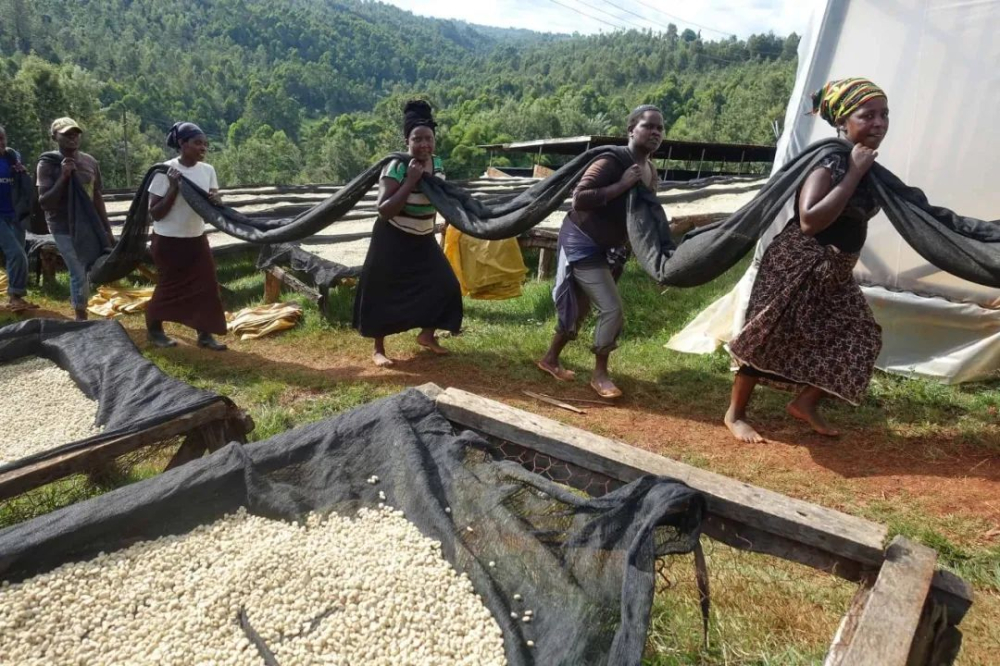
What makes Kenyan coffee most captivating is its bright fruit acidity and clear layered profile. This is inseparable from its unique washed fermentation process. Compared to the typical 36-hour fermentation time in Central and South America, Kenyan washed processing often lasts up to 72 hours. After fermenting for 30 to 48 hours, the mucilage is removed, but the beans then undergo an additional 24-hour soak in clean water—a step critical to the purity of the flavor and the intensity of the acidity.
Take the popular Kenya Assaliya as an example, which uses the SL28 and SL34 varieties and undergoes K72 washed processing, yielding complex flavors such as dark plum, cherry tomato, Asian pear, brown sugar, and plum. It is a top choice for many coffee enthusiasts just starting out.
If you’d like to try pour over brewing with Kenyan coffee at home, you can refer to the following practical parameters: use a Hario V60 dripper, 15 grams of coffee, a 1:15 coffee-to-water ratio, water temperature controlled at 90°C, and a grind size of approximately 80% passing through a 20-mesh sieve (e.g., EK43s #10). Recommended pour over steps: start with a 30-gram bloom for 30 seconds, then pour to 125 grams for the first pour, and continue pouring to 225 grams as the water level drops. Total brew time is about 2 minutes, which can fully highlight the layered profile and sweet-acid balance of Kenyan coffee.
The above content is compiled by CoffeeHunters, a coffee news website.


