







Introduction:The moka pot is a highly efficient coffee tool beloved by many households. With its classic design and simple operation, it can brew coffee with a rich flavor. But how does it differ from a true espresso? What is the standard capacity of a cup? And how can you use a moka pot to brew for multiple people? This article takes an in-depth look at the principles of the moka pot, brewing conditions, suitable beans, and common questions, helping you master the correct usage and brew your ideal coffee.
The moka pot is an important symbol of Italian coffee culture and one of the world’s most well-known home coffee brewing devices. With its iconic eight-sided shape, intuitive operation, and relative accessibility, the moka pot has become an indispensable tool in the homes of many coffee enthusiasts. Even without a professional espresso machine, using a moka pot allows you to easily brew coffee with a rich flavor. For those who enjoy crema and the intensity of espresso, it is a very practical alternative.
The moka pot was first created in 1933 by the Italian craftsman Alfonso Bialetti from the Crucignano region in northern Italy. Bialetti had worked in the French aluminum industry for ten years before returning to his hometown, where he founded his own metal products workshop in Piedmont, initially producing mainly aluminum household items. The most widely circulated story about the birth of the moka pot is that it was inspired by the design of a washing machine: the tub of household washing machines at the time came with a lid fitted with a tube, and when heated, the soapy water inside was pushed upward by steam pressure to clean clothes. With the help of his technical partner Luigi De Ponti, Bialetti successfully applied this principle to a coffee maker, creating the revolutionary moka pot.
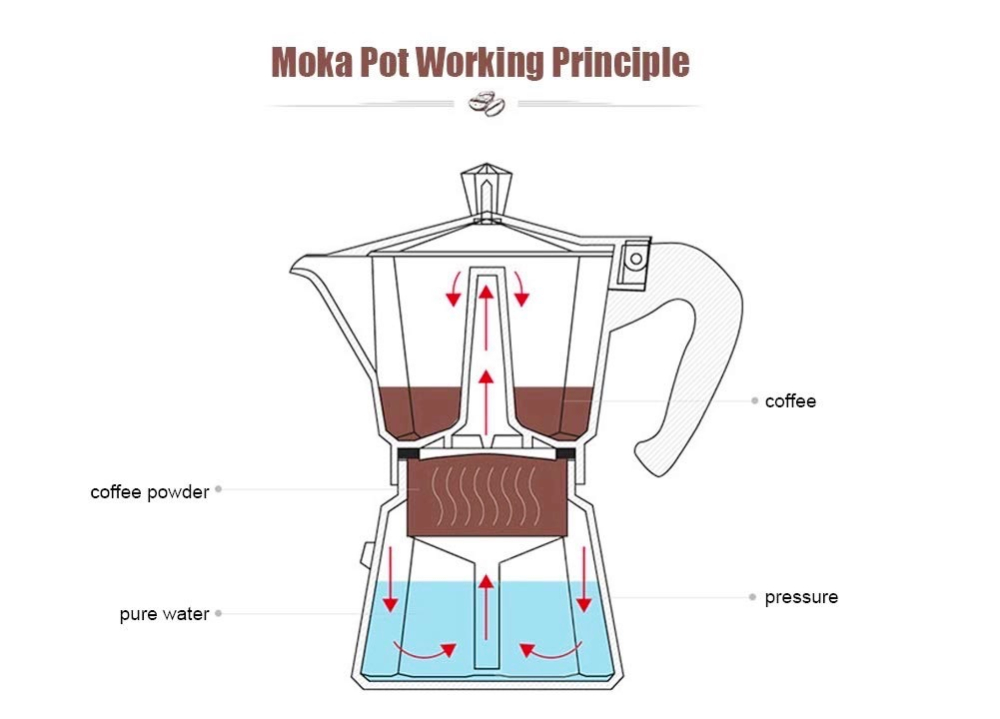
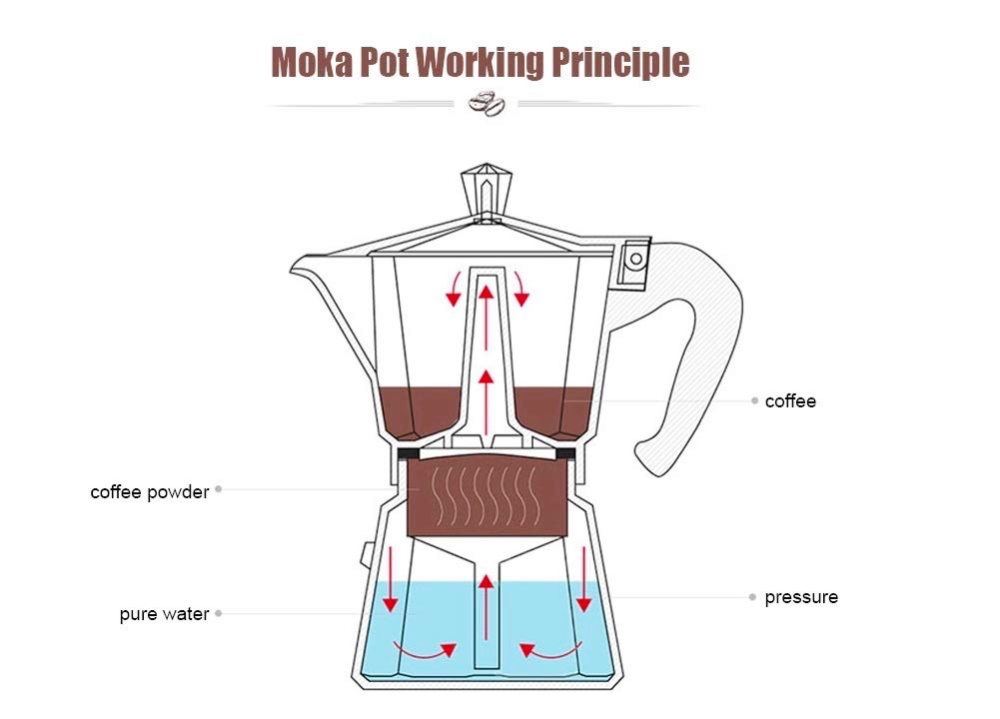
The moka pot mainly consists of three parts: the base, which is the lower chamber that holds water; the middle, which features a metal filter basket for placing ground coffee; and the top, which is the upper chamber that collects the brewed coffee. To assemble, you first add water to the lower chamber, place the filter basket filled with ground coffee, then screw on the upper chamber, and place the entire setup on a heat source. When the water in the lower chamber reaches boiling point, the resulting steam pressure forces the hot water through the central tube and up through the layer of coffee grounds, finally reaching the upper chamber, completing the extraction. This method of extraction using pressure and high temperature allows the moka pot to produce coffee with an espresso-like flavor even at home.
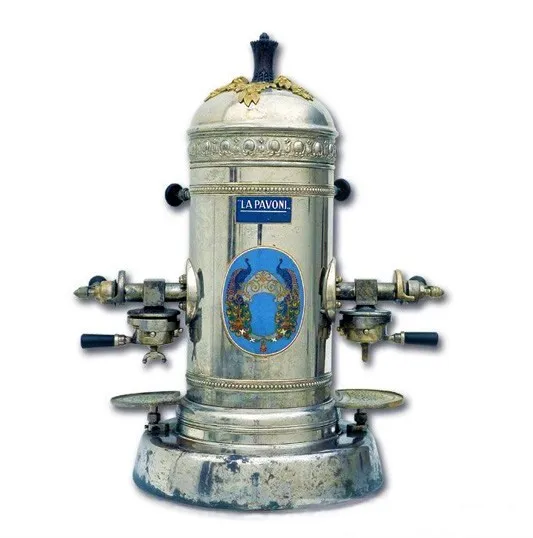
Although the coffee brewed with a moka pot has a strong flavor and sometimes a slight layer of crema can be seen, there are still fundamental differences compared to today’s standard espresso. The biggest difference lies in the extraction pressure: modern espresso machines typically operate at 9 bars of pressure, while a moka pot only generates about 1.5 bars. Additionally, the water temperature during extraction with a moka pot is usually higher, around 100°C, whereas professional espresso machines control the temperature between 92–96°C to reduce the risk of over-extraction. Historically, the design of the moka pot was actually inspired by early steam-powered coffee machines, such as the La Pavoni commercial machines commonly used in Italian bars. These machines were large and expensive, making them unaffordable for most households, hence the moka pot became a more accessible option.
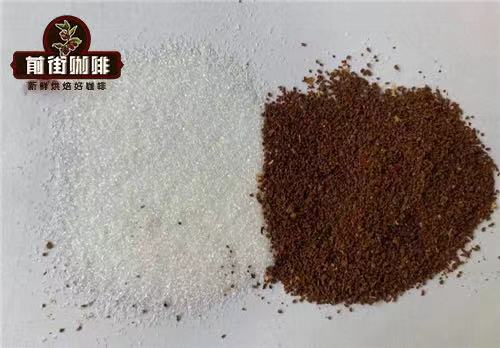
While it’s not possible to precisely control water temperature and extraction time when using a moka pot, there are still some key parameters you can adjust to optimize flavor. The main variables are the grind size and dosage of the coffee grounds. It’s recommended to grind the coffee slightly coarser than what is used for espresso machines, specifically referring to the gap size of the filter basket to ensure the coffee grounds do not seep into the lower chamber. As for the amount of coffee, simply fill the filter basket and gently tap to level the coffee bed. If you’re aiming for a richer, fuller body, it’s best to choose medium-dark to dark roasted coffee beans, such as those with pronounced caramel, nut, and chocolate notes, which can better match the flavor profile of espresso.
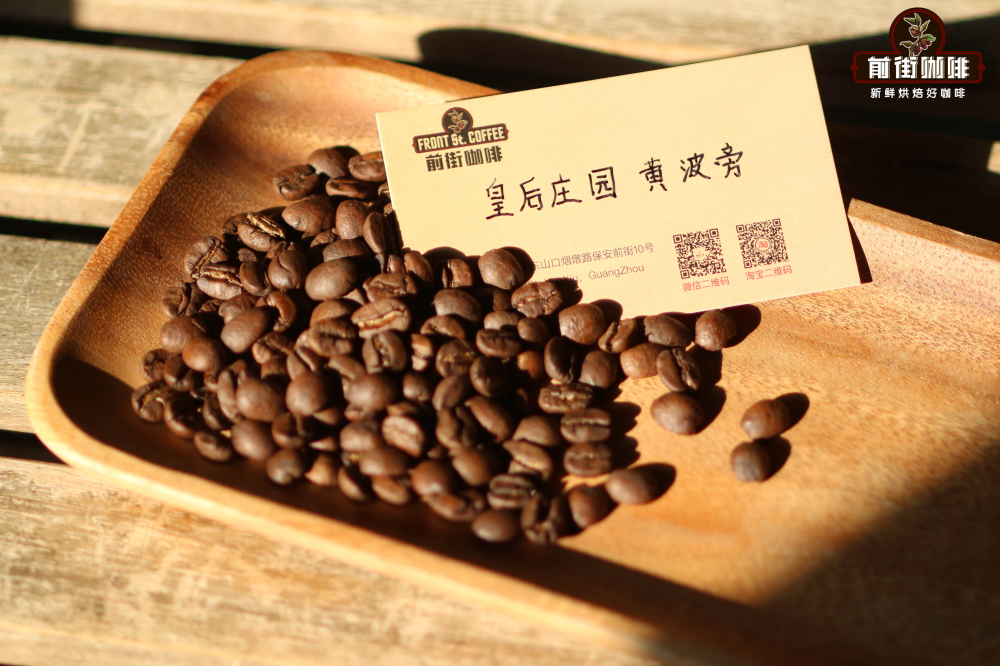
A coffee vendor once recommended the "Brazilian Queen Estate" from their bean selection as an ideal choice for moka pot brewing. This coffee is grown in the Mogiana region of São Paulo State, Brazil, at altitudes between 1400 and 1950 meters, and is of the Yellow Bourbon variety, processed using the natural method. Its flavor profile is dominated by notes of nuts, cream, cane sugar, and fermented fruits—rich and naturally sweet, making it highly suitable for coffee drinkers who enjoy intense flavors. When using a moka pot, pairing it with such a dark roast can effectively bring out the layers and richness of the coffee.
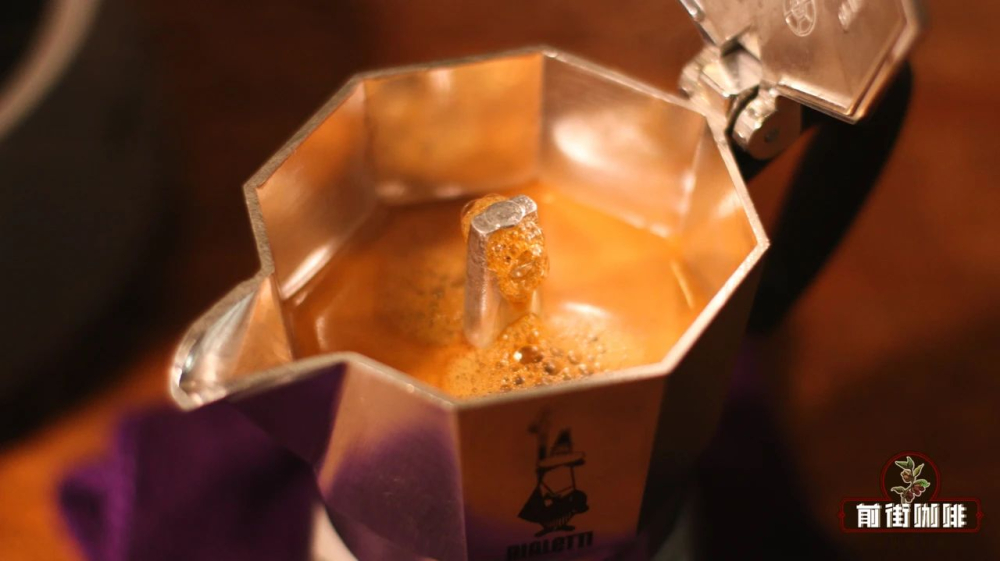
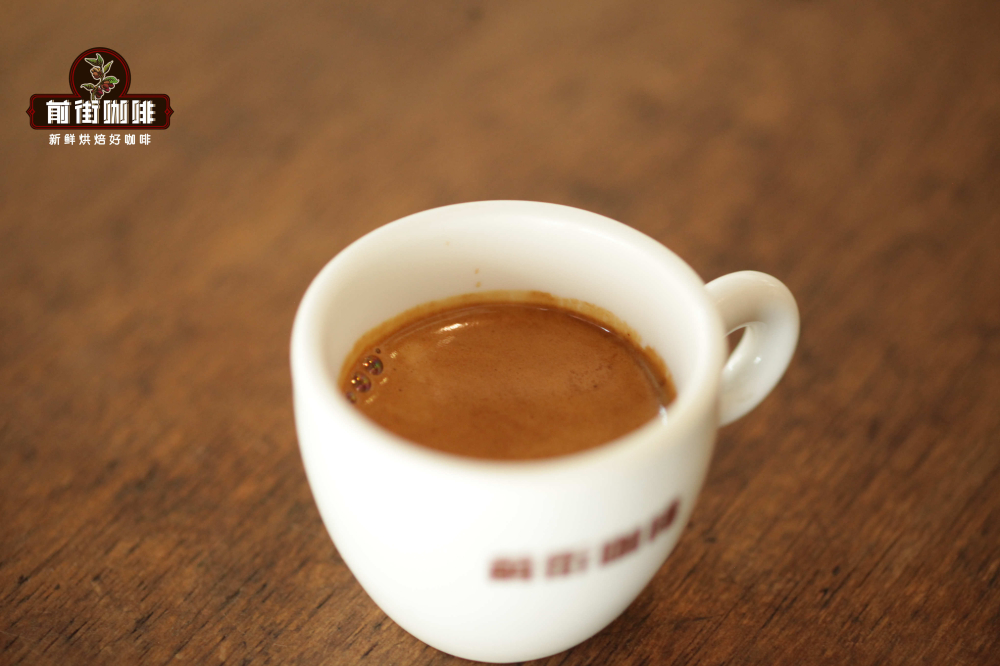
Many home users hope that the moka pot can produce beautiful crema just like an espresso machine. However, if the roast level and freshness of the coffee beans are not taken into account, the resulting coffee may end up smooth with no crema. In fact, coffee crema is primarily composed of carbon dioxide bubbles, and dark roast beans require a resting period after roasting to stabilize internal aromas and allow gases to dissipate. Most commercially sold coffee beans will indicate the roast date and expiration date, but the truly optimal “best drinking period” usually falls between 30–45 days after roasting. This is also the main phase during which the coffee beans release carbon dioxide. If the beans are kept too long, even if they haven’t expired, the flavor will noticeably deteriorate. Therefore, if you want to brew coffee with fine crema using a moka pot, choosing freshly roasted beans with sufficient roast level is crucial.
In summary, the moka pot is a coffee brewing device that combines a classic design with practical functionality, allowing you to easily brew rich-flavored coffee at home. Although it differs from a professional espresso machine in terms of pressure and water temperature, as long as you master the grind size, ensure even tamping, and choose suitable beans, you can still enjoy an espresso-like experience close to that of a café. If you’re aiming for crema and a rich body, remember to pay attention to the roast level and freshness of the beans, ensuring each moka pot brew achieves the ideal result.
The above content is compiled by CoffeeHunters, a coffee news website.


