







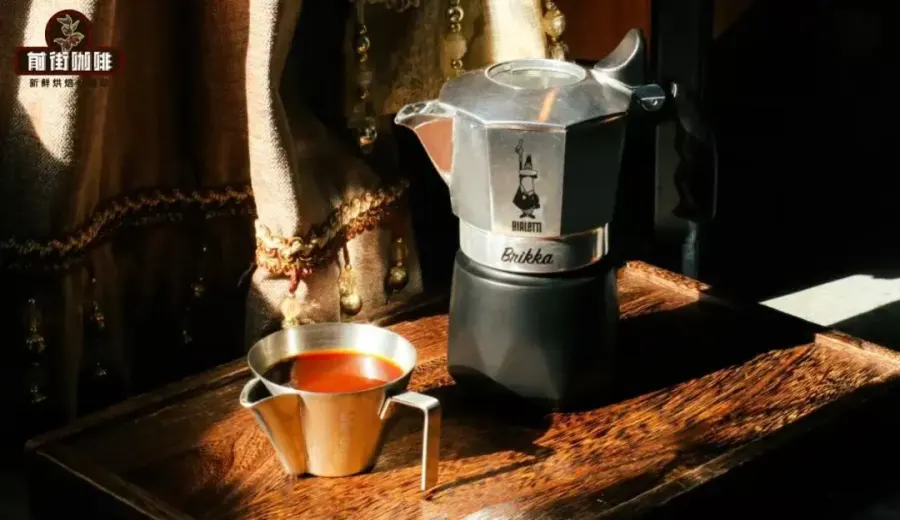
Introduction:Do you often find that the coffee brewed with your moka pot lacks intensity and the captivating crema? In fact, by mastering extraction parameters, adjusting the coffee-to-water ratio, and controlling heat, the moka pot can produce coffee with flavors close to those of espresso. This article will delve into how to enhance coffee concentration and crema performance through precise control of brew weight, selecting the right coffee beans, and optimizing the brewing process, while guiding you step-by-step to make an aromatic and crema-rich moka pot coffee.
Many coffee enthusiasts notice that although moka pot coffee is stronger than pour over, it still falls short in flavor complexity and crema compared to espresso. If you’ve encountered the same issue, the problem may lie in your extraction parameters. With some key adjustments, the moka pot can also brew coffee with a concentration close to that of espresso.
Many people mistakenly believe that the moka pot is inherently incapable of producing espresso-like strength, but this is a misconception. While the moka pot’s structure differs from that of a professional espresso machine and cannot achieve the extreme pressure of 9 bars, proper control can still yield excellent concentration and crema. The key lies in adjusting the coffee-to-water ratio, limiting brew weight, and optimizing other extraction conditions.
First, to achieve high concentration in moka pot coffee, the most direct method isto limit the final brew liquid volume. Under a fixed extraction yield, the lower the brew weight, the higher the coffee concentration naturally becomes. For example, espresso typically uses a 1:2 coffee-to-water ratio, resulting in strong flavors and noticeable crema; whereas pour over commonly uses a 1:15 ratio, yielding a lighter taste. To approach espresso-like concentration with a moka pot, it is recommended to adjust the coffee-to-water ratio to 1:4 or even lower, and strictly control the output liquid volume.
Of course, simply adjusting the coffee-to-water ratio is not enough—you also need tomaintain stable extraction efficiencyto ensure that the flavor compounds in the coffee grounds are fully released. Focusing solely on low brew weight while neglecting extraction uniformity may result in overly sharp or flat-tasting coffee. In addition, choosing the right coffee beans is crucial. If your goal is to make a coffee suitable for pairing with milk and rich in crema, a medium to dark roasted blend is recommended.
For instance, a medium to dark roasted blend composed of Mandheling, Brazil, and Vietnamese beans often exhibits prominent chocolate, caramel, and hazelnut aromas. Not only does it deliver excellent crema, but it also tastes rich and nearly acidity-free, with a long-lasting sweet aftertaste—making it highly suitable for moka pot brewing.
Next, let’s take a look at how to use specific parameters and steps to brew high-concentration coffee with moka pot flavors close to espresso in actual practice. This demonstration uses a single-serving moka pot, with 19 grams of coffee, a 1:4 coffee-to-water ratio, and coffee grounds ground to the fineness of Italian flour.
In terms of steps, first add about 76 milliliters of hot water to the bottom chamber (calculated based on 19 grams of coffee according to the 1:4 ratio). It is recommended to use freshly boiled water to help reduce the likelihood of channeling.The heat source should be set to low to medium; avoid excessively high temperatures that could lead to over-extraction or burnt, bitter flavors.

Next, evenly fill the coffee grounds into the filter basket. Be careful not to tamp too firmly—use moderate pressure to ensure the surface is level. This helps the water pressure pass uniformly through the coffee bed, improving extraction consistency. Once tamping is complete, assemble the upper and lower chambers and place them on the heat source.
When the coffee begins to flow,be sure to reduce the heat to the minimum, or even consider removing the heat source altogether, relying on residual heat for the final stage of extraction. Excessive heat can lead to over-extraction, increased bitterness, and negatively affect crema formation and flavor balance. If your heating device does not allow for heat adjustment, an alternative is to quickly remove the moka pot from the heat once coffee starts flowing, wait for the residual heat to push out the coffee, then return it to the heat source as needed to complete the extraction.
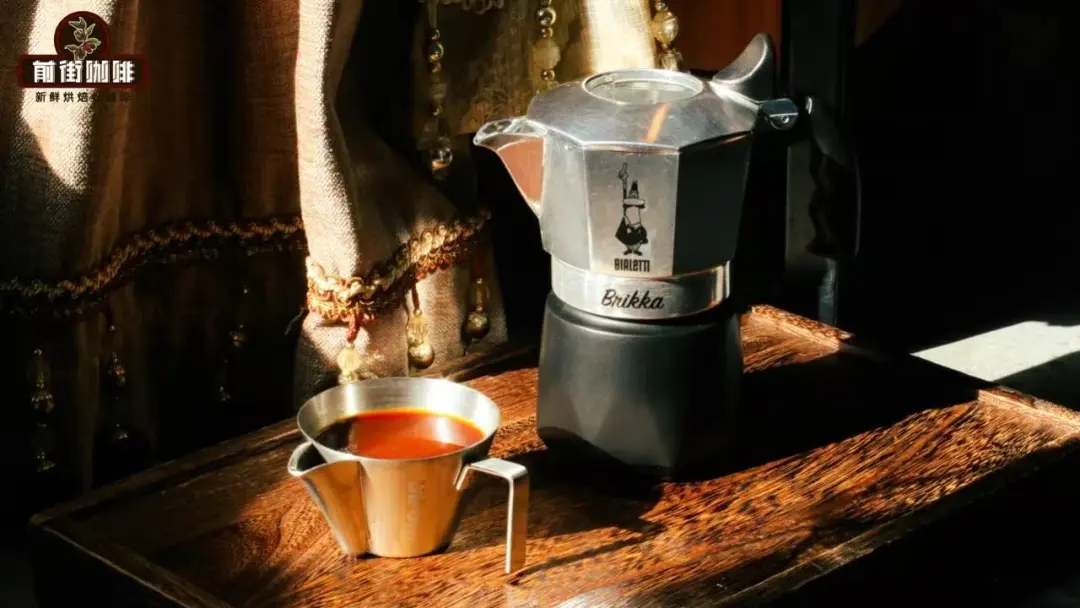
After brewing, observe the color and surface of the coffee. If it appears dark brown and has visible crema, it means you have successfully brewed a high-concentration moka pot coffee rich in flavor. Such coffee is not only great for drinking straight but also makes an excellent base for milk-based drinks like lattes and cappuccinos.

In summary, although the moka pot is not a professional espresso machine, by mastering the coffee-to-water ratio, limiting brew weight, adjusting grind size and heat, and selecting the right coffee beans, brewing high-concentration coffee with espresso-like flavors is definitely achievable. With the parameters and practical tips shared in this guide, we believe you can easily make a cup of moka pot coffee that is aromatic, crema-rich, and balanced in taste.
The above content is compiled by CoffeeHunters, a coffee news website.


